
Belarusian Art in June: Biennials, Exhibitions, Collections, and Book Awards. The Big Monthly Review
Belarusian Art in June: Biennials, Exhibitions, Collections, and Book Awards. The Big Monthly Review
News | 15.07.2026
June turned out to be a dense month for Belarusian art: Belarusian artists appeared in the programs of international biennials, photography festivals, and book competitions; new exhibitions and venues opened in Minsk; and several projects brought heritage, archives, and art collections back into focus. Chrysalis Mag's monthly news review doesn't include every event, but rather those that seem most important for understanding the current state of the Belarusian art scene.
June turned out to be a dense month for Belarusian art: Belarusian artists appeared in the programs of international biennials, photography festivals, and book competitions; new exhibitions and venues opened in Minsk; and several projects brought heritage, archives, and art collections back into focus. Chrysalis Mag's monthly news review doesn't include every event, but rather those that seem most important for understanding the current state of the Belarusian art scene.
SHARE:
Who Won "Art-Minsk 2026"? Familiar Names and a Broader List of Artists
Minsk has announced the winners of the "Art-Minsk 2026" art festival and opened a group exhibition of their works — Postscriptum. The project features artists who received the greatest support from the audience and the jury: Tatsiana Ulasavets won the jury's grand prix, and Alesia Skarabahataya won the audience's grand prix for the seventh time.
A separate focus of the exhibition is the broader list of artists recognized in various categories. Among them are Viktoryia Staravoitava, Tatsiana Charnykh, Valery Stratovich, Aleh Mikhailau, Lizaveta Pastushenka, Usevalad Shvaiba, Ilya Hichan, Valeryia Biralo, Piloroma, Anastasiya Chadziy, Palina Belaya, Yulia Tsiareshka, Liudmila Zemliakova, Maryana Karpovich, Anastasiya Ulasavets, Anton Borzdy, Anastasiya Dubach, Mikalai Kachanovich, Kanstantsin Bychko, Graph Calligraph, and others.
Who Won "Art-Minsk 2026"? Familiar Names and a Broader List of Artists
Minsk has announced the winners of the "Art-Minsk 2026" art festival and opened a group exhibition of their works — Postscriptum. The project features artists who received the greatest support from the audience and the jury: Tatsiana Ulasavets won the jury's grand prix, and Alesia Skarabahataya won the audience's grand prix for the seventh time.
A separate focus of the exhibition is the broader list of artists recognized in various categories. Among them are Viktoryia Staravoitava, Tatsiana Charnykh, Valery Stratovich, Aleh Mikhailau, Lizaveta Pastushenka, Usevalad Shvaiba, Ilya Hichan, Valeryia Biralo, Piloroma, Anastasiya Chadziy, Palina Belaya, Yulia Tsiareshka, Liudmila Zemliakova, Maryana Karpovich, Anastasiya Ulasavets, Anton Borzdy, Anastasiya Dubach, Mikalai Kachanovich, Kanstantsin Bychko, Graph Calligraph, and others.
Who Won "Art-Minsk 2026"? Familiar Names and a Broader List of Artists
Minsk has announced the winners of the "Art-Minsk 2026" art festival and opened a group exhibition of their works — Postscriptum. The project features artists who received the greatest support from the audience and the jury: Tatsiana Ulasavets won the jury's grand prix, and Alesia Skarabahataya won the audience's grand prix for the seventh time.
A separate focus of the exhibition is the broader list of artists recognized in various categories. Among them are Viktoryia Staravoitava, Tatsiana Charnykh, Valery Stratovich, Aleh Mikhailau, Lizaveta Pastushenka, Usevalad Shvaiba, Ilya Hichan, Valeryia Biralo, Piloroma, Anastasiya Chadziy, Palina Belaya, Yulia Tsiareshka, Liudmila Zemliakova, Maryana Karpovich, Anastasiya Ulasavets, Anton Borzdy, Anastasiya Dubach, Mikalai Kachanovich, Kanstantsin Bychko, Graph Calligraph, and others.
Who Won "Art-Minsk 2026"? Familiar Names and a Broader List of Artists
Minsk has announced the winners of the "Art-Minsk 2026" art festival and opened a group exhibition of their works — Postscriptum. The project features artists who received the greatest support from the audience and the jury: Tatsiana Ulasavets won the jury's grand prix, and Alesia Skarabahataya won the audience's grand prix for the seventh time.
A separate focus of the exhibition is the broader list of artists recognized in various categories. Among them are Viktoryia Staravoitava, Tatsiana Charnykh, Valery Stratovich, Aleh Mikhailau, Lizaveta Pastushenka, Usevalad Shvaiba, Ilya Hichan, Valeryia Biralo, Piloroma, Anastasiya Chadziy, Palina Belaya, Yulia Tsiareshka, Liudmila Zemliakova, Maryana Karpovich, Anastasiya Ulasavets, Anton Borzdy, Anastasiya Dubach, Mikalai Kachanovich, Kanstantsin Bychko, Graph Calligraph, and others.
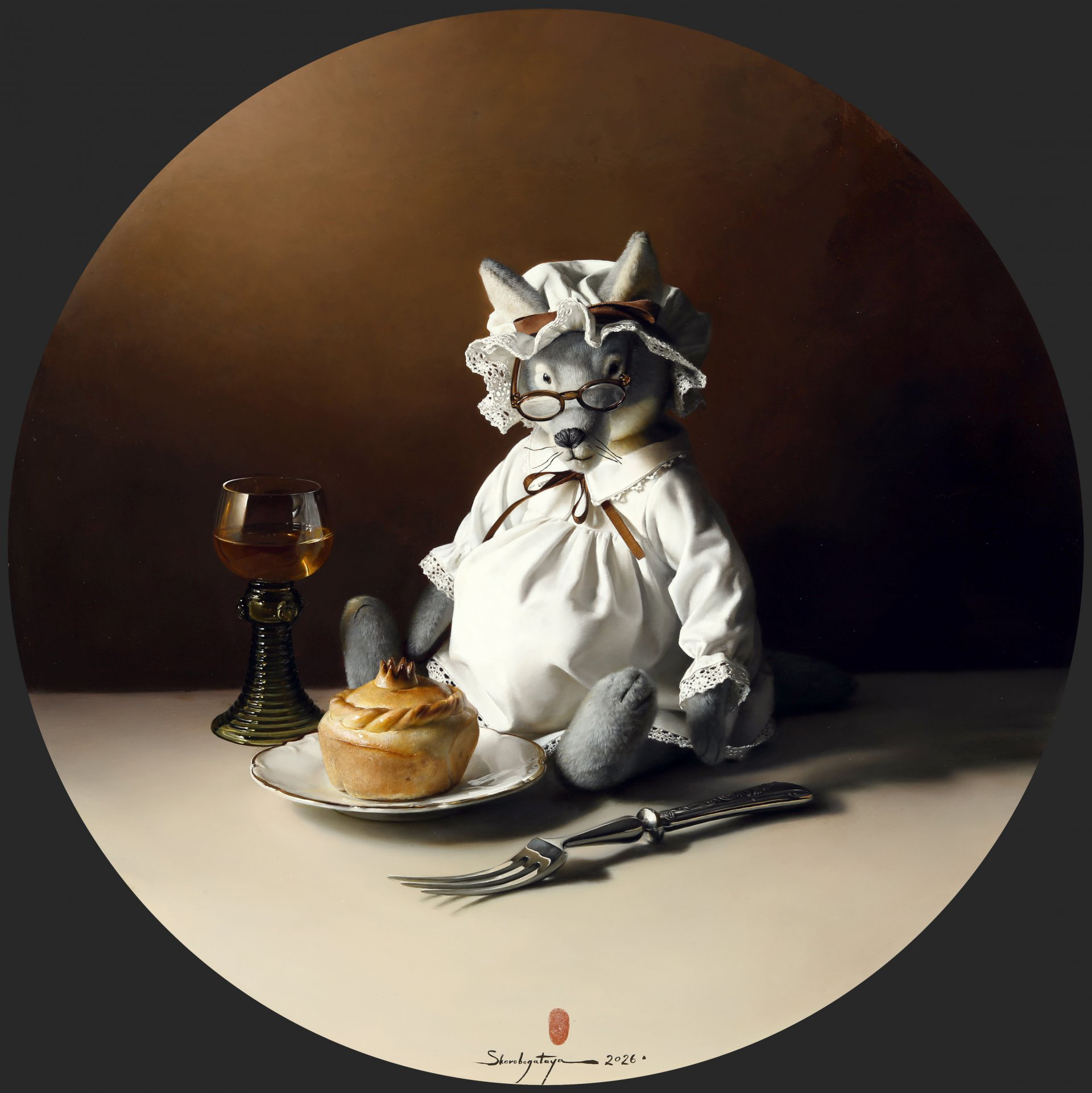
A work by Alesia Skarabahataya that participated in "Art-Minsk 2026" — "Pie for Grandma" / oil on canvas / 2026 / image taken from the Artcenter.by
The special jury prize was awarded to Andrei Savich, Aliaksandr Truskouski, and Kanstantsin Vashchanka. Individual curator's diplomas were awarded to Anton Shappo, Kiryl Orsik, Anna Plotnikava, Aliaksandr Shappo, Yulia Dranets, Yury Nesteruk, Fiodar Shurmialiou, Anna Ambrosava, Tatsiana Savik, Katsiaryna Afonina, and Yauheniya Tsviatkova.
The festival's curator was Aliaksandr Zinkevich, and the Postscriptum exhibition is curated by Katsiaryna Yankouskaya. The exhibition is held at ZAL#2 at 3 Kazlova Street; works by the winners and other participants can be purchased through Artcenter.by.
A New Museum Venue in Minsk? The "Museum of Naïve Art" Has Opened in the Arena City Shopping Center
A Museum of Naïve Art has opened in Minsk. The new venue began its work with an exhibition by Ihar Yermakou and states that it will showcase both renowned artists and self-taught ones without professional education. This could become a notable event for the Minsk art scene. Previously, in an analytical review of inclusion in the history of Belarusian contemporary art, the Kalektar platform drew attention to the fact that insitic, or naïve, artists without professional education have often remained outside the central artistic narrative.
The special jury prize was awarded to Andrei Savich, Aliaksandr Truskouski, and Kanstantsin Vashchanka. Individual curator's diplomas were awarded to Anton Shappo, Kiryl Orsik, Anna Plotnikava, Aliaksandr Shappo, Yulia Dranets, Yury Nesteruk, Fiodar Shurmialiou, Anna Ambrosava, Tatsiana Savik, Katsiaryna Afonina, and Yauheniya Tsviatkova.
The festival's curator was Aliaksandr Zinkevich, and the Postscriptum exhibition is curated by Katsiaryna Yankouskaya. The exhibition is held at ZAL#2 at 3 Kazlova Street; works by the winners and other participants can be purchased through Artcenter.by.
A New Museum Venue in Minsk? The "Museum of Naïve Art" Has Opened in the Arena City Shopping Center
A Museum of Naïve Art has opened in Minsk. The new venue began its work with an exhibition by Ihar Yermakou and states that it will showcase both renowned artists and self-taught ones without professional education. This could become a notable event for the Minsk art scene. Previously, in an analytical review of inclusion in the history of Belarusian contemporary art, the Kalektar platform drew attention to the fact that insitic, or naïve, artists without professional education have often remained outside the central artistic narrative.
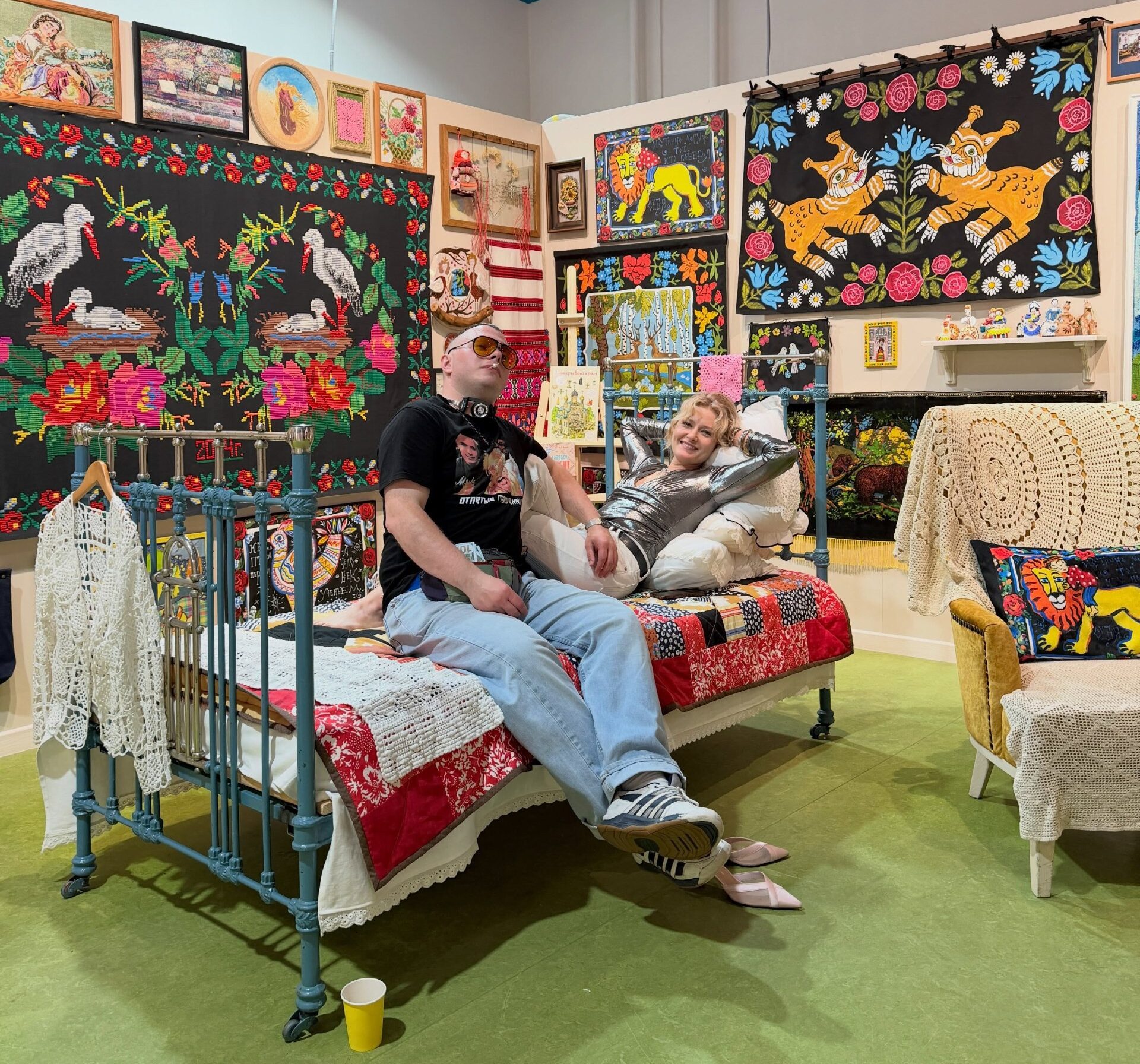
Photograph from the Museum of Naïve Art's social media / 2026
Photograph from the Museum of Naïve Art's social media / 2026
In the Belarusian context, there have been individual attempts to work with this field. Let us recall the Bezmezhniki (Boundless) project, which took place at the "Ў" gallery, and the social project Kraina Oz (Land of Oz) by staff members of a neuropsychiatric care home. That is why the museum's opening looks like an important gesture, but one that requires a framework: what matters is how the venue will interpret the very term "naïve art," work with different artists, and build context around its exhibitions.
The Belgazprombank Collection Will Be Shown Publicly Again
In July, after a long hiatus, the gallery plans to resume the public display of Belgazprombank's corporate collection. This is one of the most important private and corporate art collections in Belarus: its core consists of works by artists of the School of Paris connected to Belarusian lands, including Marc Chagall, Chaïm Soutine, Osip Lubich, Pinchus Krémègne, Michel Kikoïne, Shraga Zarfin, and Ossip Zadkine. The collection also includes works by Léon Bakst, Valenty Wańkowicz, Simeon of Polotsk, and other artists.
In the Belarusian context, there have been individual attempts to work with this field. Let us recall the Bezmezhniki (Boundless) project, which took place at the "Ў" gallery, and the social project Kraina Oz (Land of Oz) by staff members of a neuropsychiatric care home. That is why the museum's opening looks like an important gesture, but one that requires a framework: what matters is how the venue will interpret the very term "naïve art," work with different artists, and build context around its exhibitions.
The Belgazprombank Collection Will Be Shown Publicly Again
In July, after a long hiatus, the gallery plans to resume the public display of Belgazprombank's corporate collection. This is one of the most important private and corporate art collections in Belarus: its core consists of works by artists of the School of Paris connected to Belarusian lands, including Marc Chagall, Chaïm Soutine, Osip Lubich, Pinchus Krémègne, Michel Kikoïne, Shraga Zarfin, and Ossip Zadkine. The collection also includes works by Léon Bakst, Valenty Wańkowicz, Simeon of Polotsk, and other artists.
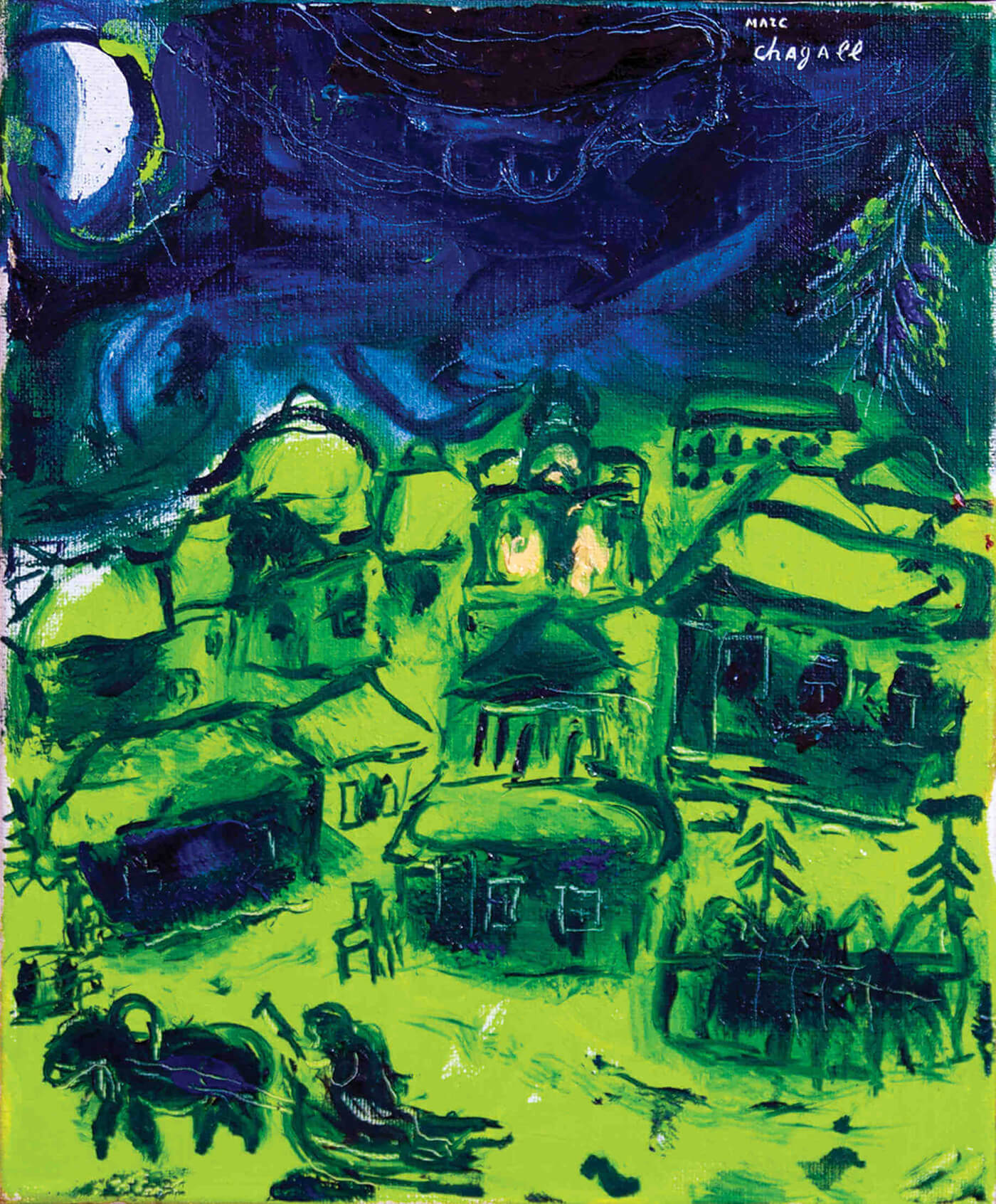
Marc Chagall — "Green Landscape" / oil on canvas / from the Belgazprombank collection
Marc Chagall — "Green Landscape" / oil on canvas / from the Belgazprombank collection
The collection's return to public display is important above all as a restoration of access. The strength of this collection lies in the fact that it brings together names of world art connected to Belarusian lands, and allows us to see the history of Belarusian art not as an isolated national line, but as part of a broader European movement: the School of Paris, the avant-garde, and the artistic migration of the twentieth century.
To Mark the 130th Anniversary of Alena Kish, Her Painted Rugs Are on Display in Minsk
The exhibition "The Painted Soul," dedicated to the 130th anniversary of Alena Kish's birth, has opened in the "Labyrinth" gallery of the National Library of Belarus.
The collection's return to public display is important above all as a restoration of access. The strength of this collection lies in the fact that it brings together names of world art connected to Belarusian lands, and allows us to see the history of Belarusian art not as an isolated national line, but as part of a broader European movement: the School of Paris, the avant-garde, and the artistic migration of the twentieth century.
To Mark the 130th Anniversary of Alena Kish, Her Painted Rugs Are on Display in Minsk
The exhibition "The Painted Soul," dedicated to the 130th anniversary of Alena Kish's birth, has opened in the "Labyrinth" gallery of the National Library of Belarus.

A painted rug (maliavanka) by Alena Kish
A painted rug (maliavanka) by Alena Kish
The exhibition presents painted rugs from the collections of the "Zaslaŭe" museum-reserve, including works by Kish herself, as well as works by Yazep Drazdovich, Fiodar Sukhavila, Nikanor Zosik, anonymous village masters, and contemporary interpretations of the maliavanka. The exhibition runs until August 31.
Official. Unofficial. Belarus: The Belarusian Context at the Venice Biennale
The 61st International Art Exhibition, La Biennale di Venezia, one of the main events in world contemporary art, is taking place in Venice. This year, the biennale runs from May 9 to November 22, and the main curatorial exhibition is titled In Minor Keys. In parallel, national pavilions and other projects that form the biennale's broader context are taking place in Venice.
The exhibition presents painted rugs from the collections of the "Zaslaŭe" museum-reserve, including works by Kish herself, as well as works by Yazep Drazdovich, Fiodar Sukhavila, Nikanor Zosik, anonymous village masters, and contemporary interpretations of the maliavanka. The exhibition runs until August 31.
Official. Unofficial. Belarus: The Belarusian Context at the Venice Biennale
The 61st International Art Exhibition, La Biennale di Venezia, one of the main events in world contemporary art, is taking place in Venice. This year, the biennale runs from May 9 to November 22, and the main curatorial exhibition is titled In Minor Keys. In parallel, national pavilions and other projects that form the biennale's broader context are taking place in Venice.
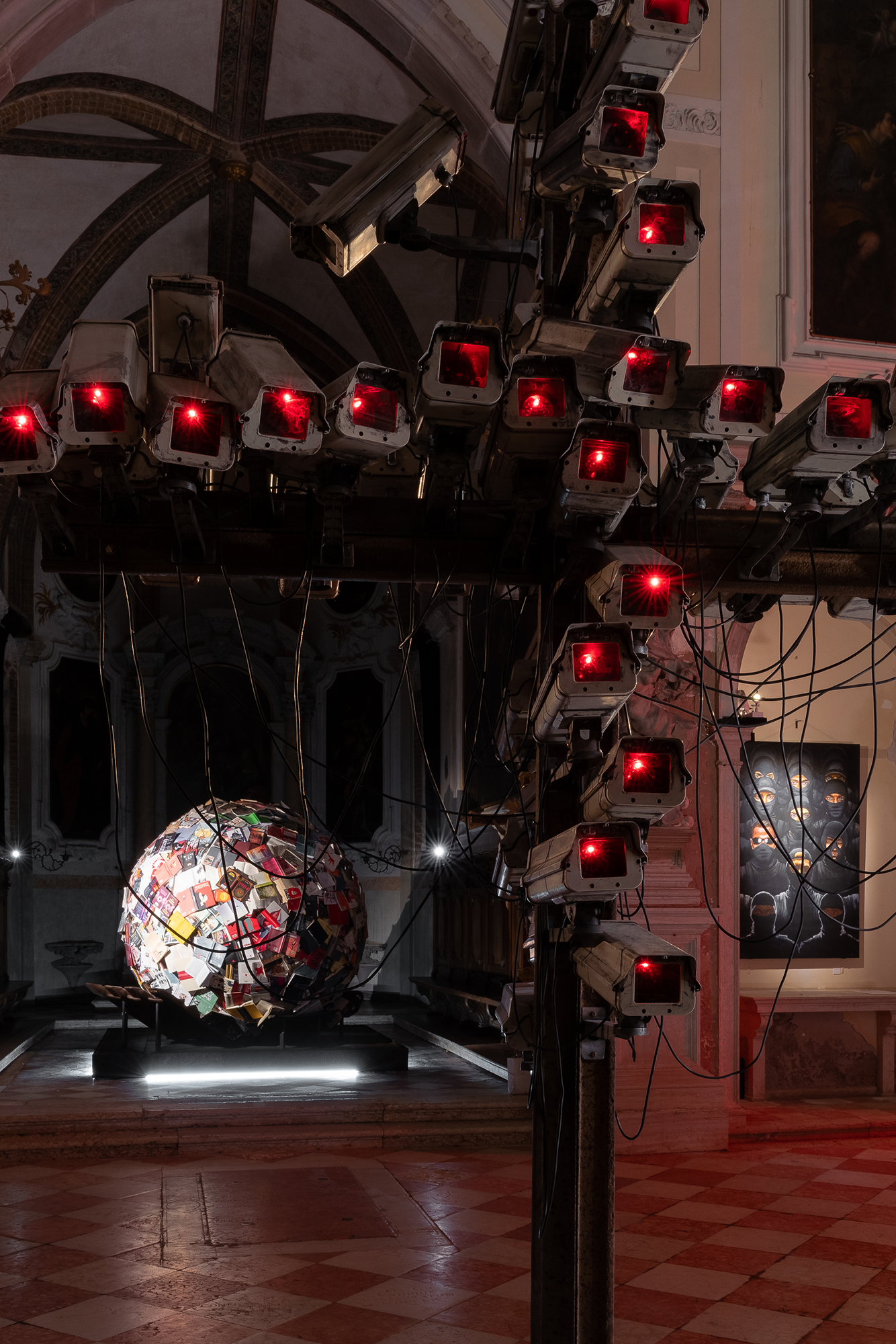
A photograph from the Belarusian exhibition at the Venice Biennale — Official. Unofficial. Belarus. Image taken from the artreview.com. Photograph by Dasha Trofimova
A photograph from the Belarusian exhibition at the Venice Biennale — Official. Unofficial. Belarus. Image taken from the artreview.com. Photograph by Dasha Trofimova
Alongside the main program, the project Official. Unofficial. Belarus. is presented. It takes place in the Chiesa di San Giovanni Evangelista, a historic 15th-century church now used as a space for exhibitions, cultural events, and conferences. In the project's descriptions, the participants of the artistic section include Siarhei Hrynevich, Uladzimir Tsesler, Volha Padhaiskaya, and Rasmus Munk. The audio section is complemented by the voices of internationally renowned actors and actresses: Gillian Anderson, Jude Law, Stephen Fry, and Joanna Lumley.
Official. Unofficial. Belarus. works as an immersive multimedia installation that combines visual art, sound, space, smell, taste, and the viewer's physical experience. From the very beginning, the project became grounds for various conversations and discussions in the Belarusian art field. In this case, it is important to note both the very fact of the Belarusian context's presence at one of the main international biennales and the scale of the work done. The project received significant attention from the international art press. For instance, The Art Newspaper included it in its selection of the best pavilions of the 61st Venice Biennale and specifically noted it as the best "unofficial" pavilion, while ArtReview placed Official. Unofficial. Belarus. in its review of notable off-site projects of the biennale.
Alongside the main program, the project Official. Unofficial. Belarus. is presented. It takes place in the Chiesa di San Giovanni Evangelista, a historic 15th-century church now used as a space for exhibitions, cultural events, and conferences. In the project's descriptions, the participants of the artistic section include Siarhei Hrynevich, Uladzimir Tsesler, Volha Padhaiskaya, and Rasmus Munk. The audio section is complemented by the voices of internationally renowned actors and actresses: Gillian Anderson, Jude Law, Stephen Fry, and Joanna Lumley.
Official. Unofficial. Belarus. works as an immersive multimedia installation that combines visual art, sound, space, smell, taste, and the viewer's physical experience. From the very beginning, the project became grounds for various conversations and discussions in the Belarusian art field. In this case, it is important to note both the very fact of the Belarusian context's presence at one of the main international biennales and the scale of the work done. The project received significant attention from the international art press. For instance, The Art Newspaper included it in its selection of the best pavilions of the 61st Venice Biennale and specifically noted it as the best "unofficial" pavilion, while ArtReview placed Official. Unofficial. Belarus. in its review of notable off-site projects of the biennale.
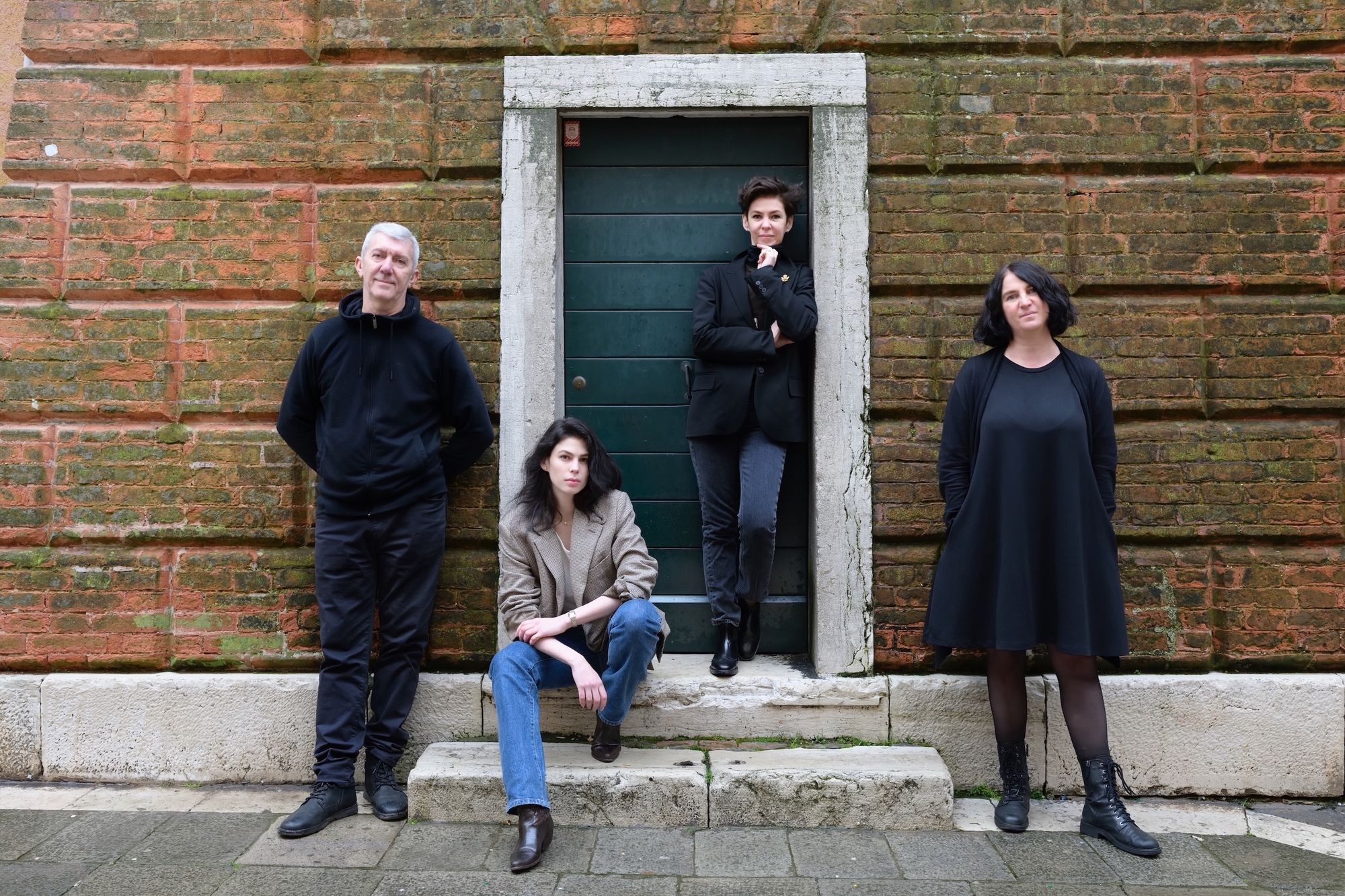
Sergey Grinevich, Daniella Kaliada, Natalia Kaliada MBE, and Olga Podgayskaya, 2026. Photo: Francesco Barasciutti
Sergey Grinevich, Daniella Kaliada, Natalia Kaliada MBE, and Olga Podgayskaya, 2026. Photo: Francesco Barasciutti
Belarusian Artist Maryna Naprushkina Is Participating in the Official Program of Manifesta 16 Ruhr This Year
Manifesta 16 Ruhr, one of Europe's major biennials of contemporary art, has opened in Germany's Ruhr region. Manifesta operates as a roaming biennial: each edition takes place in a new city or region and connects its artistic program with the local context. This year's theme is related to rethinking empty church buildings as spaces for communal life, gatherings, physical well-being, and social interaction. The program features more than 100 participants; some of the projects were created specifically for this edition.
Belarusian Artist Maryna Naprushkina Is Participating in the Official Program of Manifesta 16 Ruhr This Year
Manifesta 16 Ruhr, one of Europe's major biennials of contemporary art, has opened in Germany's Ruhr region. Manifesta operates as a roaming biennial: each edition takes place in a new city or region and connects its artistic program with the local context. This year's theme is related to rethinking empty church buildings as spaces for communal life, gatherings, physical well-being, and social interaction. The program features more than 100 participants; some of the projects were created specifically for this edition.
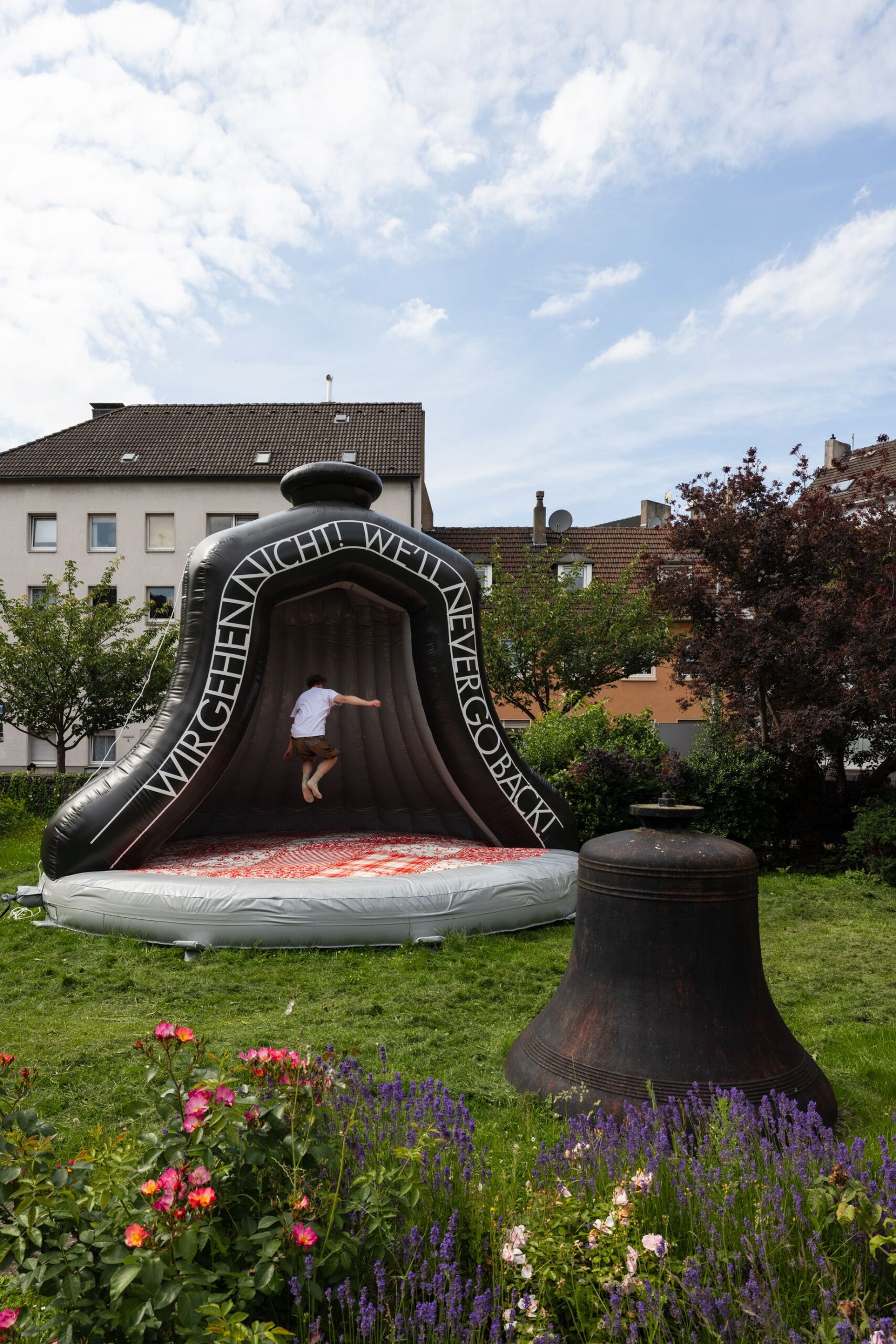
For Belarusians, Manifesta 16 is notable for the participation of Maryna Naprushkina — a Belarusian artist who, in the opinion of curator Antonina Stebur, is one of the most important artists not only for the Belarusian context but on an international scale as well. The venue for the artist's project was the Gethsemane-Kirche (Bochum), built between 1947 and 1950. In her work, Naprushkina reflects on the role of labor migrants who, among other things, supported industry in the region adjacent to the Ruhr.
This year, the biennial runs from June 21 to October 4 in Duisburg, Essen, Gelsenkirchen, and Bochum.
Belarusian context in the program of the Czech Biennale Matter of Art 2026
The Biennale Matter of Art 2026 has opened in the Czech Republic — an international biennale of contemporary art that engages with exhibition form as well as political, social, and historical processes. This year the biennale is taking place in Prague and Pardubice: the opening took place on June 11, and the main exhibition venues began operating from June 12.
The 2026 program features 49 artists and collectives from 20 countries. The Belarusian context in the program is connected to the work of Rufina Bazlova and the Stitchit project.
For Belarusians, Manifesta 16 is notable for the participation of Maryna Naprushkina — a Belarusian artist who, in the opinion of curator Antonina Stebur, is one of the most important artists not only for the Belarusian context but on an international scale as well. The venue for the artist's project was the Gethsemane-Kirche (Bochum), built between 1947 and 1950. In her work, Naprushkina reflects on the role of labor migrants who, among other things, supported industry in the region adjacent to the Ruhr.
This year, the biennial runs from June 21 to October 4 in Duisburg, Essen, Gelsenkirchen, and Bochum.
Belarusian context in the program of the Czech Biennale Matter of Art 2026
The Biennale Matter of Art 2026 has opened in the Czech Republic — an international biennale of contemporary art that engages with exhibition form as well as political, social, and historical processes. This year the biennale is taking place in Prague and Pardubice: the opening took place on June 11, and the main exhibition venues began operating from June 12.
The 2026 program features 49 artists and collectives from 20 countries. The Belarusian context in the program is connected to the work of Rufina Bazlova and the Stitchit project.
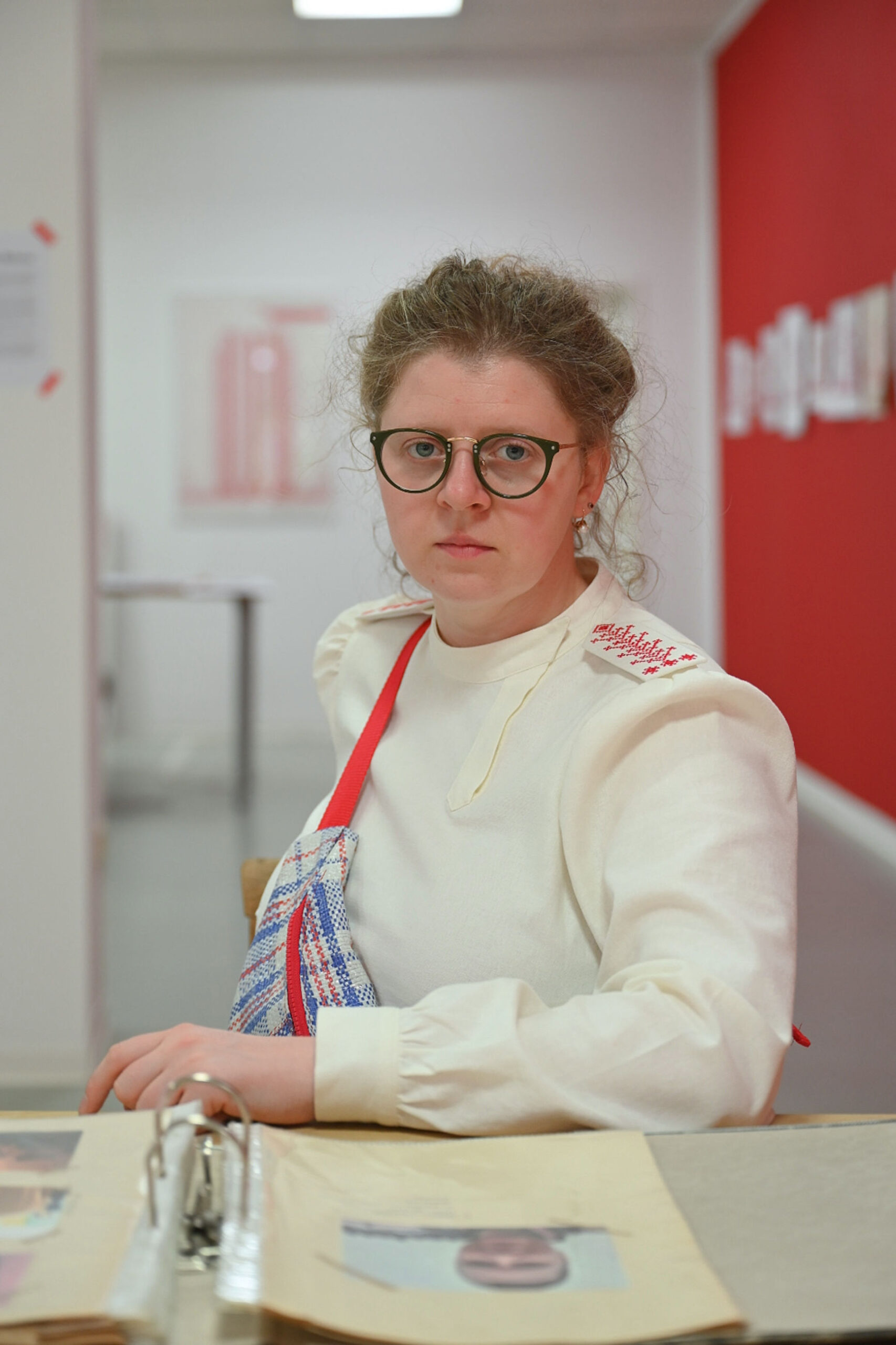
A special focus of the biennale program is #ZaramovanovBelorusku, a series of 678 hand-embroidered works created between 2021 and 2025. In this project, hand embroidery and the visual language of Belarusian ornamentation come together as a large collective form. It is a large-scale textile project in which individual images merge into a shared visual structure. Repetition, rhythm, and the time invested in each embroidery become integral parts of the work itself: personal gestures are assembled into a collective form, where the handmade technique functions as a means of preserving and transmitting experience.
This is the second time Belarusians have participated in the Czech Biennale Matter of Art. Their debut took place during the previous edition of the biennale, when Belarusian curator Aliaksei Barysiônak served as co-curator of the main exhibition. That edition also featured works by Belarusian artists Uladzimir Hramovich, Volha Sasnouskaya, and the collective eeefff (Dzina Zhuk and Mikalai Spesiŭtsau).
Tanya Artsimovich received the prestigious European Igor Zabel Award 2026
Belarusian art researcher Tanya Artsimovich has received the prestigious European art award, the Igor Zabel Award 2026. This is one of the notable international awards for authors, curators, and researchers working with cultural theory and visual art from Central, Eastern, and South-Eastern Europe.
A special focus of the biennale program is #ZaramovanovBelorusku, a series of 678 hand-embroidered works created between 2021 and 2025. In this project, hand embroidery and the visual language of Belarusian ornamentation come together as a large collective form. It is a large-scale textile project in which individual images merge into a shared visual structure. Repetition, rhythm, and the time invested in each embroidery become integral parts of the work itself: personal gestures are assembled into a collective form, where the handmade technique functions as a means of preserving and transmitting experience.
This is the second time Belarusians have participated in the Czech Biennale Matter of Art. Their debut took place during the previous edition of the biennale, when Belarusian curator Aliaksei Barysiônak served as co-curator of the main exhibition. That edition also featured works by Belarusian artists Uladzimir Hramovich, Volha Sasnouskaya, and the collective eeefff (Dzina Zhuk and Mikalai Spesiŭtsau).
Tanya Artsimovich received the prestigious European Igor Zabel Award 2026
Belarusian art researcher Tanya Artsimovich has received the prestigious European art award, the Igor Zabel Award 2026. This is one of the notable international awards for authors, curators, and researchers working with cultural theory and visual art from Central, Eastern, and South-Eastern Europe.
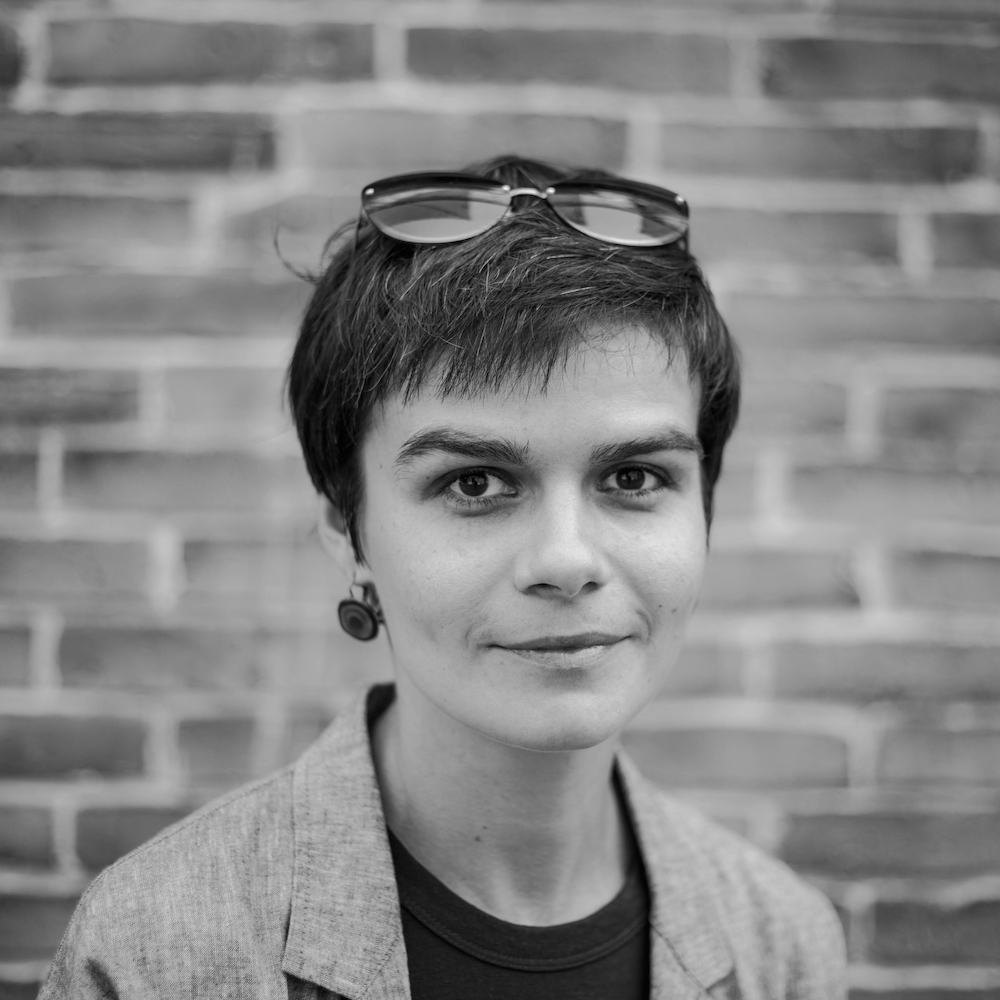
The jury noted Artsimovich's work with contemporary Belarusian art, performance, and the historical avant-garde, as well as her attention to the Belarusian artistic context both within the country and in the diaspora. This year we also published a major interview with the researcher. You can read it on the pages of Chrysalis Mag.
Sasha Vialichka and Belarusian photography at international festivals
This summer has been particularly notable for Belarusian photographer Sasha Vialichka. Her projects, connected to Belarusian experience, memory, media, and visual manipulation, are appearing simultaneously at several international venues. In Łódź, as part of Fotofestiwal 2026, Vialichka is presenting her solo exhibition Called to the Carpet at Kamienica Hilarego Majewskiego. The exhibition's curator is Ariana Rinaldo.
The project continues Vialichka's work at the intersection of photography, archive, installation, and new media: in it, woven portraits on carpets become a material carrier of memory and a way of speaking about how personal experience can be preserved in objects, textures, and domestic space. In June, her work was also presented in Amsterdam as part of Foam Talent 2026, and the project State of Denial is taking part in the main program of the Athens Photo Festival at the Benaki Museum.
The jury noted Artsimovich's work with contemporary Belarusian art, performance, and the historical avant-garde, as well as her attention to the Belarusian artistic context both within the country and in the diaspora. This year we also published a major interview with the researcher. You can read it on the pages of Chrysalis Mag.
Sasha Vialichka and Belarusian photography at international festivals
This summer has been particularly notable for Belarusian photographer Sasha Vialichka. Her projects, connected to Belarusian experience, memory, media, and visual manipulation, are appearing simultaneously at several international venues. In Łódź, as part of Fotofestiwal 2026, Vialichka is presenting her solo exhibition Called to the Carpet at Kamienica Hilarego Majewskiego. The exhibition's curator is Ariana Rinaldo.
The project continues Vialichka's work at the intersection of photography, archive, installation, and new media: in it, woven portraits on carpets become a material carrier of memory and a way of speaking about how personal experience can be preserved in objects, textures, and domestic space. In June, her work was also presented in Amsterdam as part of Foam Talent 2026, and the project State of Denial is taking part in the main program of the Athens Photo Festival at the Benaki Museum.

In parallel, Vialichka is also acting as curator of the upcoming exhibition Historie w ukryciu at Galeria Promocyjna in Warsaw: an open call is now underway for authors of Belarusian origin whose work engages with personal or collective histories that often remain invisible.
A photobook about Belarusian heritage has made it onto Polish shortlists as book of the year
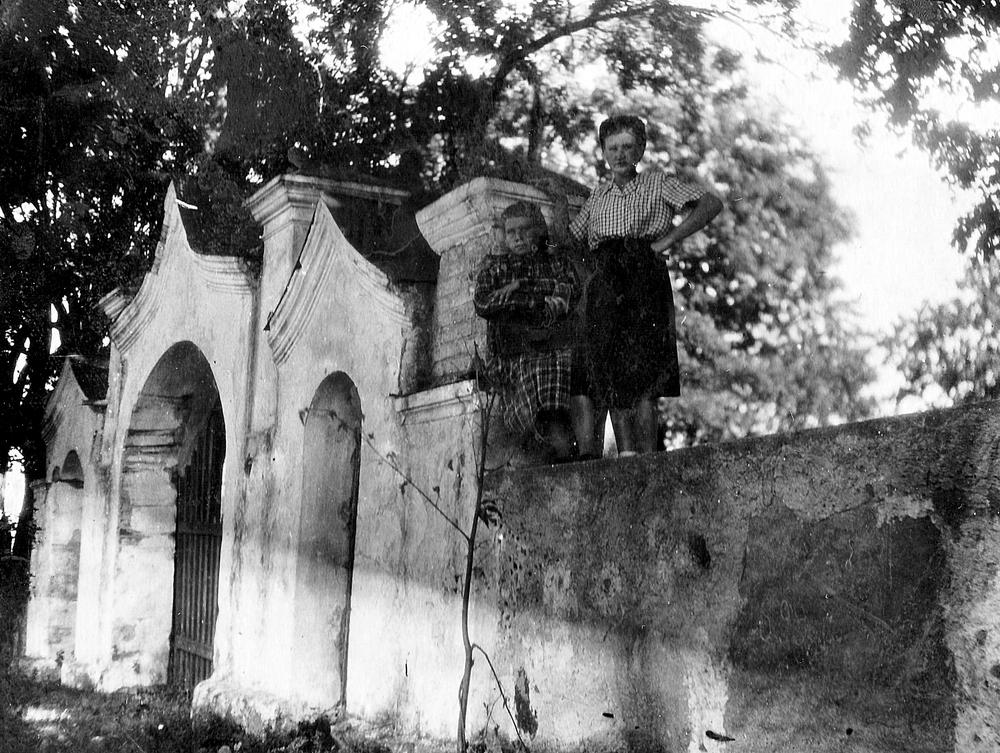
Łódź is important in this context not only because of Vialichka's solo exhibition. A Belarusian photobook context also emerged as part of the festival: Ruiny Białorusi / Ruins of Belarus from the VEHA archive made the shortlist for the Fotograficzna Publikacja Roku 2026 (Photographic Publication of the Year 2026) competition. The book is dedicated to Belarusian architectural heritage and its traces in family, private, and public archives. The publication includes photographs of castles, Catholic churches, Orthodox churches, synagogues, mosques, town halls, and other buildings. Some of them still stand in a state of ruin, while others have already disappeared from the landscape and remain only in photographs, memories, and local stories.
In parallel, Vialichka is also acting as curator of the upcoming exhibition Historie w ukryciu at Galeria Promocyjna in Warsaw: an open call is now underway for authors of Belarusian origin whose work engages with personal or collective histories that often remain invisible.
A photobook about Belarusian heritage has made it onto Polish shortlists as book of the year
Łódź is important in this context not only because of Vialichka's solo exhibition. A Belarusian photobook context also emerged as part of the festival: Ruiny Białorusi / Ruins of Belarus from the VEHA archive made the shortlist for the Fotograficzna Publikacja Roku 2026 (Photographic Publication of the Year 2026) competition. The book is dedicated to Belarusian architectural heritage and its traces in family, private, and public archives. The publication includes photographs of castles, Catholic churches, Orthodox churches, synagogues, mosques, town halls, and other buildings. Some of them still stand in a state of ruin, while others have already disappeared from the landscape and remain only in photographs, memories, and local stories.
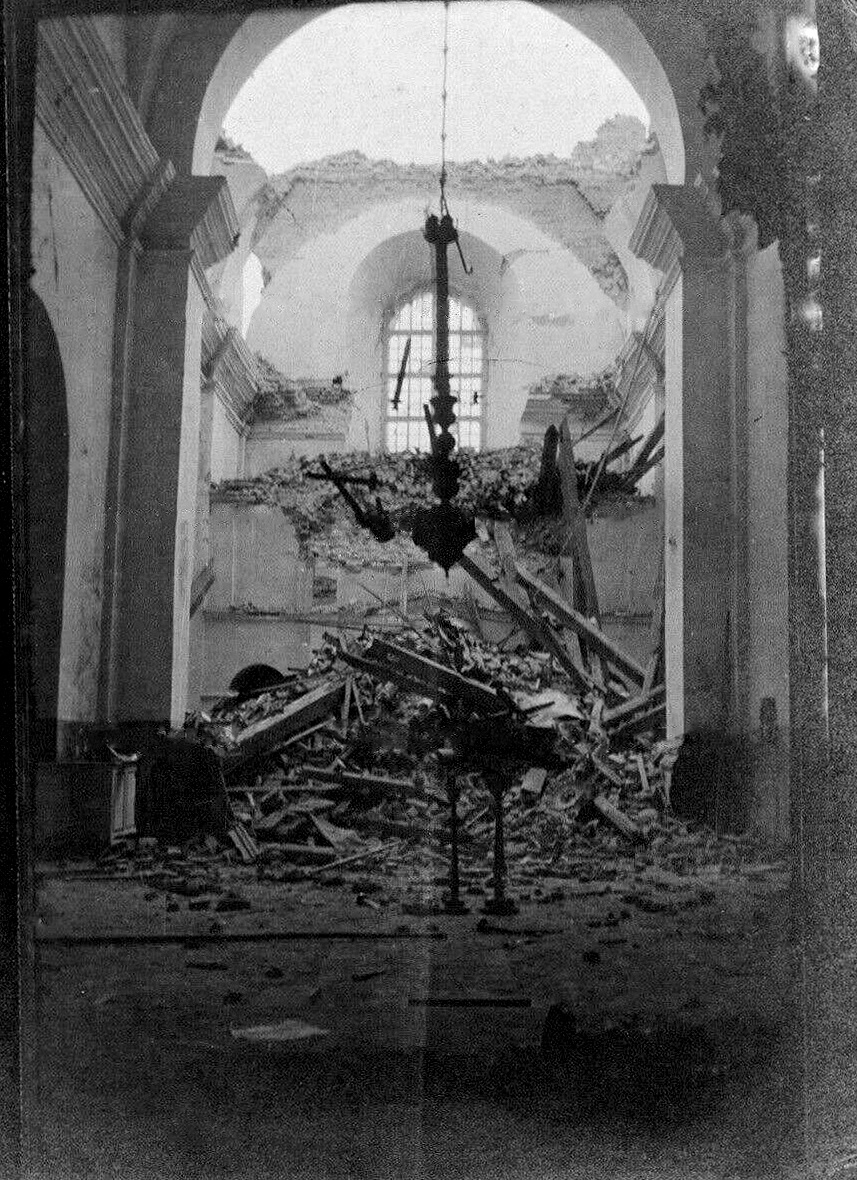
The publication also received an honorable mention in the "Art" category of the "Najpiękniejsze Polskie Książki 2025" (Most Beautiful Polish Books 2025) competition.
Yulia Hermanovich received the LensCulture Critics' Choice Award 2026
Belarusian photographer Yulia Hermanovich received the LensCulture Critics' Choice Award 2026 for her work Condition. In 2026, winners were selected by 19 international experts in photography, museums, media, and visual culture. Hermanovich's work was chosen by Rhea Combs, a curator and museum researcher who from 2021 to 2026 served as Director of Curatorial Affairs and Chief Curator at the Smithsonian National Portrait Gallery in Washington. In her comments, she noted that the photograph conveys an inner state through an image of accumulated physical heaviness and unexpected space to breathe.
The publication also received an honorable mention in the "Art" category of the "Najpiękniejsze Polskie Książki 2025" (Most Beautiful Polish Books 2025) competition.
Yulia Hermanovich received the LensCulture Critics' Choice Award 2026
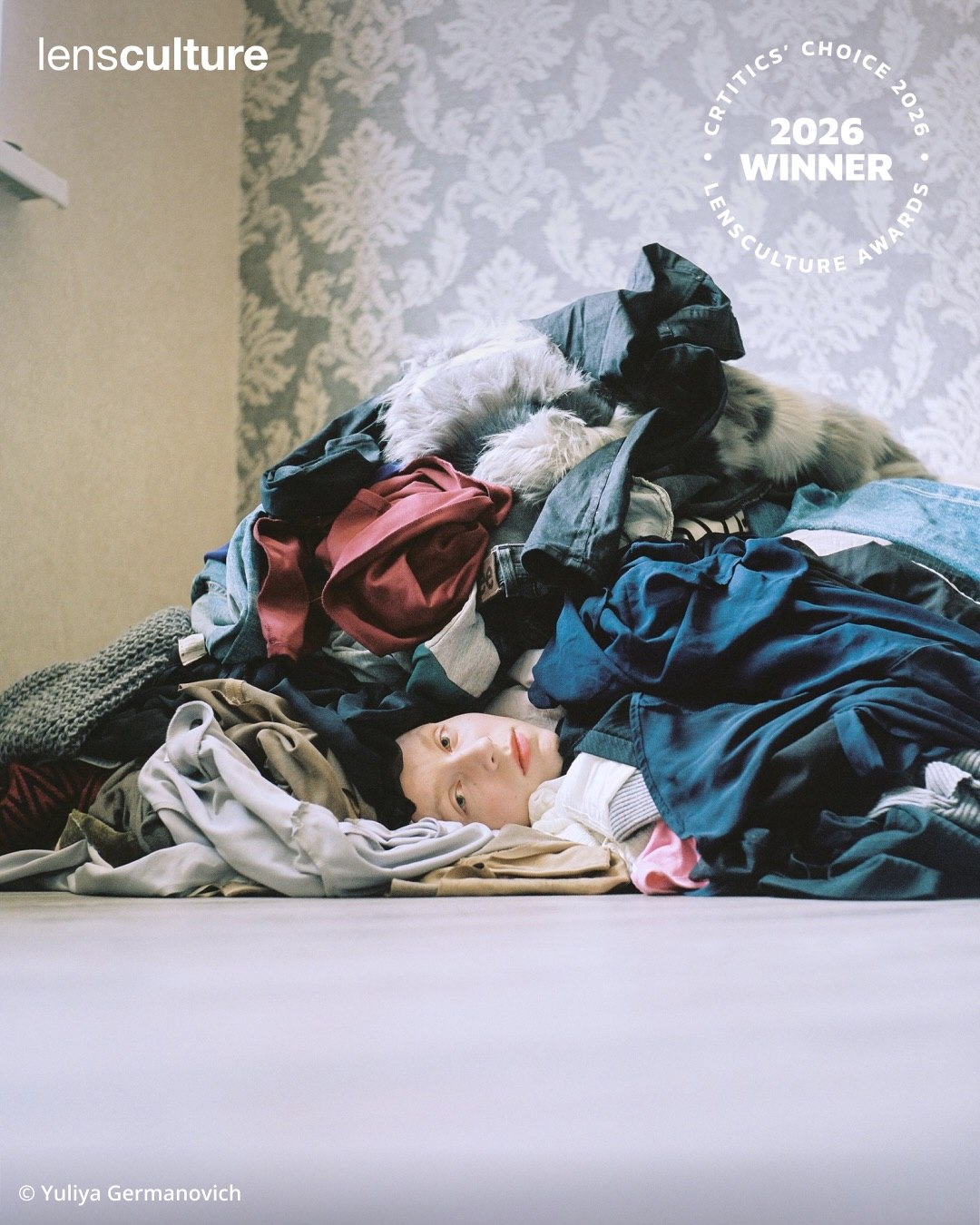
Belarusian photographer Yulia Hermanovich received the LensCulture Critics' Choice Award 2026 for her work Condition. In 2026, winners were selected by 19 international experts in photography, museums, media, and visual culture. Hermanovich's work was chosen by Rhea Combs, a curator and museum researcher who from 2021 to 2026 served as Director of Curatorial Affairs and Chief Curator at the Smithsonian National Portrait Gallery in Washington. In her comments, she noted that the photograph conveys an inner state through an image of accumulated physical heaviness and unexpected space to breathe.
A solo exhibition by Ala Savashevich about women's labor and the body can be seen at a museum in Wrocław
A solo exhibition by Ala Savashevich, "Twoje ciało to pole pracy" ("Your Body Is a Field of Labor"), is currently on view at the Ethnographic Museum in Wrocław. The exhibition brings the artist's works into dialogue with folk culture objects from the museum's collection. The idea for this exhibition emerged while Savashevich was working with the Ethnographic Museum's collection as part of her doctoral research. It became clear at that point that her objects entered into a precise dialogue with the museum collection, particularly with items and tools connected to the everyday rural labor of women.
A solo exhibition by Ala Savashevich about women's labor and the body can be seen at a museum in Wrocław
A solo exhibition by Ala Savashevich, "Twoje ciało to pole pracy" ("Your Body Is a Field of Labor"), is currently on view at the Ethnographic Museum in Wrocław. The exhibition brings the artist's works into dialogue with folk culture objects from the museum's collection. The idea for this exhibition emerged while Savashevich was working with the Ethnographic Museum's collection as part of her doctoral research. It became clear at that point that her objects entered into a precise dialogue with the museum collection, particularly with items and tools connected to the everyday rural labor of women.
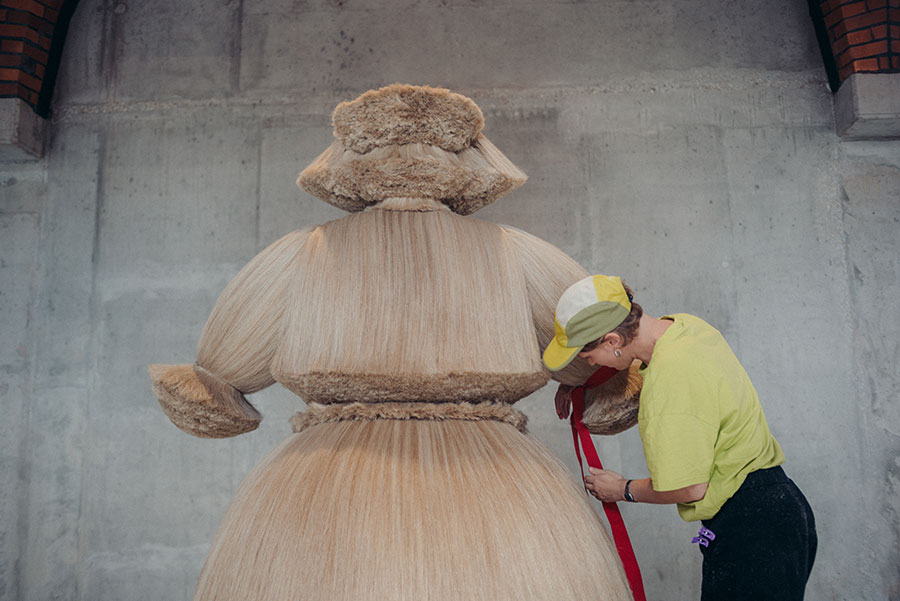
Savashevich comes from a Belarusian village and has worked for many years with the theme of women's labor, deliberately choosing techniques that demand time and physical effort: straw, metal, linen thread, and processes of straightening, combing, joining, and repetition. For the Wrocław exhibition, she created a new work specifically, "Pole kłosów." The exhibition is accompanied by a dedicated publication and an extensive events program — curatorial and artist-led tours, meetings, lectures, and workshops — that extend the exhibition's themes beyond the gallery space.
MALDZIS to present a drawing by the celebrated Grodno native Osip Liubich in Warsaw
The MALDZIS initiative has acquired a drawing by Osip Liubich, "Workers," at an auction in Israel. The work will be presented in Warsaw at a meeting with art historian and curator Dzmitry Salodki. The meeting will be devoted to the work itself, Liubich's biography, and the return to the Belarusian context of names that have long been better known in European art history than in Belarus.
Savashevich comes from a Belarusian village and has worked for many years with the theme of women's labor, deliberately choosing techniques that demand time and physical effort: straw, metal, linen thread, and processes of straightening, combing, joining, and repetition. For the Wrocław exhibition, she created a new work specifically, "Pole kłosów." The exhibition is accompanied by a dedicated publication and an extensive events program — curatorial and artist-led tours, meetings, lectures, and workshops — that extend the exhibition's themes beyond the gallery space.
MALDZIS to present a drawing by the celebrated Grodno native Osip Liubich in Warsaw
The MALDZIS initiative has acquired a drawing by Osip Liubich, "Workers," at an auction in Israel. The work will be presented in Warsaw at a meeting with art historian and curator Dzmitry Salodki. The meeting will be devoted to the work itself, Liubich's biography, and the return to the Belarusian context of names that have long been better known in European art history than in Belarus.
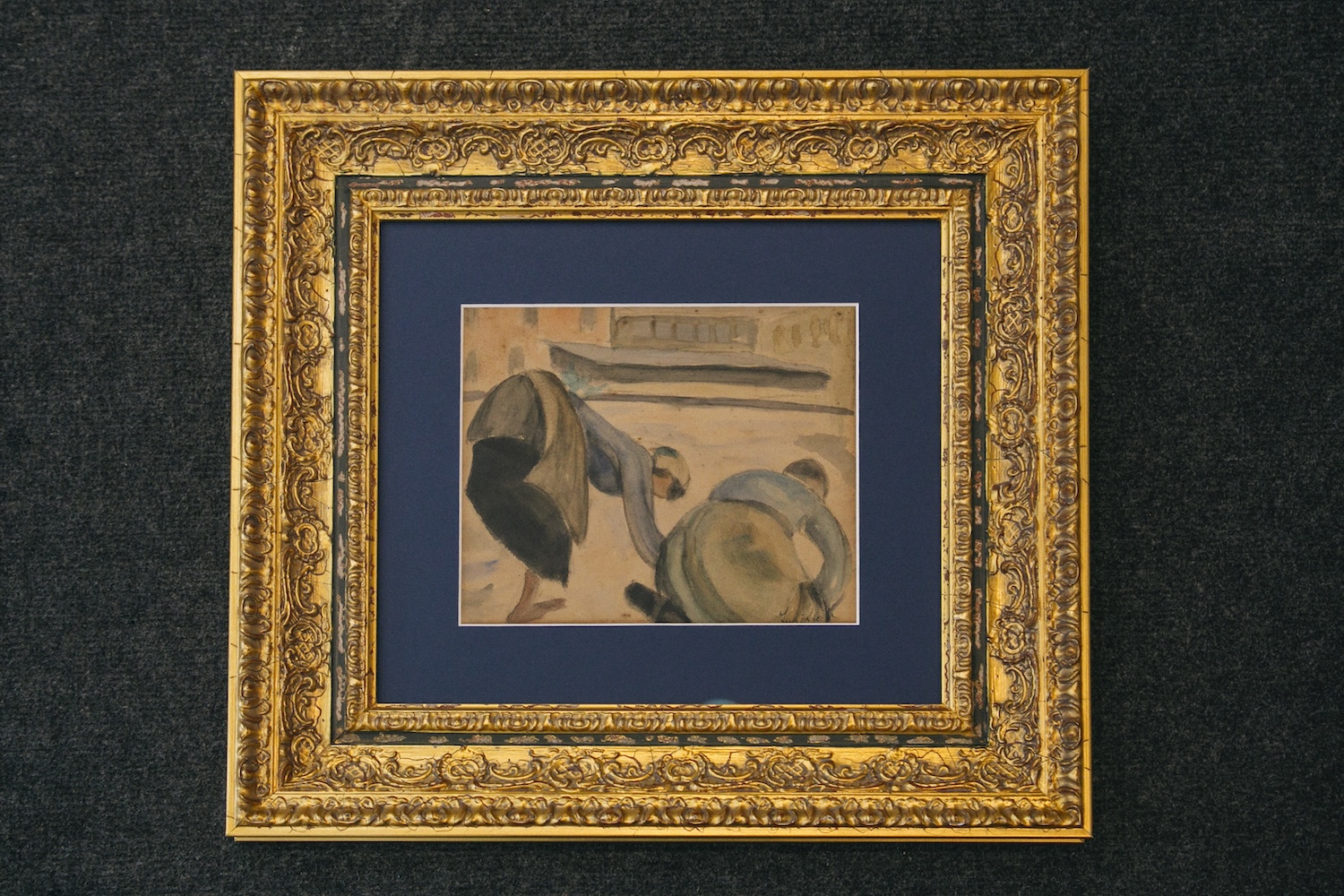
"Workers" by Osip Liubich, gouache on paper, 1920s. Photo: Tatsiana Kapitonava
As a reminder, the MALDZIS initiative works on returning Belarusian cultural heritage — searching for, acquiring, and bringing back into focus names, places, and artifacts connected to Belarus. This year they also purchased 30 lithographs by Napoleon Orda at a Polish auction: 19 of them are dedicated to landscapes and architectural monuments on the territory of present-day Belarus, while the rest are connected to present-day Lithuania, Ukraine, and Poland.
The Open Muzej initiative begins work on a compendium about Belarusian art
Researchers, curators, and art historians and critics are beginning work as part of the Open Muzej research laboratory "Revision and Collection of Belarusian Art 2015-2025," organized together with the Ambasada Kultury (Culture Embassy).
As a reminder, the MALDZIS initiative works on returning Belarusian cultural heritage — searching for, acquiring, and bringing back into focus names, places, and artifacts connected to Belarus. This year they also purchased 30 lithographs by Napoleon Orda at a Polish auction: 19 of them are dedicated to landscapes and architectural monuments on the territory of present-day Belarus, while the rest are connected to present-day Lithuania, Ukraine, and Poland.
The Open Muzej initiative begins work on a compendium about Belarusian art
Researchers, curators, and art historians and critics are beginning work as part of the Open Muzej research laboratory "Revision and Collection of Belarusian Art 2015-2025," organized together with the Ambasada Kultury (Culture Embassy).
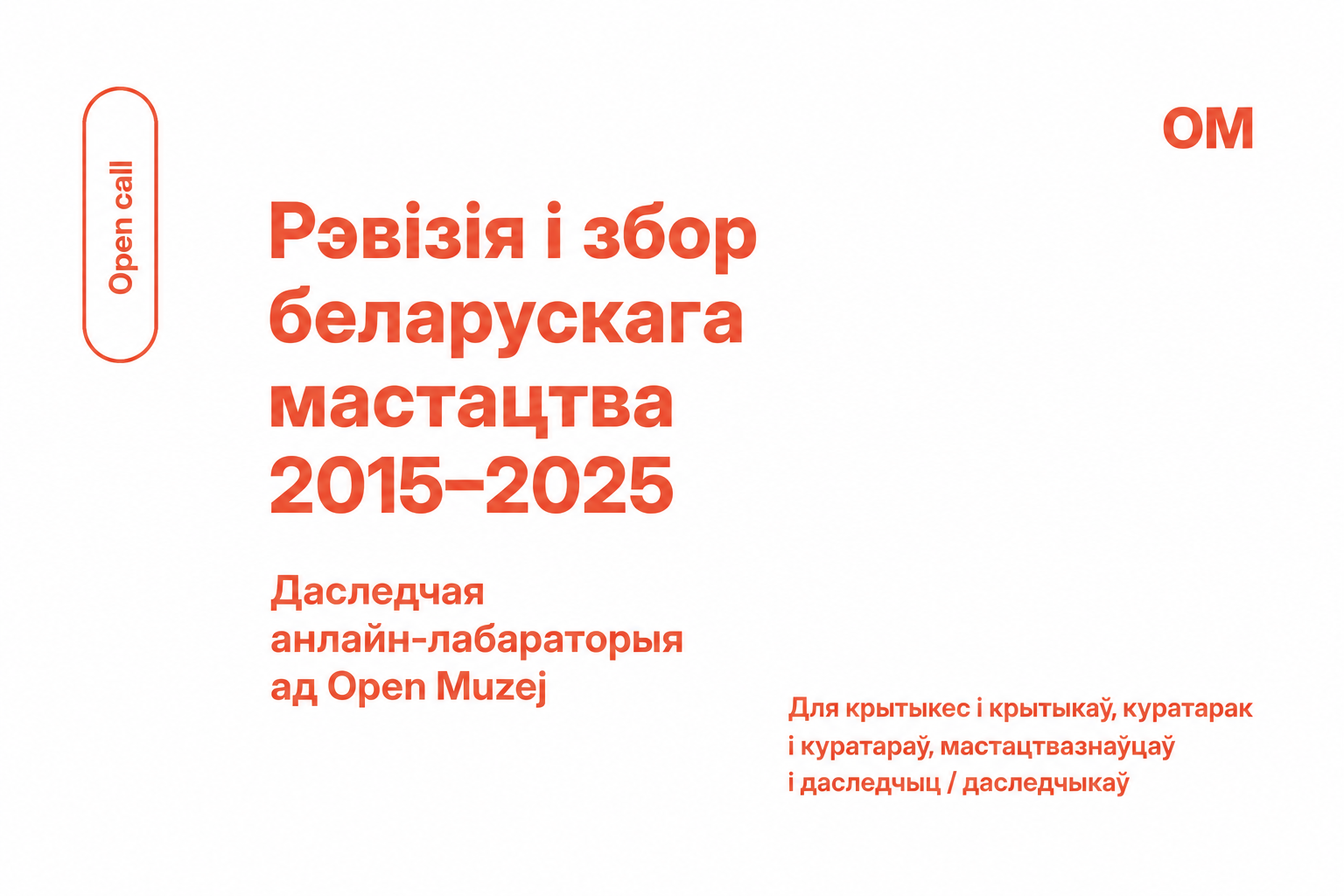
The laboratory is devoted to mapping notable names, events, practices, and phenomena in Belarusian art of the last decade. The open call itself is significant here too: the Belarusian artistic process is being documented, described, and gathered into a professional research format. The results of this work will become analytical and critical texts for a forthcoming compendium.
A book-catalogue titled Sense of Safety was presented in Berlin
An English-language book-catalogue, Sense of Safety: Art in a Time of War, published by Distanz, was presented in Berlin.
The laboratory is devoted to mapping notable names, events, practices, and phenomena in Belarusian art of the last decade. The open call itself is significant here too: the Belarusian artistic process is being documented, described, and gathered into a professional research format. The results of this work will become analytical and critical texts for a forthcoming compendium.
A book-catalogue titled Sense of Safety was presented in Berlin
An English-language book-catalogue, Sense of Safety: Art in a Time of War, published by Distanz, was presented in Berlin.
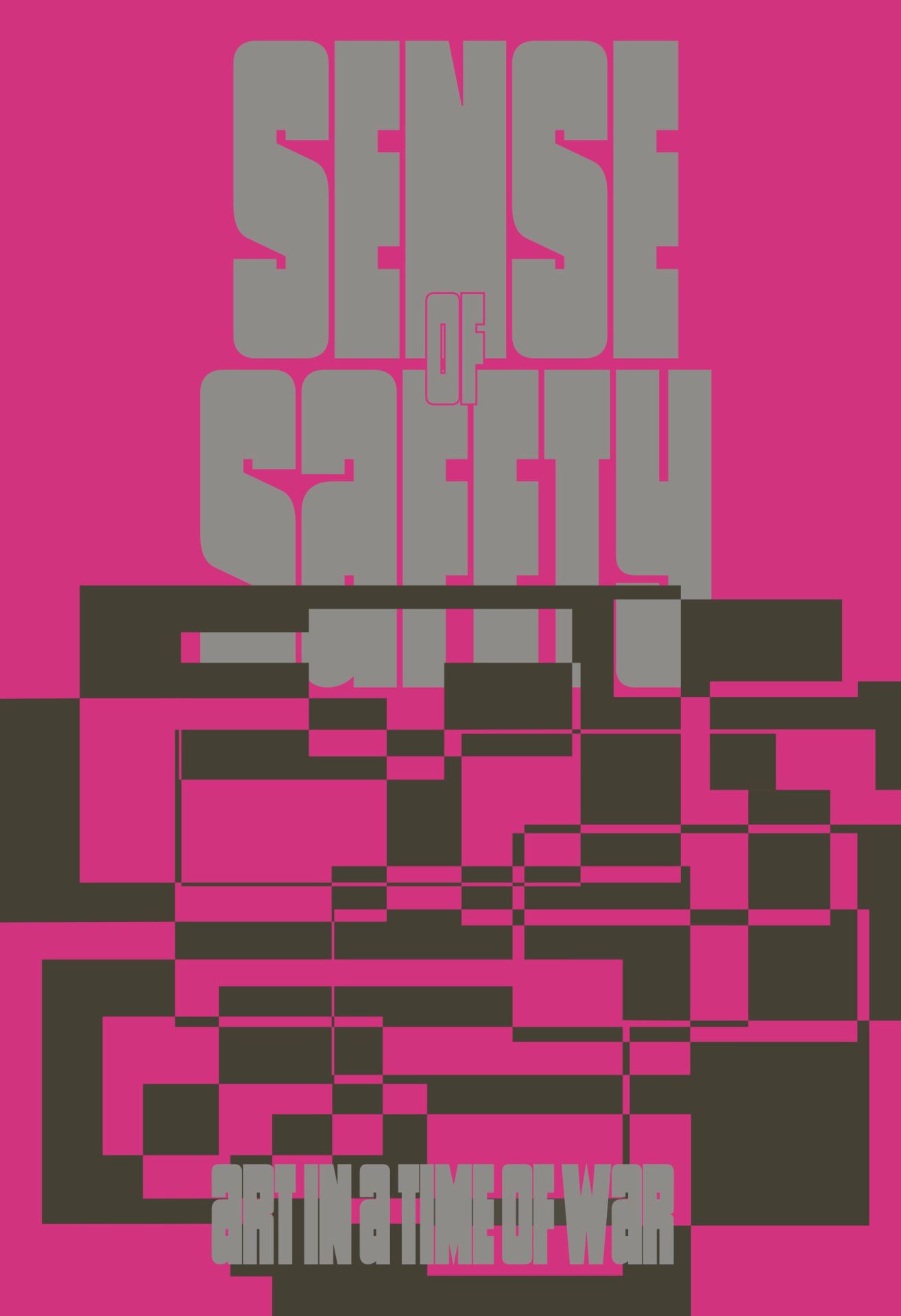
The publication continues the international art project Sense of Safety, which took place in 2024 at the YermilovCentre in Kharkiv and was organized by antiwarcoalition.art together with the Ambasada Kultury. The exhibition brought together more than 30 Ukrainian and international artists and became part of the broader Bridges of Solidarity network, with events in various countries. The project engaged with themes of safety, war, vulnerability, and solidarity in a city living under constant threat of shelling. The book gathers documentation, texts, and visual materials from this project.
Maxim Zhbankov's book on "ShockingCult" is being released
Cultural critic and film scholar Maxim Zhbankov is preparing a book, "ShockingCult. The Book of Changes," with the publishing house "Mnye Nyama" ("I'm Not Here"). The collection includes selected texts from the author's YouTube project of the same name, dedicated to analyzing sociocultural processes since 2020. According to the publisher, the print run is expected in early July 2026.
The publication continues the international art project Sense of Safety, which took place in 2024 at the YermilovCentre in Kharkiv and was organized by antiwarcoalition.art together with the Ambasada Kultury. The exhibition brought together more than 30 Ukrainian and international artists and became part of the broader Bridges of Solidarity network, with events in various countries. The project engaged with themes of safety, war, vulnerability, and solidarity in a city living under constant threat of shelling. The book gathers documentation, texts, and visual materials from this project.
Maxim Zhbankov's book on "ShockingCult" is being released
Cultural critic and film scholar Maxim Zhbankov is preparing a book, "ShockingCult. The Book of Changes," with the publishing house "Mnye Nyama" ("I'm Not Here"). The collection includes selected texts from the author's YouTube project of the same name, dedicated to analyzing sociocultural processes since 2020. According to the publisher, the print run is expected in early July 2026.
The art book Rattus Sapiens received bronze at the European Design Awards
The art book "Rattus Sapiens" by Belarusian photographer Maria Karneenka received bronze at the European Design Awards 2026 in the Artistic Catalogue Layout category. The book was published by the independent Belarusian publishing house TAMAKA, designed by Polish designer Ania Nałęcka-Milach, with texts written by Tatsiana Zamirovskaya.
The art book Rattus Sapiens received bronze at the European Design Awards
The art book "Rattus Sapiens" by Belarusian photographer Maria Karneenka received bronze at the European Design Awards 2026 in the Artistic Catalogue Layout category. The book was published by the independent Belarusian publishing house TAMAKA, designed by Polish designer Ania Nałęcka-Milach, with texts written by Tatsiana Zamirovskaya.
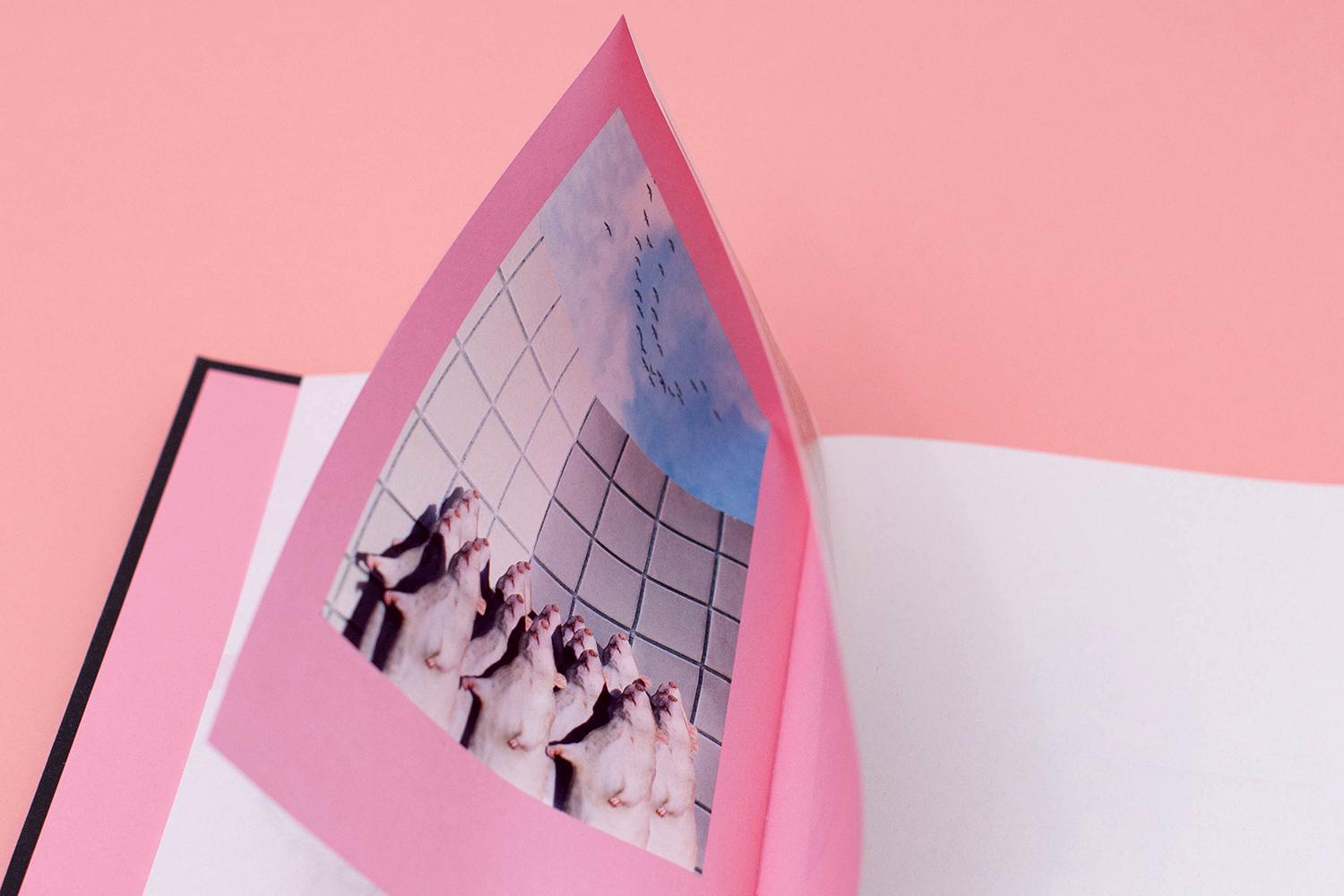
"Rattus Sapiens" begins with a simple shift in perspective: what if another intelligent civilization had always existed alongside us, one we only ever glimpsed through fears, superstitions, and urban myths? Karneenka works with photography, collage, sculpture, and illustration, assembling the world of the rat burrow as a labyrinth of hints, half-truths, and quasi-scientific evidence. You can read more about the publication, as well as about the TAMAKA publishing house in general, on our pages.
Belarusian-Jewish Center launches fundraiser for board game "Shtetl"
The Center for Belarusian-Jewish Cultural Heritage has launched a Kickstarter campaign to fund the publication of the board game "Shtetl," dedicated to the history of Jewish towns on the territory of Belarus. The visual world of the new board game was created by Vasil Hryno, a contemporary artist who worked for a long time for Disney and Vulica Brazil. The project is already prepared for print, and the crowdfunding is needed to cover the first print run.
«Rattus Sapiens» пачынаецца з простага зруху оптыкі: што, калі побач з намі заўсёды існавала іншая разумная цывілізацыя, якую мы бачылі толькі праз страхі, забабоны і гарадскія міфы? Карнеенка працуе з фатаграфіяй, калажам, скульптурай і ілюстрацыяй, збіраючы свет пацучай нары як лабірынт намёкаў, паўпраўдаў і квазінавуковых доказаў. Пачытаць падрабязней пра выданне, а таксама агулам выдавецтва ТАМАКА можна на нашых старонках.
Беларуска-габрэйскі цэнтр запусціў збор на настольную гульню «Штэтл»
Цэнтр беларуска-габрэйскай культурнай спадчыны запусціў на Kickstarter збор на выданне настольнай гульні «Штэтл», прысвечанай гісторыі габрэйскіх мястэчак на тэрыторыі Беларусі. За візуальны сусвет новай настолкі адказваў Васіль Грыно — сучасны мастак, які доўгі час працаваў для Disney и Vulica Brazil. Праект ужо падрыхтаваны да друку, а краўдфандынг патрэбны для выпуску першага накладу.
«Rattus Sapiens» пачынаецца з простага зруху оптыкі: што, калі побач з намі заўсёды існавала іншая разумная цывілізацыя, якую мы бачылі толькі праз страхі, забабоны і гарадскія міфы? Карнеенка працуе з фатаграфіяй, калажам, скульптурай і ілюстрацыяй, збіраючы свет пацучай нары як лабірынт намёкаў, паўпраўдаў і квазінавуковых доказаў. Пачытаць падрабязней пра выданне, а таксама агулам выдавецтва ТАМАКА можна на нашых старонках.
Беларуска-габрэйскі цэнтр запусціў збор на настольную гульню «Штэтл»
Цэнтр беларуска-габрэйскай культурнай спадчыны запусціў на Kickstarter збор на выданне настольнай гульні «Штэтл», прысвечанай гісторыі габрэйскіх мястэчак на тэрыторыі Беларусі. За візуальны сусвет новай настолкі адказваў Васіль Грыно — сучасны мастак, які доўгі час працаваў для Disney и Vulica Brazil. Праект ужо падрыхтаваны да друку, а краўдфандынг патрэбны для выпуску першага накладу.
«Rattus Sapiens» пачынаецца з простага зруху оптыкі: што, калі побач з намі заўсёды існавала іншая разумная цывілізацыя, якую мы бачылі толькі праз страхі, забабоны і гарадскія міфы? Карнеенка працуе з фатаграфіяй, калажам, скульптурай і ілюстрацыяй, збіраючы свет пацучай нары як лабірынт намёкаў, паўпраўдаў і квазінавуковых доказаў. Пачытаць падрабязней пра выданне, а таксама агулам выдавецтва ТАМАКА можна на нашых старонках.
Беларуска-габрэйскі цэнтр запусціў збор на настольную гульню «Штэтл»
Цэнтр беларуска-габрэйскай культурнай спадчыны запусціў на Kickstarter збор на выданне настольнай гульні «Штэтл», прысвечанай гісторыі габрэйскіх мястэчак на тэрыторыі Беларусі. За візуальны сусвет новай настолкі адказваў Васіль Грыно — сучасны мастак, які доўгі час працаваў для Disney и Vulica Brazil. Праект ужо падрыхтаваны да друку, а краўдфандынг патрэбны для выпуску першага накладу.
"Rattus Sapiens" begins with a simple shift in perspective: what if another intelligent civilization had always existed alongside us, one we only ever glimpsed through fears, superstitions, and urban myths? Karneenka works with photography, collage, sculpture, and illustration, assembling the world of the rat burrow as a labyrinth of hints, half-truths, and quasi-scientific evidence. You can read more about the publication, as well as about the TAMAKA publishing house in general, on our pages.
Belarusian-Jewish Center launches fundraiser for board game "Shtetl"
The Center for Belarusian-Jewish Cultural Heritage has launched a Kickstarter campaign to fund the publication of the board game "Shtetl," dedicated to the history of Jewish towns on the territory of Belarus. The visual world of the new board game was created by Vasil Hryno, a contemporary artist who worked for a long time for Disney and Vulica Brazil. The project is already prepared for print, and the crowdfunding is needed to cover the first print run.

In the game, participants develop their own shtetl, build up a community, construct houses, and go through events connected to life in multiethnic Belarus. The project is based on archival materials and historical prototypes, an attempt to translate the conversation about Jewish heritage into the format of a cultural board game.
A new podcast about contemporary art has appeared — Belarusian cultural figures launch "Suchart" («Сучарт»)
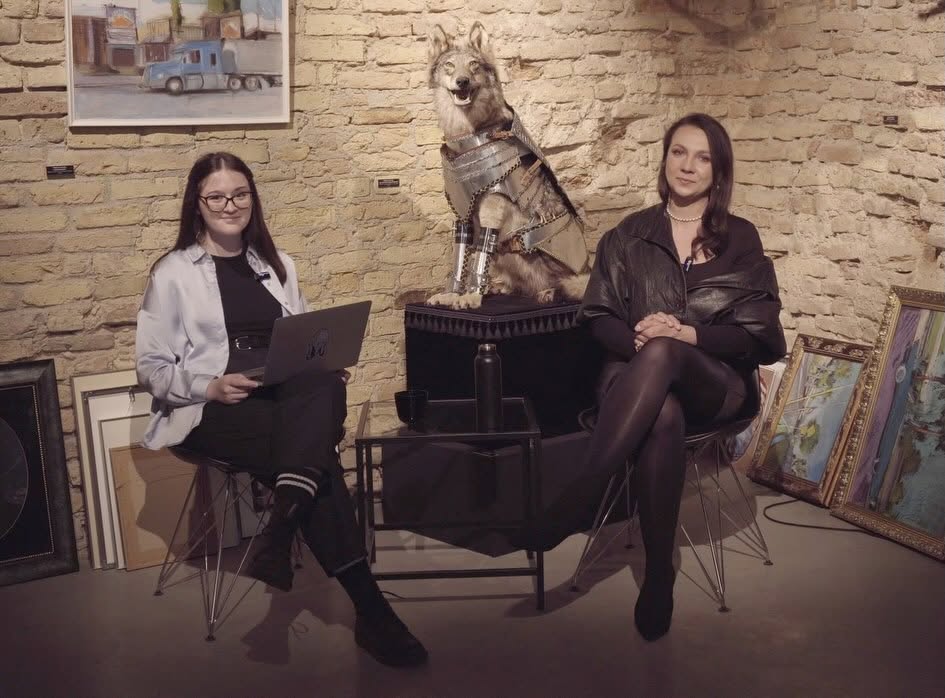
A podcast about contemporary art in the Belarusian and international context has appeared on YouTube. In the pilot episode, the hosts — Chrysalis Mag editor-in-chief and art journalist Palina Yurhenson, and interdisciplinary artist and curator Sviatlana Piatushkova — discuss a possible discovery of an unknown painting by Yazep Drazdovich, Dalí in Minsk, and forgeries in Belarusian museums.
The podcast can already be watched on the channel of the same name, and you can read more about the new project on the pages of 34mag.
In the game, participants develop their own shtetl, build up a community, construct houses, and go through events connected to life in multiethnic Belarus. The project is based on archival materials and historical prototypes, an attempt to translate the conversation about Jewish heritage into the format of a cultural board game.
A new podcast about contemporary art has appeared — Belarusian cultural figures launch "Suchart" («Сучарт»)
A podcast about contemporary art in the Belarusian and international context has appeared on YouTube. In the pilot episode, the hosts — Chrysalis Mag editor-in-chief and art journalist Palina Yurhenson, and interdisciplinary artist and curator Sviatlana Piatushkova — discuss a possible discovery of an unknown painting by Yazep Drazdovich, Dalí in Minsk, and forgeries in Belarusian museums.
The podcast can already be watched on the channel of the same name, and you can read more about the new project on the pages of 34mag.
Text author: Liza Maslenchanka
Reprinting of the material or fragments of the material is possible only with the written permission of the editorial team.
If you have noticed an error or would like to suggest an addition to the published materials, please let us know.
Text author: Liza Maslenchanka
Reprinting of the material or fragments of the material is possible only with the written permission of the editorial team.
If you have noticed an error or would like to suggest an addition to the published materials, please let us know.
SHARE:
Read More


САЧЫЦЕ ЗА НАМI
INSTAGRAM LINKEDIN TELEGRAM TIKTOK FACEBOOK YOUTUBE
© 2026 Chrysalis Mag. Усе правы абаронены.
САЧЫЦЕ ЗА НАМI
INSTAGRAM LINKEDIN TELEGRAM TIKTOK FACEBOOK YOUTUBE
© 2026 Chrysalis Mag. Усе правы абаронены.
САЧЫЦЕ ЗА НАМI
INSTAGRAM LINKEDIN TELEGRAM TIKTOK FACEBOOK YOUTUBE
© 2026 Chrysalis Mag. Усе правы абаронены.
САЧЫЦЕ ЗА НАМI
INSTAGRAM LINKEDIN TELEGRAM TIKTOK FACEBOOK YOUTUBE
© 2026 Chrysalis Mag. Усе правы абаронены.