
“Our history is a pure white blank space that we all fill in together.” VEHA releases a new book, Ruins of Belarus
Interview, 16.12.2025
Photographs have always been used to preserve memory—not only of past events, but also of the people who lived through them. The VEHA Archive, founded by Lesia Pcholka in 2017, has become one of those independent cultural movements striving to collect this “everyday history” and return it to the shared cultural code. Over eight years of work, the archive has held dozens of exhibitions and published several significant editions: The Best Side, Hen Party, The Last Photograph, and People of the Forest.
This year, VEHA, together with The Belarusian Cultural Center in Białystok, released a new book—Ruins of Belarus. The publication marks another step in exploring the Belarusian past through visual memory and photographs of ruins from different regions, drawn from archives, museums, and people’s personal collections. On this occasion, we spoke with Lesia Pcholka.
SHARE:
How was the new book created?
Work on Ruins of Belarus began back in 2023, but the active collection of materials took place primarily this year. A large number of people were involved in the creation of the book: experts from various fields worked on proofreading and translations (the book was translated into three languages: Belarusian, English, and Polish).
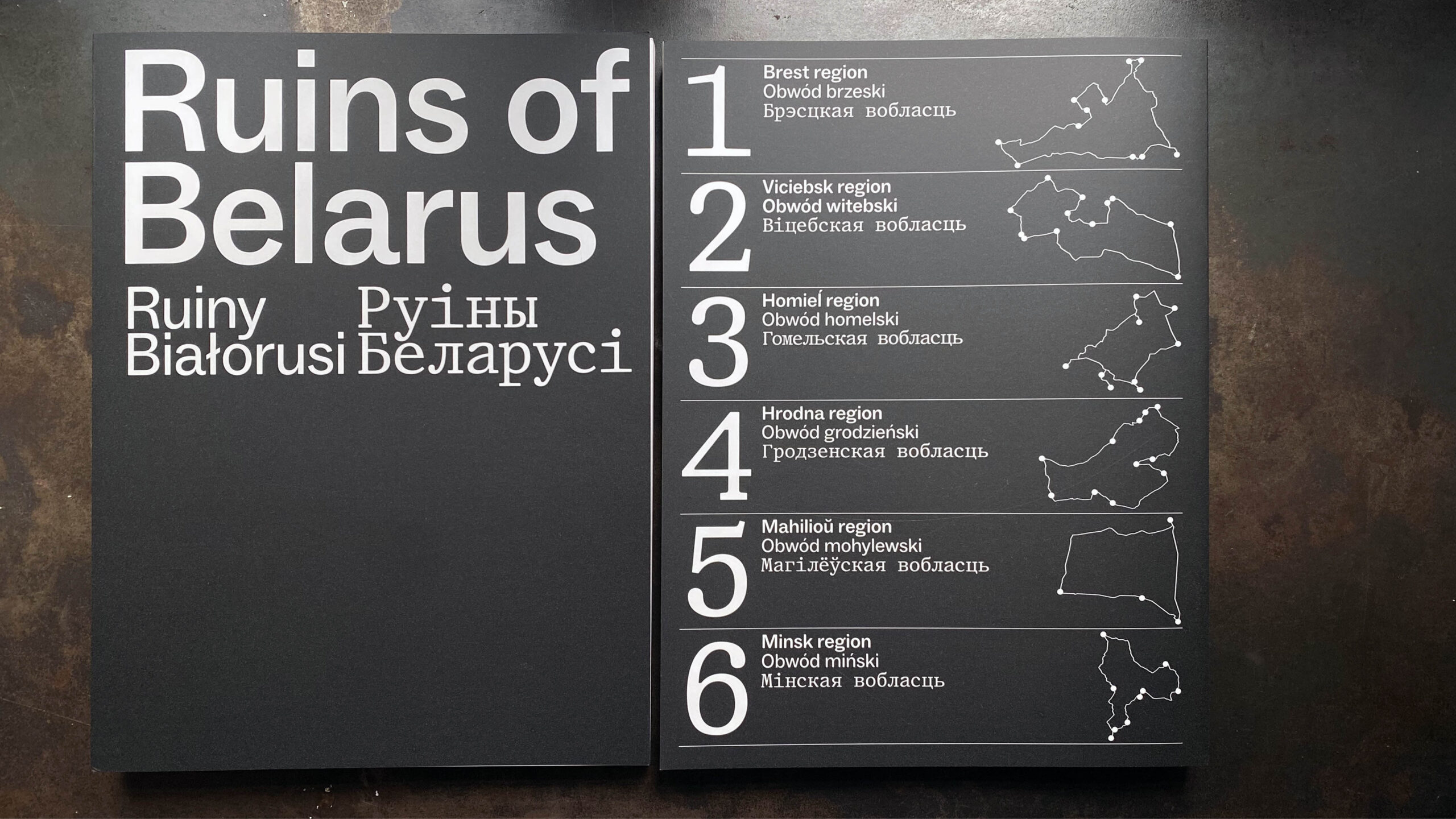
The appearance of the new book "Ruins of Belarus" from the VEHA archive / photo provided by the VEHA team / 2025.
VEHA’s founder, Lesia Pcholka, worked with the photographs and the main stages of preparing and presenting the project, while her colleague Asya Hmyz handled the cataloguing of photographs and also wrote all the accompanying texts about the buildings. An important role was also played by the artist who wrote the essay for the book—Uladzimir Hramovich. As Lesya notes, he also inspired the VEHA team to work with this collection. In his text, Hramovich reflects on religious institutions and on ways of interpreting heritage that has not been fully preserved.
It is worth noting that this book was published in collaboration with The Belarusian Cultural Center in Białystok, which is a very important milestone for VEHA, as previously they had been engaged exclusively in self-publishing.
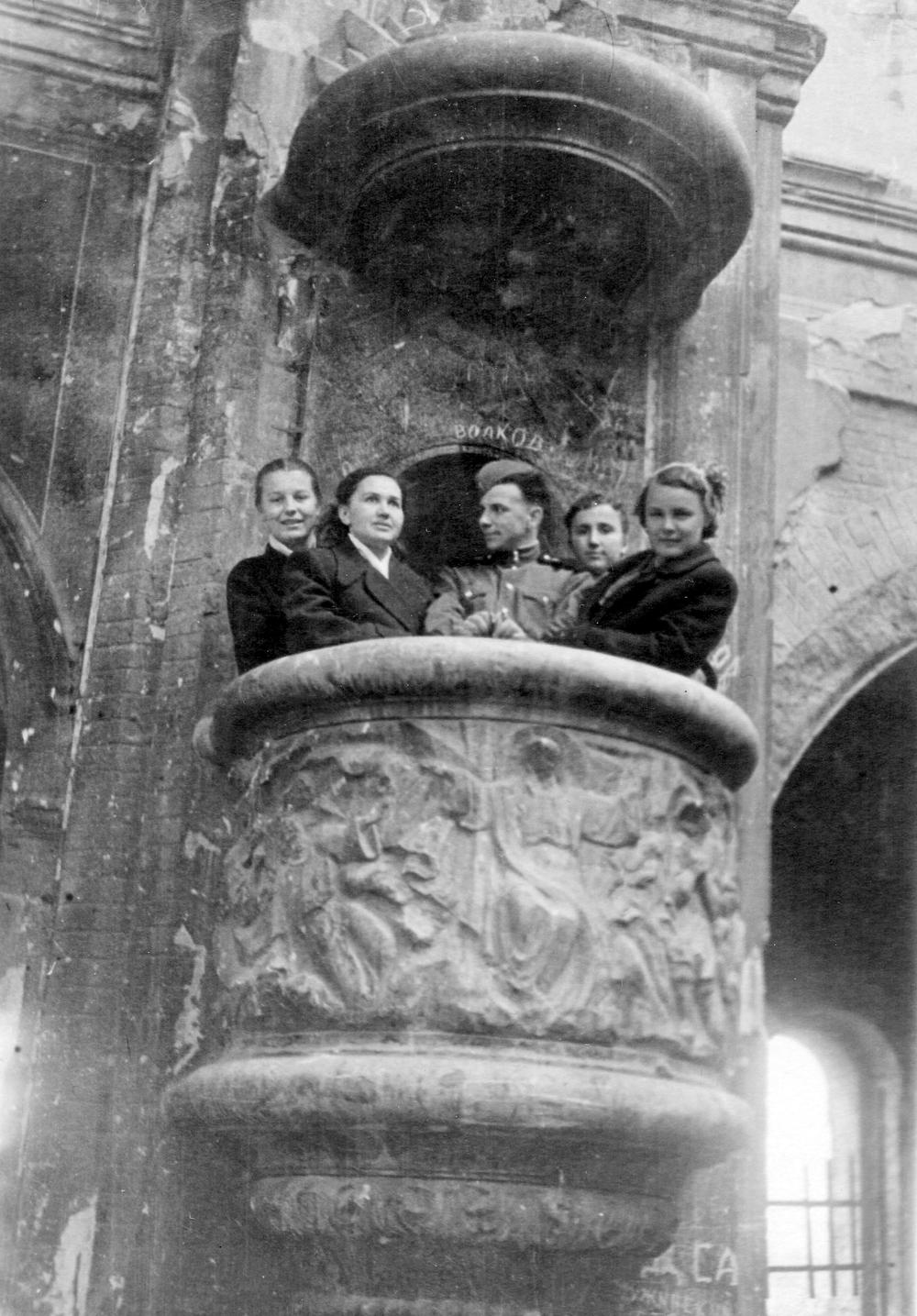
1950s, Brest. Youth on the pulpit in the Church of St. Casimir in the Brest Fortress (built as an Orthodox St. Nicholas Cathedral, in 1919 reconsecrated as a Catholic and rebuilt, damaged during World War II, in 1991 returned to the Orthodox Church, restored to a form close to its original). Provided by Jaŭhien Mšar. From the VEHA archive, ״Ruins of Belarus״ collection.
Details from family archives and the first institutional refusals
The main focus when selecting materials for Ruins of Belarus was photographs from private family photo archives. That is, despite the fact that the book is dedicated to ruined buildings, the main narrative is still built around people and their stories. In this sense, the book shows not only the geography of ruins, but also the geography of memory.
Answering the question about which behind-the-scenes stories impress her the most, Lesia emphasizes that for her it is not individual examples that matter, but the entire body of material and how it works as a whole.
“I can’t single out one or two specific stories. For me, it’s always a collective process,” she explains. “We know well what family archives usually consist of: hundreds of selections have passed through our hands, and these patterns often repeat—weddings, funerals, holidays, trips. But the most interesting part begins when you observe how, while working with specific materials, the original concept of the collection changes, how the idea itself begins to transform.”
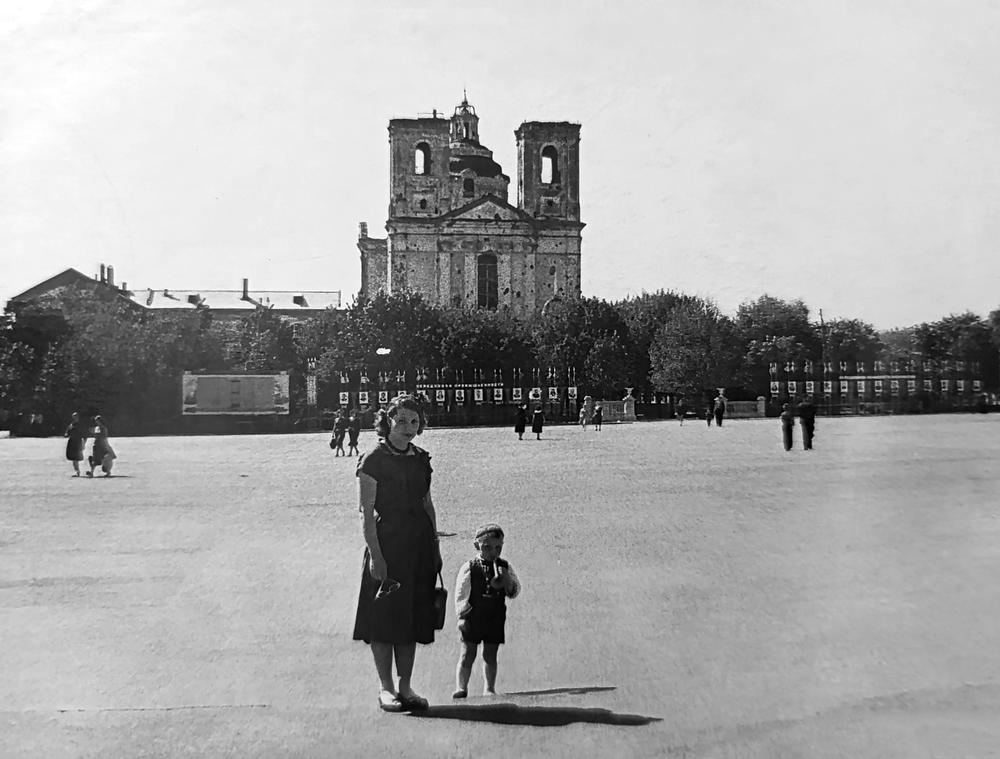
1936-1964, Połack, Vitsebsk Region. A woman and a child against the backgound of St. Stephen's Church (towers were dismantled in 1936, blown up by the Soviet authorities in 1964). Provided by Vadzim Citoŭ. From the VEHA archive, ״Ruins of Belarus״ collection.
For example, during work on the project Hen Party, the initial idea revolved around women’s communication and support. However, the photographs lacked what could directly reflect this idea, so the collection was supplemented with The Last Photograph, and the publication came out as a two-volume edition comparing wedding and funeral rituals. In Ruins of Belarus, the process was similar: the team had certain expectations, but the specific images people submitted shifted the emphases and focus.
“Working with everyday history teaches you to look at details and notice what people usually overlook. In an ordinary group photo, it may suddenly stand out that barefoot people were placed in the second row. Coats may have mismatched buttons, indicating scarcity. These small details reveal social status, difficult living conditions, and inequality in access to resources. For 20th-century Belarus this is especially tangible: the number of preserved photographs is significantly smaller compared to neighboring countries, so every frame gains particular weight and value,” Lesia notes.
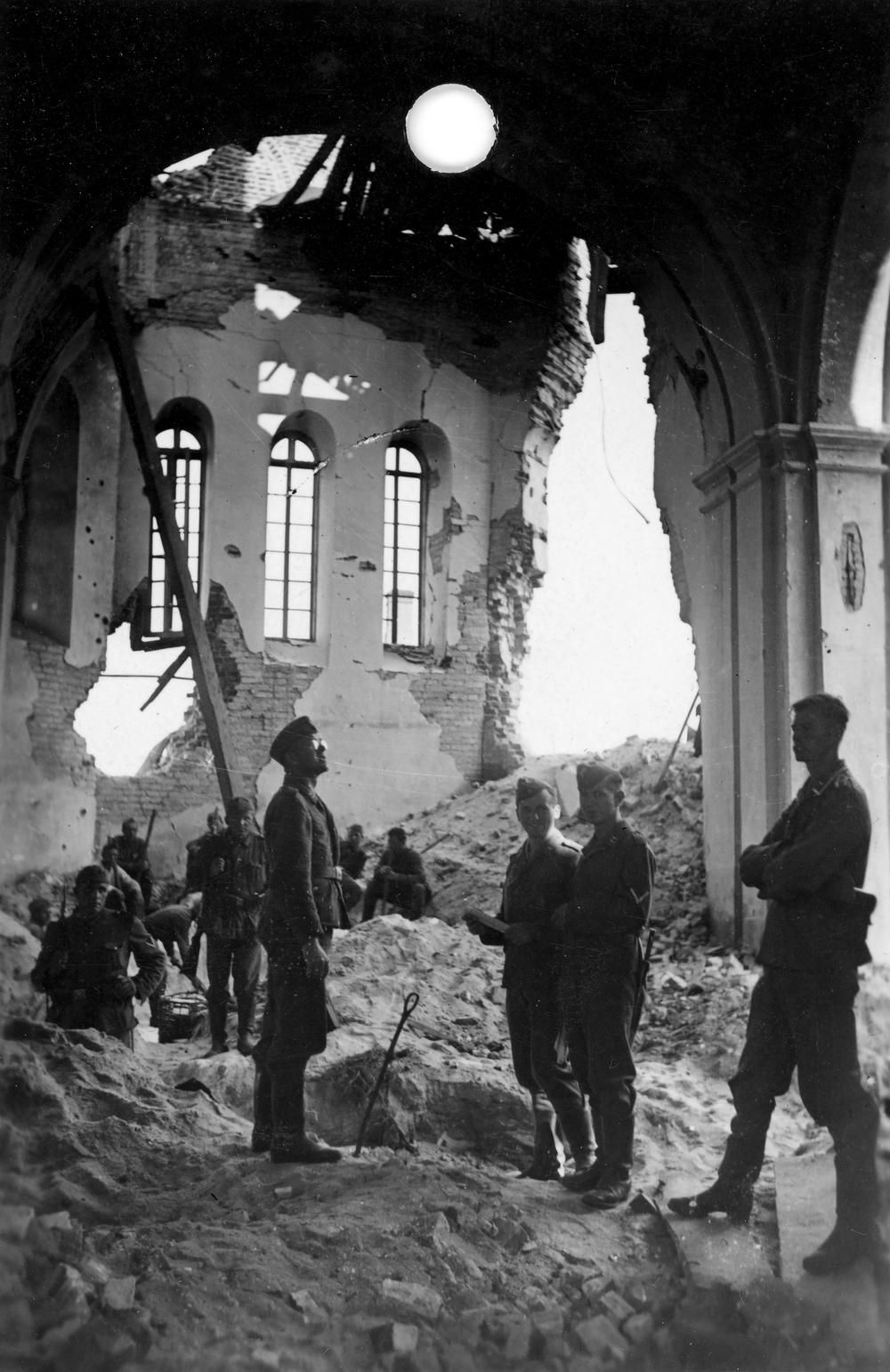
1941, Rahačoŭ, Homieĺ Region. Church of St. Alexander Nevsky (damaged by artillery fire, finally lost after 1944). Provided by Uladzimir Hramovič. From the VEHA archive, ״Ruins of Belarus״ collection.
In addition to family archives, VEHA also used resources from Belarusian and foreign institutions in Poland, Lithuania, and Russia for the new publication. Alongside unique discoveries, the team also encountered its first experiences of refusal to cooperate.
“We contacted an archive in Russia: they have their own photograph of the Kalozha Church with a person in it, a fairly well-known image, but it is part of their collection. After lengthy negotiations, they set conditions we could not agree to,” Lesia Pcholka shares.
In another case, a museum in Lublin requested payment for the use of photographs that had previously been available free of charge, while an institution in Lithuania refused even a request for a single image and asked not to be contacted again. Despite these difficulties, the team plans to continue working with European archives on future projects—just, as Lesia notes, they will be better prepared for such situations.
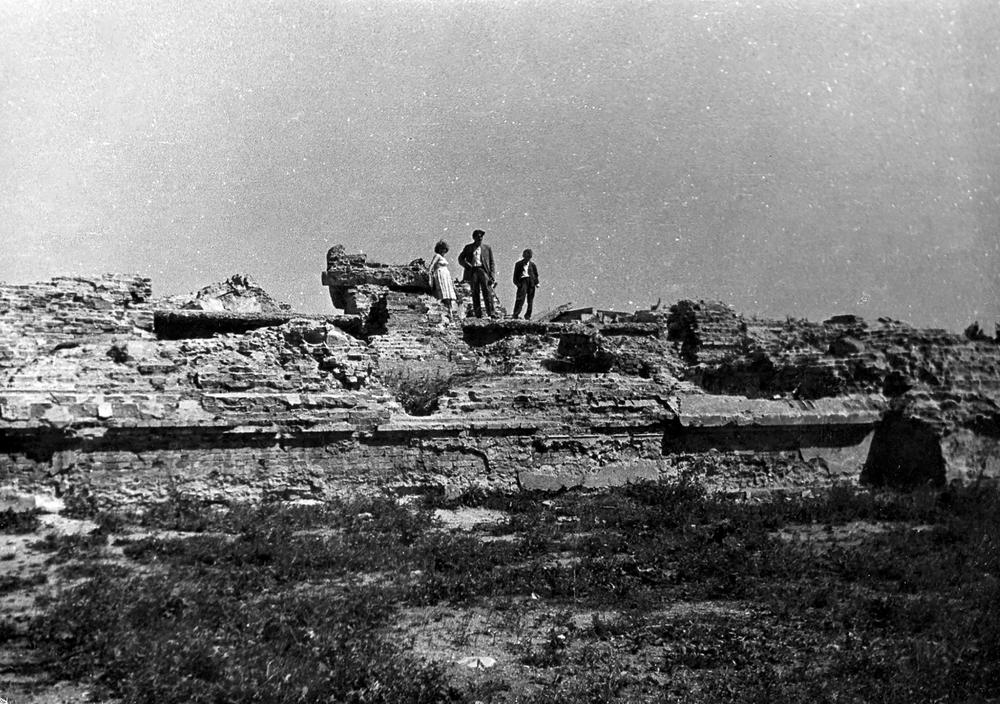
1960s, Brest. Zinaida, Viktar and Hienadź Bierazoŭski at the ruins of the Brest Fortress (heavily damaged during the First and Second World Wars, since 1971 houses a museum complex with partially preserved remains of the fortress). Provided by Dzijana Pinčuk. From the VEHA archive, ״Ruins of Belarus״ collection.
The geography of the book
Another distinctive feature of Ruins of Belarus, according to Lesia, is the geographical inequality of the archival field. According to the founder of VEHA, the eastern regions of the country remain the most problematic.
“The Mahilioŭ region is pain. The Homiel region also has a very limited number of sources. Viciebsk looks a bit better, but there is still not enough material. At the same time, the Brest and Hrodna regions provide a rich visual layer: it is easier to find both archival and family photographs there.”
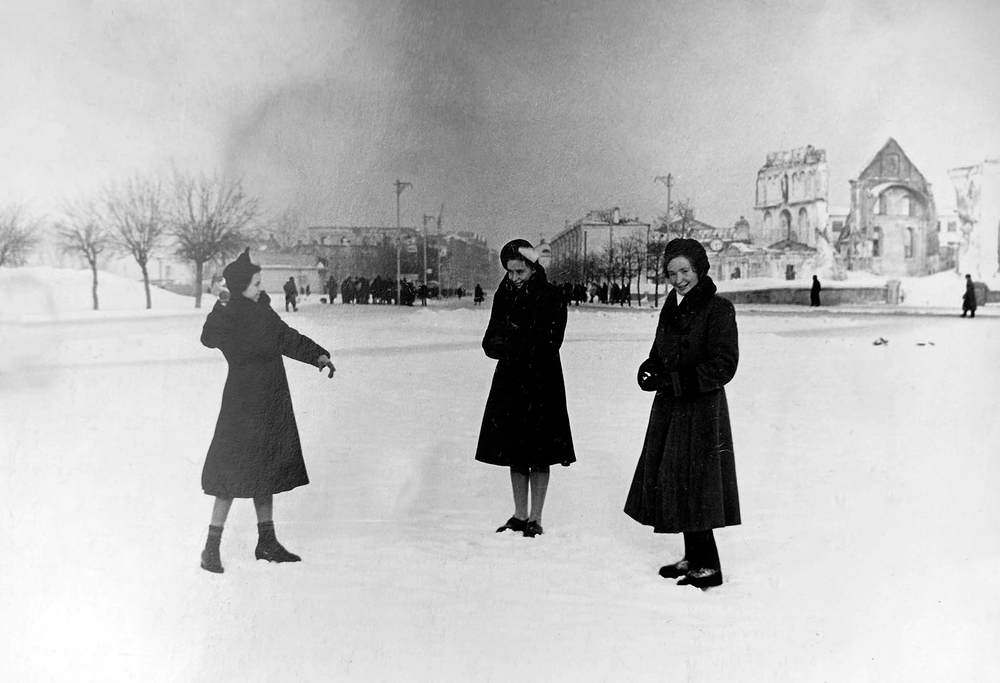
Late1940s - early 1950s, Mahilioŭ. Girls against the background of the Epiphany Orthodox Church (since the 1920s the building housed the central archive of the BSSR, finally demolished after World War II). Provided by Liudmila Hryšanava; from the family album of L.I. Jakuboŭskaja, rom the funds of the church-archaeological office of the Spiritual and Еducational Сenter of the Mahilioŭ Diocese.From the VEHA archive, ״Ruins of Belarus״ collection.
In this situation, VEHA is trying to become an alternative database that researchers, artists, and journalists can turn to. But archival work is only possible when people are willing to share materials. Throughout the interview, Lesia emphasizes the importance of understanding the value of one’s own archives.
“For VEHA, it’s not essential that all photographs be handed over to the archive; what matters is that they do not disappear at all. People can scan photos themselves and upload them to thematic groups, local pages, or open communities. The main thing is the awareness that even a single image can matter for shared history. It’s important simply to acknowledge that what people have now is important. So let them at least not lose or throw away these archives and remember that their photographs will one day be very valuable.”
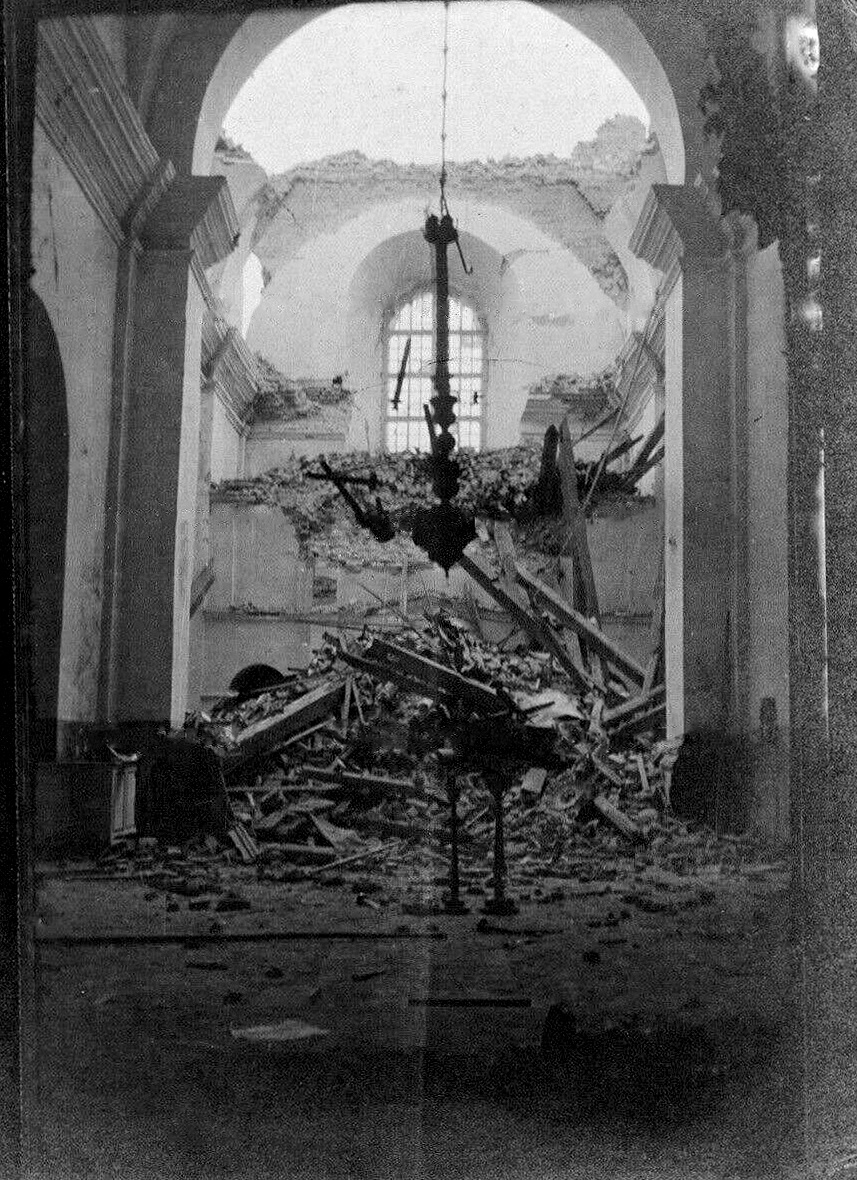
1915, Bycień, Ivacevičy District, Brest Region. Interior of the Church of St. Josaphat (blown up by retreating Russian troops during the First World War, finally demolished after the Second World War). Provided by Jaŭhien Mšar. From the VEHA archive, ״Ruins of Belarus״ collection.
Ruins as a language of interpretation
The book’s foreword states that ruins can become a metaphorical foundation for new Belarusian institutions. In this context, Lesia explains that this is not about copying ready-made models borrowed from other countries, but about reflecting on one’s own experience as it has historically developed. In her opinion, this is precisely what can become the basis for further movement—without attempts to catch up with or replicate foreign forms.
“For me, the concept of ruins is not something bad. They have all become part of our culture, and that does not mean we are worse than countries that, for example, were not reached by wars. Ruins also shape us and perhaps even strongly distinguish us from other countries.”
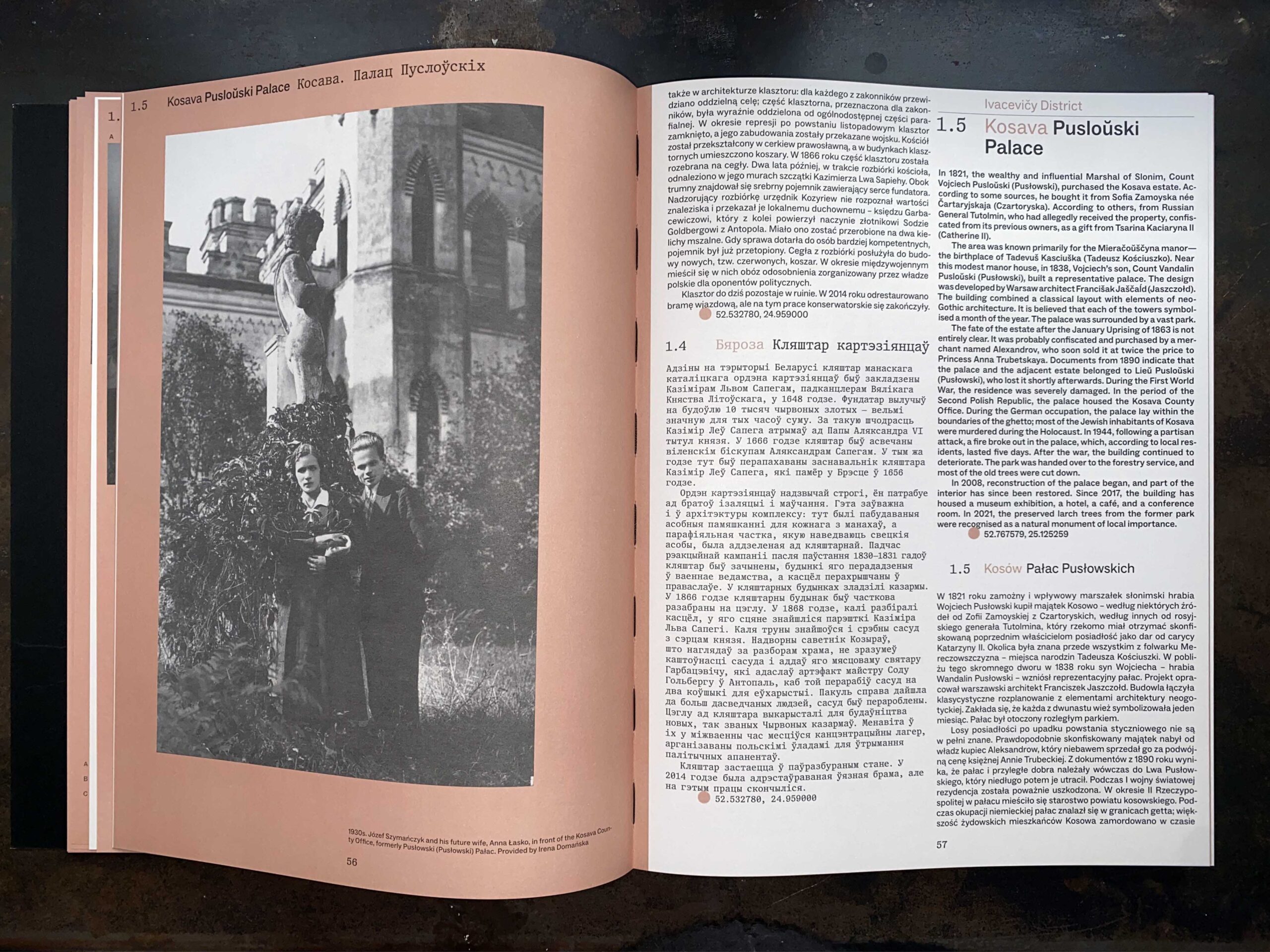
The appearance of the new book "Ruins of Belarus" from the VEHA archive / photo provided by the VEHA team / 2025.
When the conversation turns to how this book influences the perception of Belarusian identity, Lesia Pcholka avoids grand formulas. She emphasizes that VEHA is not an academic historical institution and does not claim to be the ultimate voice on the past. Rather, the archive offers one possible way of seeing history—through photographs that show how Belarusians in different eras related themselves to space.
“In this sense, Ruins of Belarus is not only a book about what has disappeared. It is a publication about what can still be named, seen, and returned to collective memory. And about how collective work with personal archives gradually turns into a new language through which Belarus tells its own story.”
So what is the main color of VEHA’s new book—and of our history of ruins in general? Lesia Pcholka answers:
“Our history is a pure white blank space that we all fill in together.”
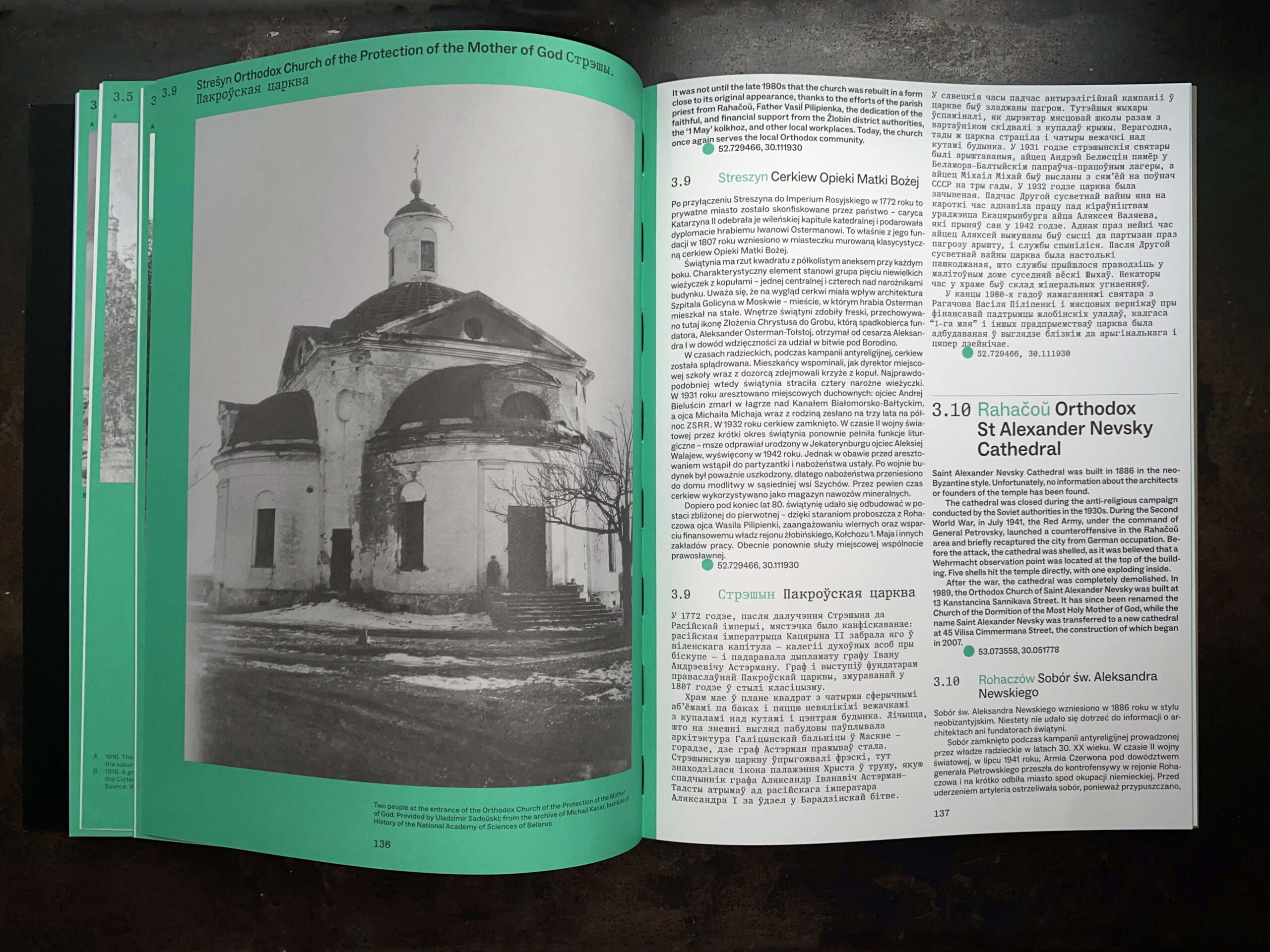
The appearance of the new book "Ruins of Belarus" from the VEHA archive / photo provided by the VEHA team / 2025.
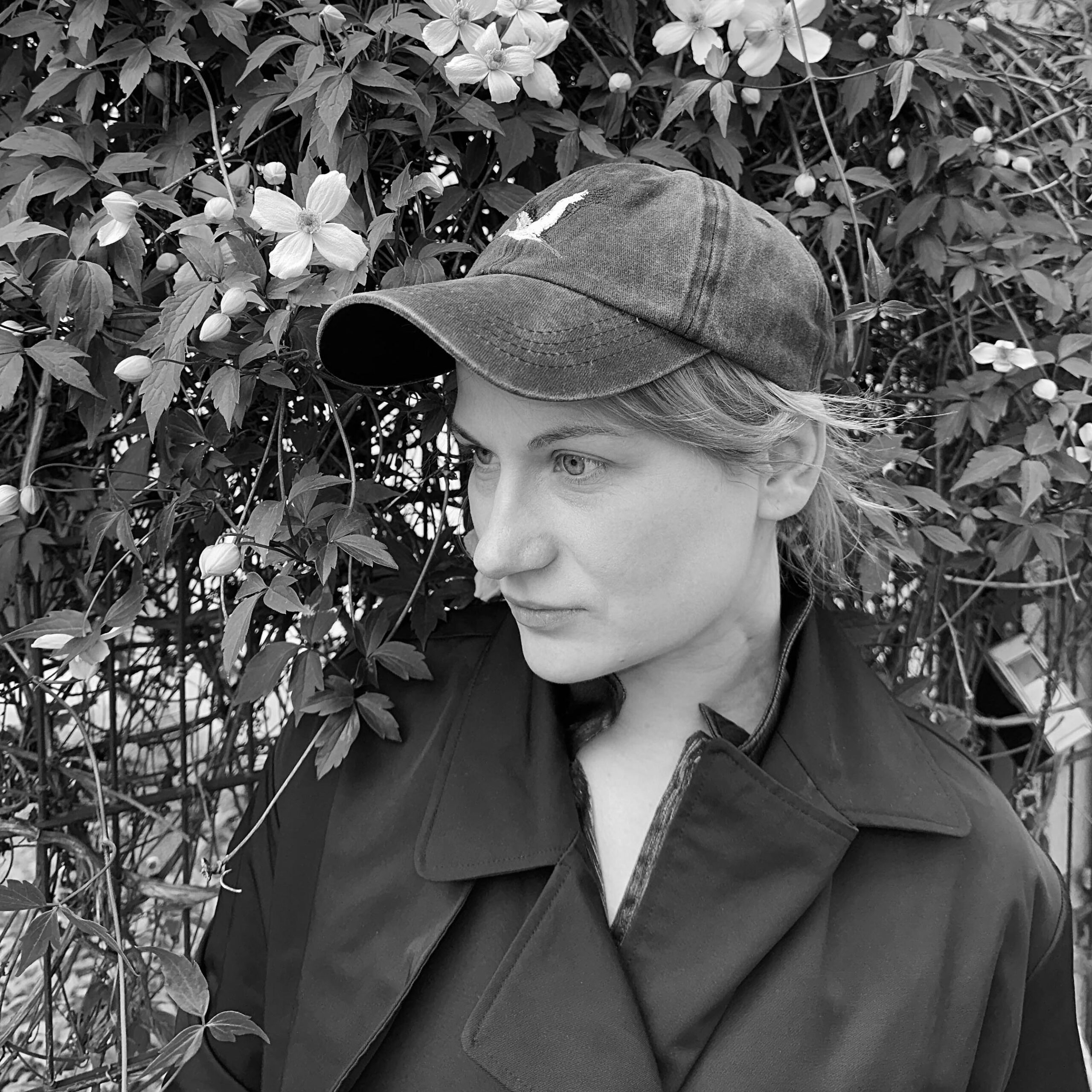
Lesia Pcholka is a visual artist born in Belarus,
currently lives and works in Berlin/DE and Bielsk Podlaski/PL. Founder and Director of the VEHA archive
Pcholka’s practice brings together archival methods, collective memoriesy, and historical continuities to show explore how the past shapes contemporary life in Belarus and beyond. Through photography, video, and installation, she explores the tension between official narratives and undocumented histories, focusing on voices often silenced. Her work situates Belarus within a broader comparative frame, tracing parallels with other authoritarian contexts while also probing spaces of resistance. Exile sharpens her attention to displacement, belonging, and fragile memory, while gender perspectives inform her sensitivity to embodied experience and power. By mobilizing community archives and approaches in experimental storytelling, Pcholka creates layered narratives that move between personal and political, private and collective — reimagining how histories can be remembered and resisted.
Photo on cover: 1960s, Brest. Zinaida, Viktar and Hienadź Bierazoŭski at the ruins of the Brest Fortress (heavily damaged during the First and Second World Wars, since 1971 houses a museum complex with partially preserved remains of the fortress). Provided by Dzijana Pinčuk. From the VEHA archive, ״Ruins of Belarus״ collection.
Also read


FOLLOW US
INSTAGRAM LINKEIN TELEGRAM TIKTOK FACEBOOK YOUTUBE
© 2026 Chrysalis Mag. All Rights Reserved.
FOLLOW US
INSTAGRAM LINKEIN TELEGRAM TIKTOK FACEBOOK YOUTUBE
© 2026 Chrysalis Mag. All Rights Reserved.