
What Belarusian Women Create Within the Traditional Art Forms
The Line | Interview, 26.11.2025
Insufficient funding, restrictive official thematic requirements, and a range of other constraints have shaped the challenging environment in which Belarusian art functions today. Despite these pressures, artists persist in expanding their technical and conceptual variety, both within the country and abroad. We spoke with women artists who are unafraid to experiment with new genres. What is missing in Belarusian sculpture? How might Belarusian graphic art be improved? And does a divide between “visible and invisible” art really exist? These questions are explored in the new interviews of The Line project.
SHARE:
Article content:
- “Belarus lacks sculpture that is diverse in expression, form, colour, and technique”. Volha Orsik
- “State-approved art in Belarus is nothing more than obedient kitsch”. Tatsiana Kandratsenka
- “Artists are inspired by tradition in different ways”. Maryia Syrakvash
- “Sculpture is all about expressing what I genuinely feel”. Hanna Miadzviedzieva
“Belarus lacks sculpture that is diverse in expression, form, colour, and technique”. Volha Orsik
One of the very few young female sculptors in Belarus, Volha Orsik also works in graphic art. She is currently revisiting earlier projects, though she recently completed three new wooden reliefs. “They relate to the topics of water and flow because at this stage of my life, I’m drawn to immersing myself in natural phenomena. Watching the flow of water, you can almost sense time physically — that is the association I have — and it feels as if I can suspend time within sculpture as well’', says Volha. “I feel a deep connection to Japanese culture and philosophy, and to the way Japanese people relate to nature’'.
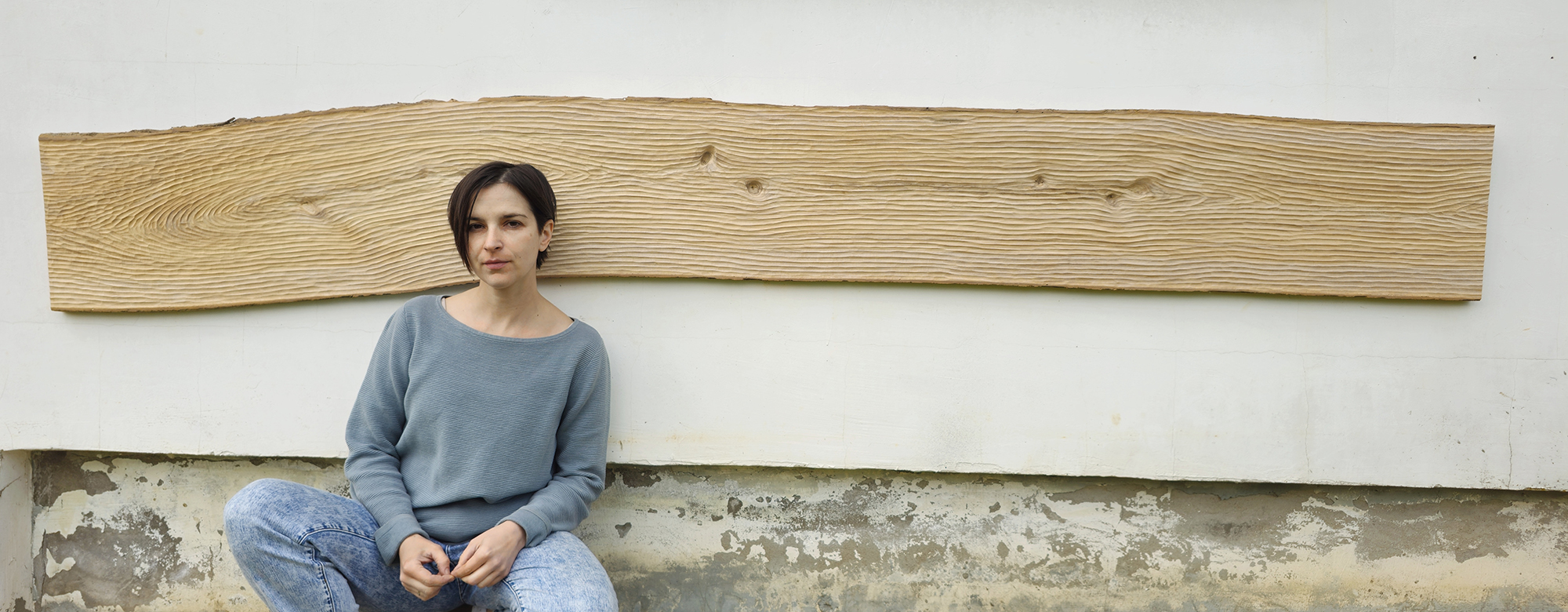
Volha Orsik / photo from the artist's personal archive.
Unlike painting, Volha remarks, sculpture requires significant time not only to formulate an idea but also to source appropriate materials. And even once a work is completed, it does not necessarily mean it will be exhibited: there is a severe shortage of exhibition places and galleries in Belarus, particularly compared to other countries.
Orsik notes that discussions about establishing a sculpture park in Belarus have been ongoing for decades, yet nothing has ever materialised. Overall, sculpture in Belarus remains scarce: “When I travel to places like Stockholm, Warsaw, or Italy, I see an enormous variety of sculpture, from realist to kinetic works. By contrast, Belarus lacks sculpture that is diverse in expression, form, colour, and technique. It exists, but only sporadically”.
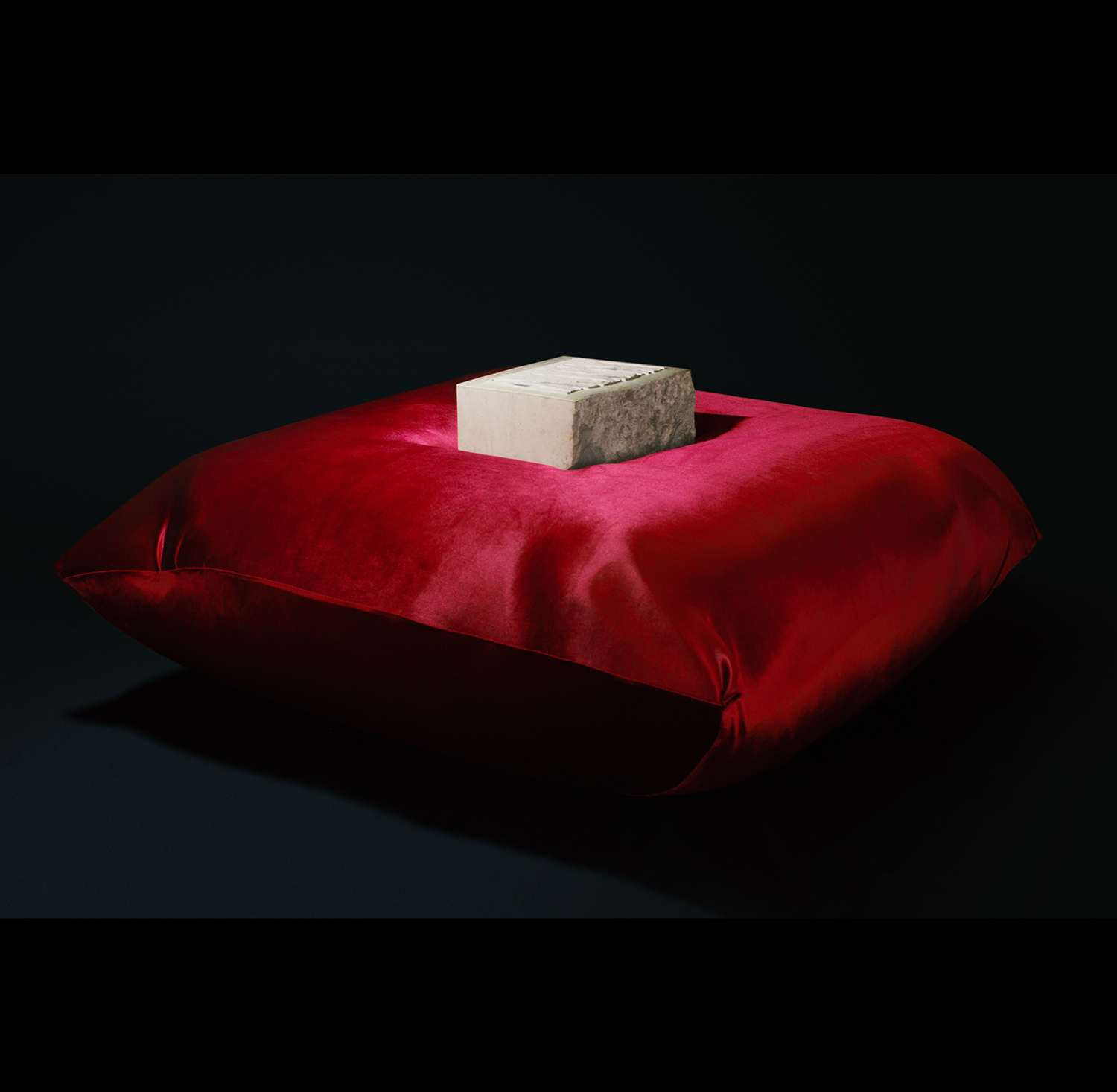
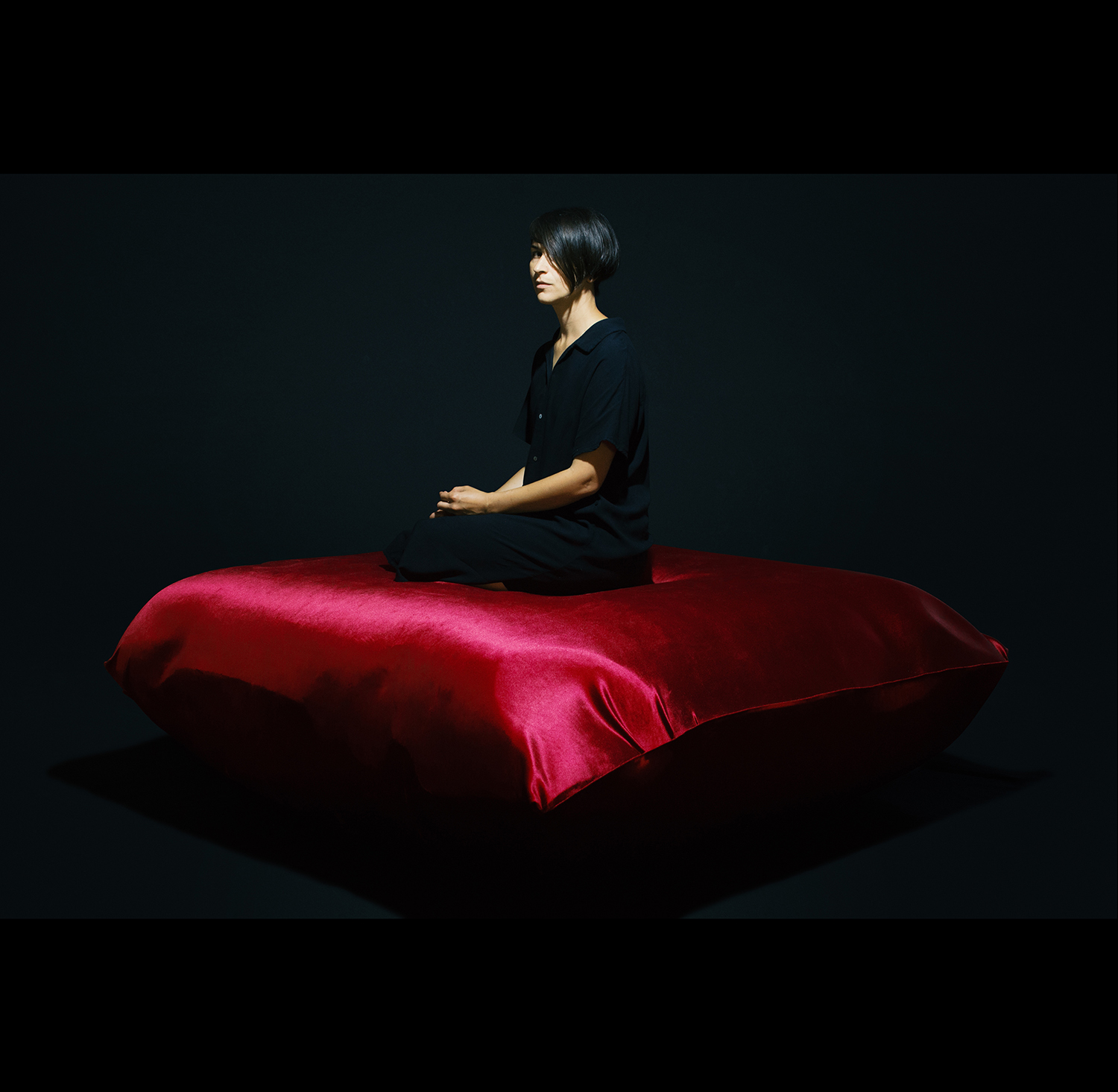
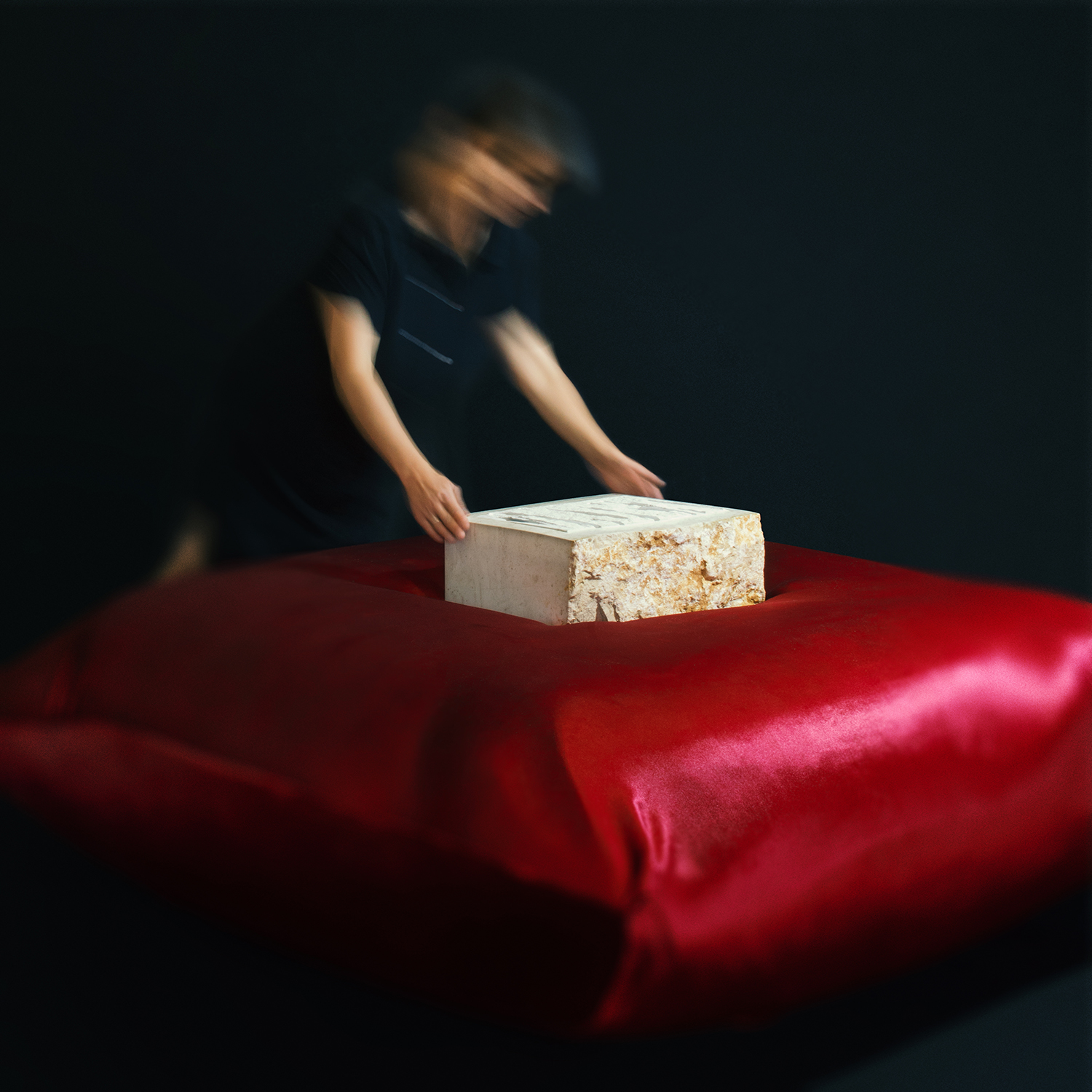
Works by Volha Orsik from the series "Jewelry" / limestone, polymer, fabric / 2024.
She adds that artistic development is often constrained by an excessive focus on audience expectations. Still, she names several Belarusian women artists worth following.
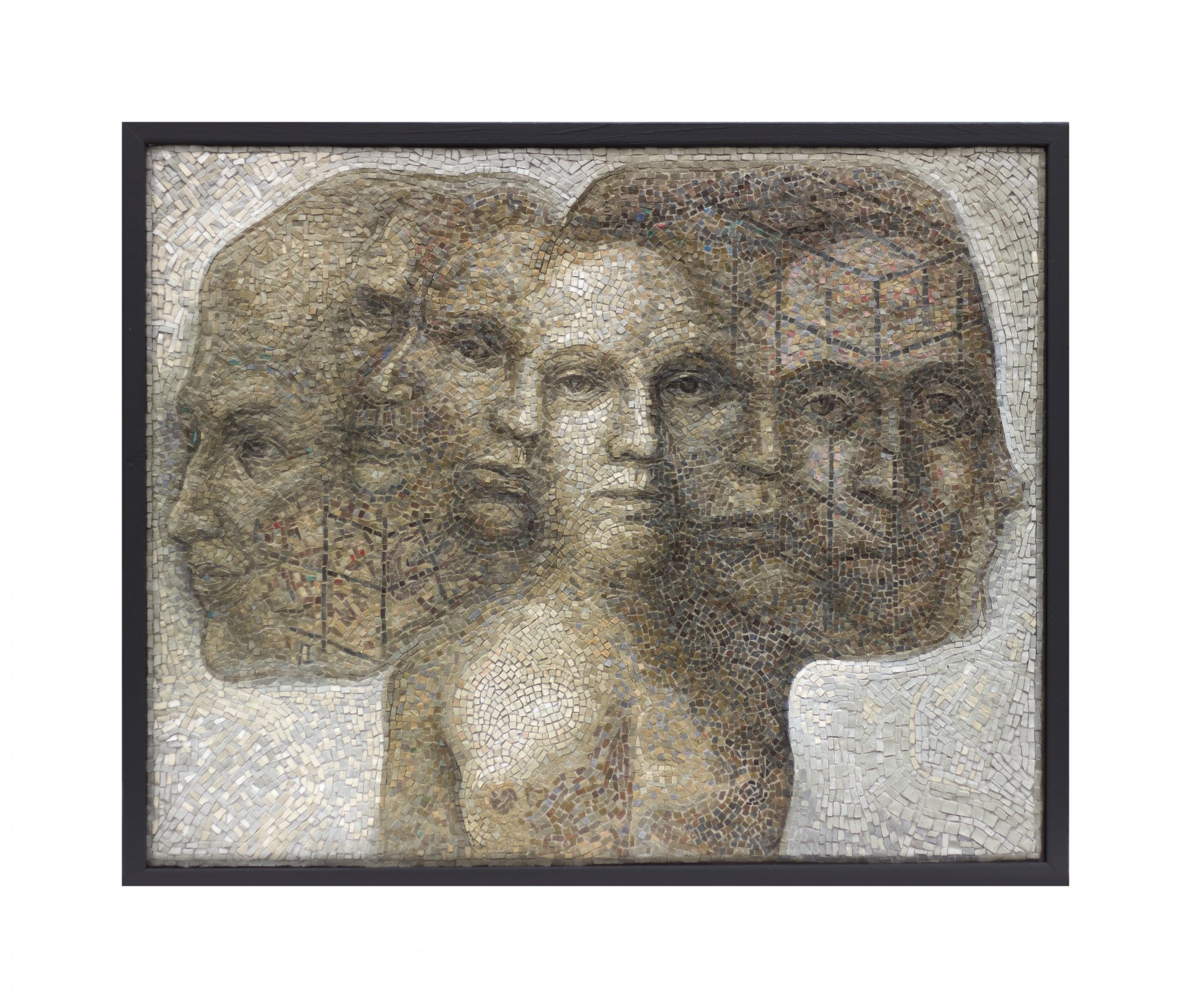
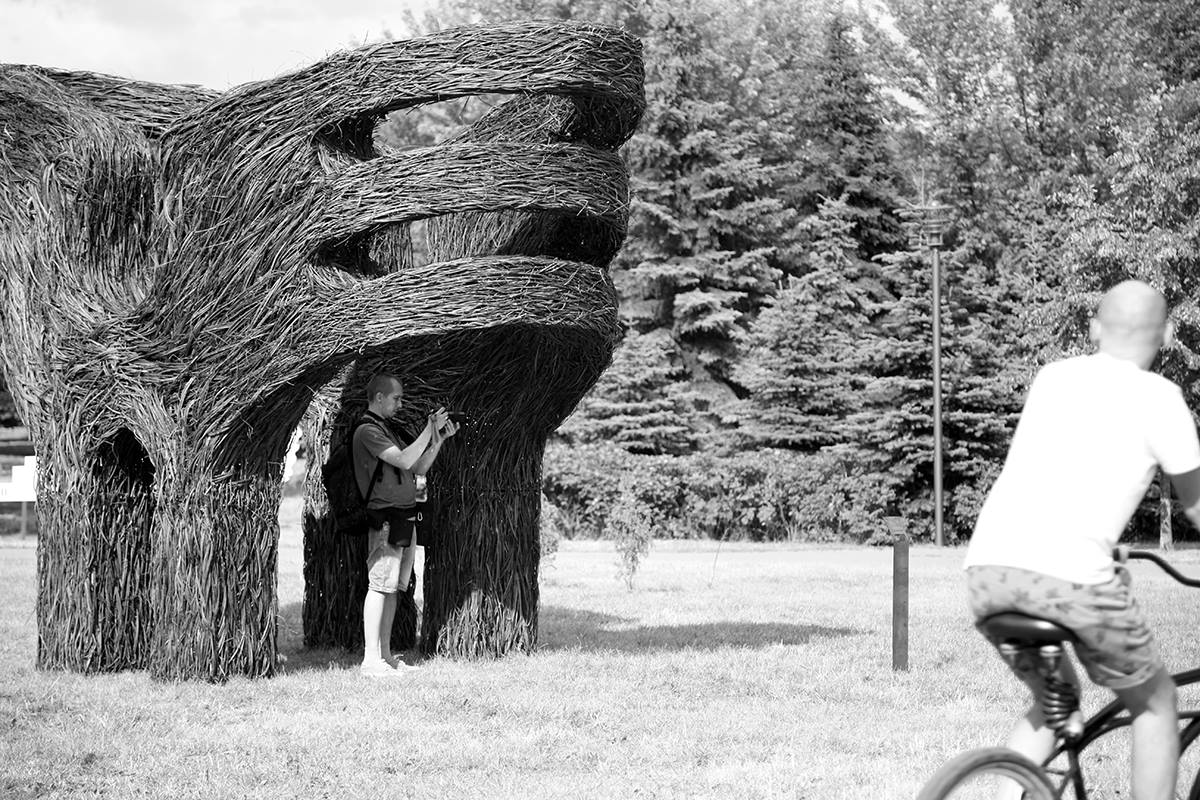
“For instance, Tamara Sakalova, who works in ceramic sculpture, or Yulia Tsiareshka, a very young monumental artist creating remarkable mosaics. Hanna Miadzvedzeva produces large ceramic pieces that are both monumental and simple. I also appreciate the duo of Palina Piragova and Vasil Tsimashov and their collective “Echo”, which works mainly with willow weaving”.
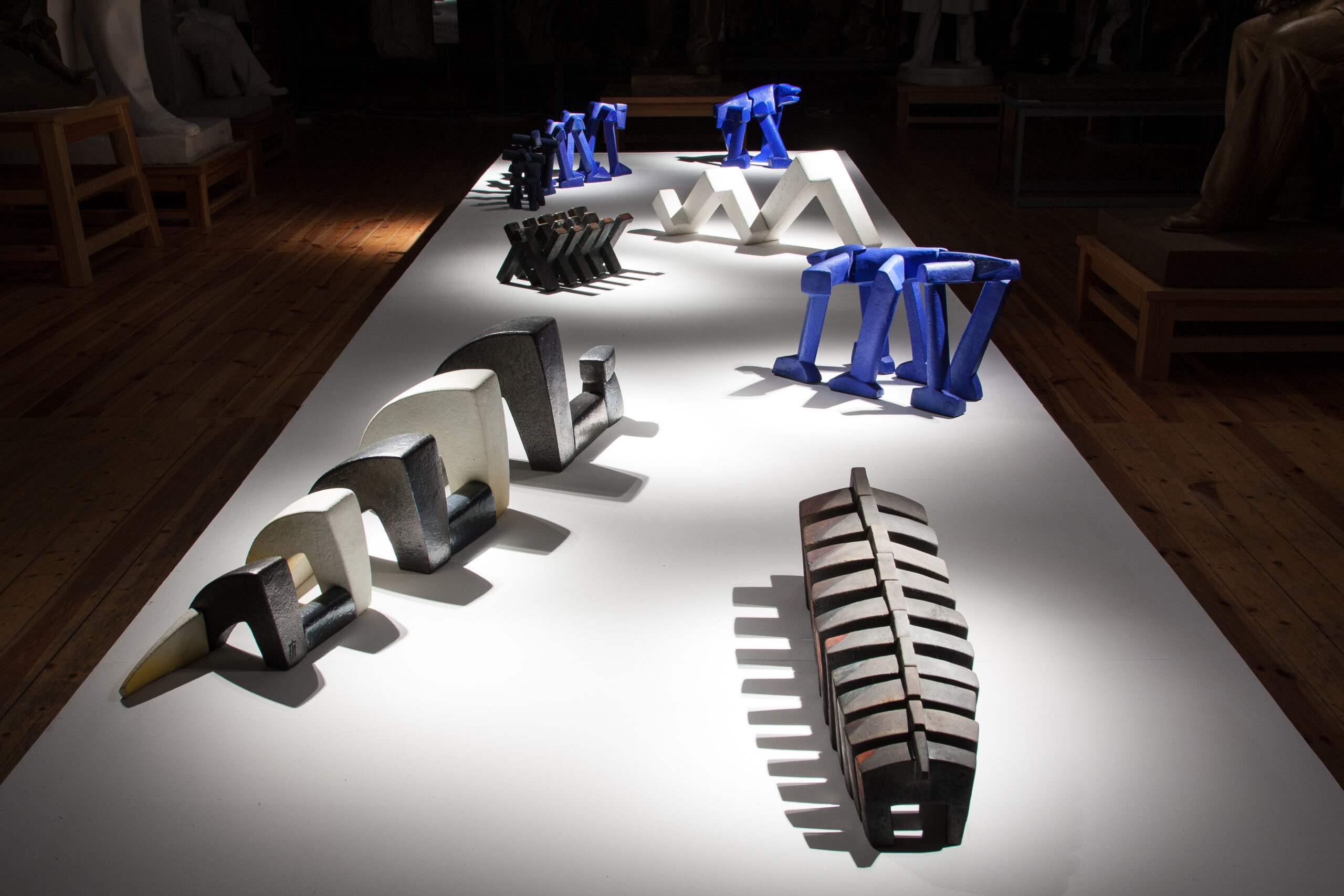
1 — Works by Tamara Sokolova from the solo exhibition Some Are Like This, Others Are Like That at the Azgura Museum, Minsk / photo by Siarhiej Ždanovič, image taken from secondaryarchive.org / 2014.
2 — Yulia Tsiareshka — “Chimeric Image” / smalt / 62x77 cm / image taken from artcenter.by / 2023.
3 — Polina Piragova and Vasil Tsimashov — Embrace / 360x480x250 cm / image taken from artcenter.by / 2016.
In her view, the long-held misconception that “sculpture is not for women’' is gradually coming to an end. “When I studied in the metal department, there were only three of us women — it simply wasn’t seen as “women’s work” at the time. But the stereotypes are fading, and today we see large-scale sculptures made from wax or fabric. The boundaries between forms are blurring — between sculpture and tapestry, for example. Along with these shifts, the notion of sculpture as a male domain is fading, and more women sculptors are emerging in Belarus”.
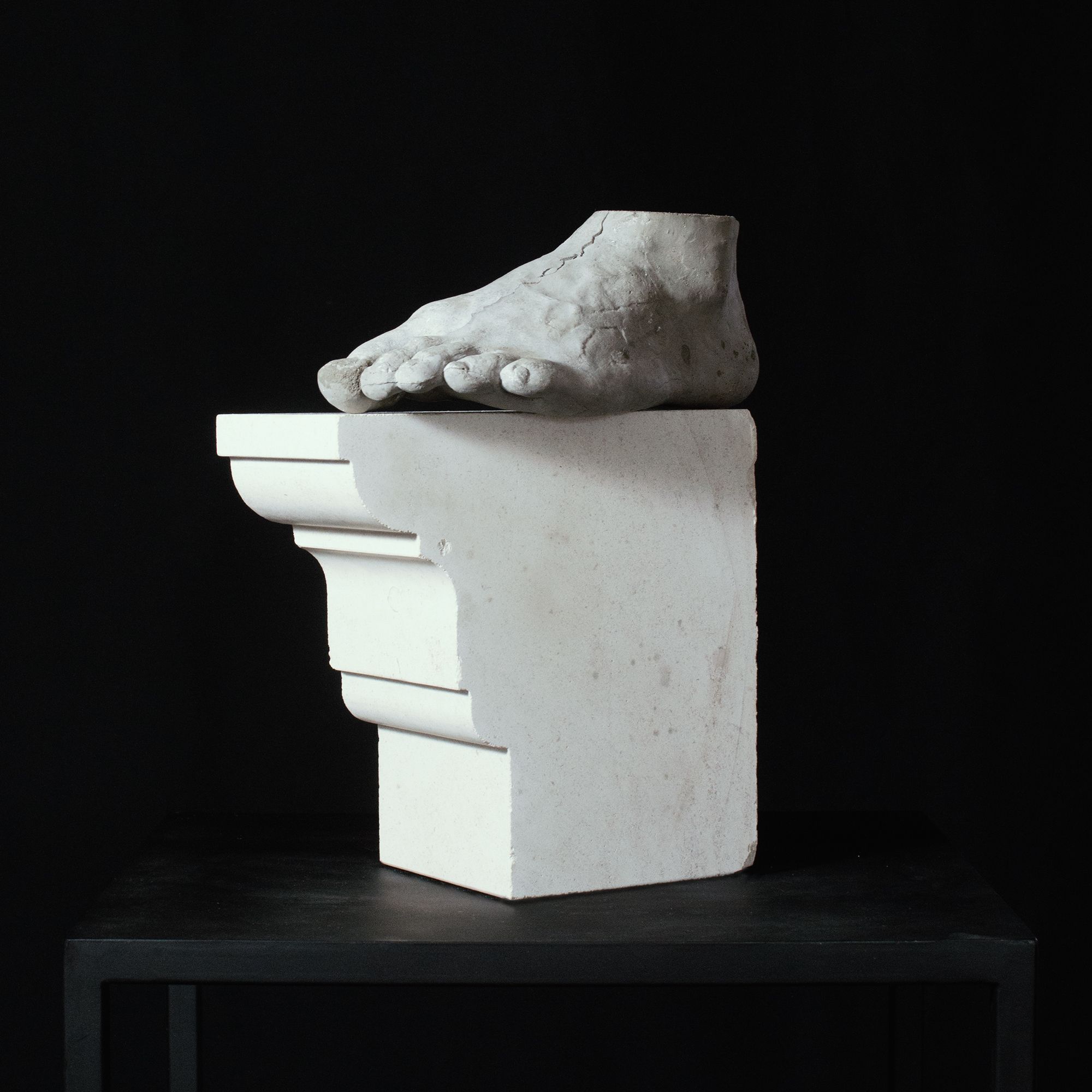
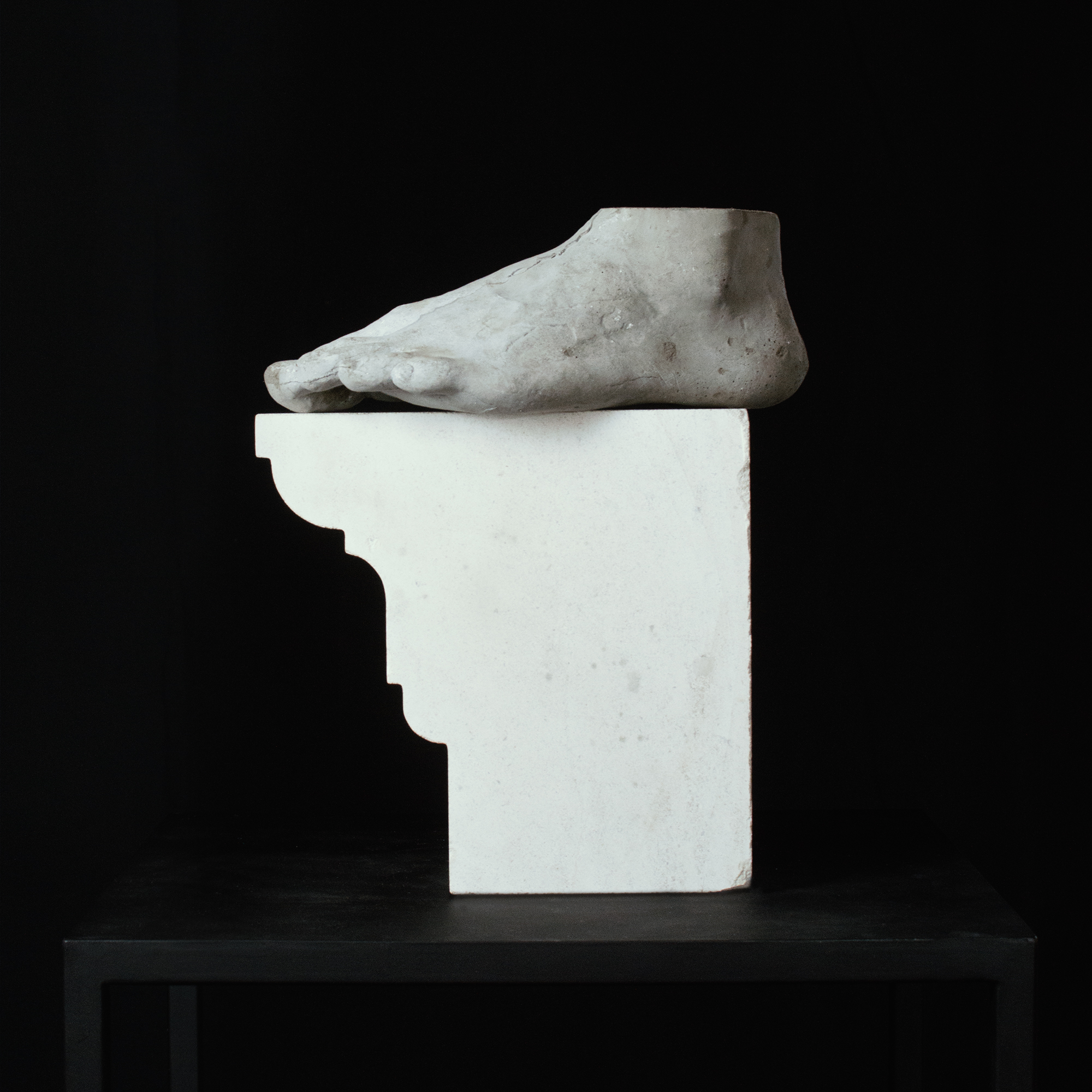
Volha Orsik's work "Pedestal" / limestone, concrete / 2025.
“State-approved art in Belarus is nothing more than obedient kitsch”. Tatsiana Kandratsenka
Artist Tatsiana Kandratsenka notes that settling and integrating into a new environment after relocation requires both time and effort. Now based in Poland, she was recently featured in Vogue Poland and opened her personal exhibition at the Kirk Gallery in Aalbord, Denmark, a gallery she has collaborated with for the past two years.
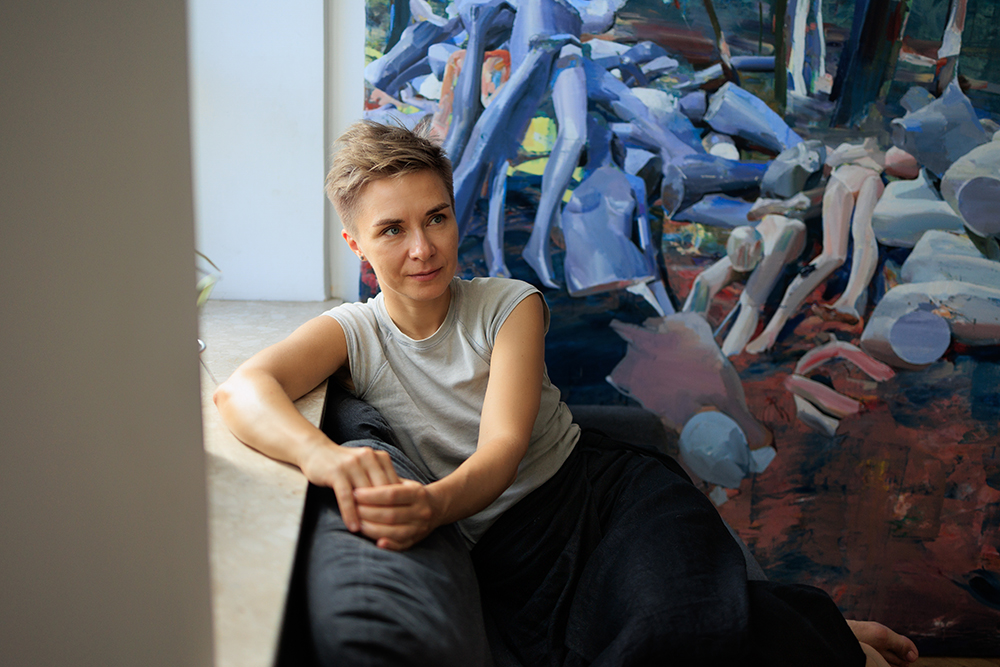
Tatsiana Kandratsenka. Photo from the artist's personal archive
Another exhibition took place in Warsaw in March 2025, in collaboration with Eugene Shadko. It was organised by Borowik Art Foundation, founded by Michał Borowik, a curator and collector of contemporary Polish art,
“My works have been with Michał for about three years. Right after my relocation, I took part in the auction, where Michał saw my works and reached out to me. He essentially acted as a mentor for me while I was navigating a new artistic environment”, — says Kandratsenka.
According to her, relocating to another country was challenging — even fatal in some ways — since it cut off previous connections and necessitated forging new ones. During her first year in Warsaw, she visited numerous exhibitions and galleries, but still felt out of place.
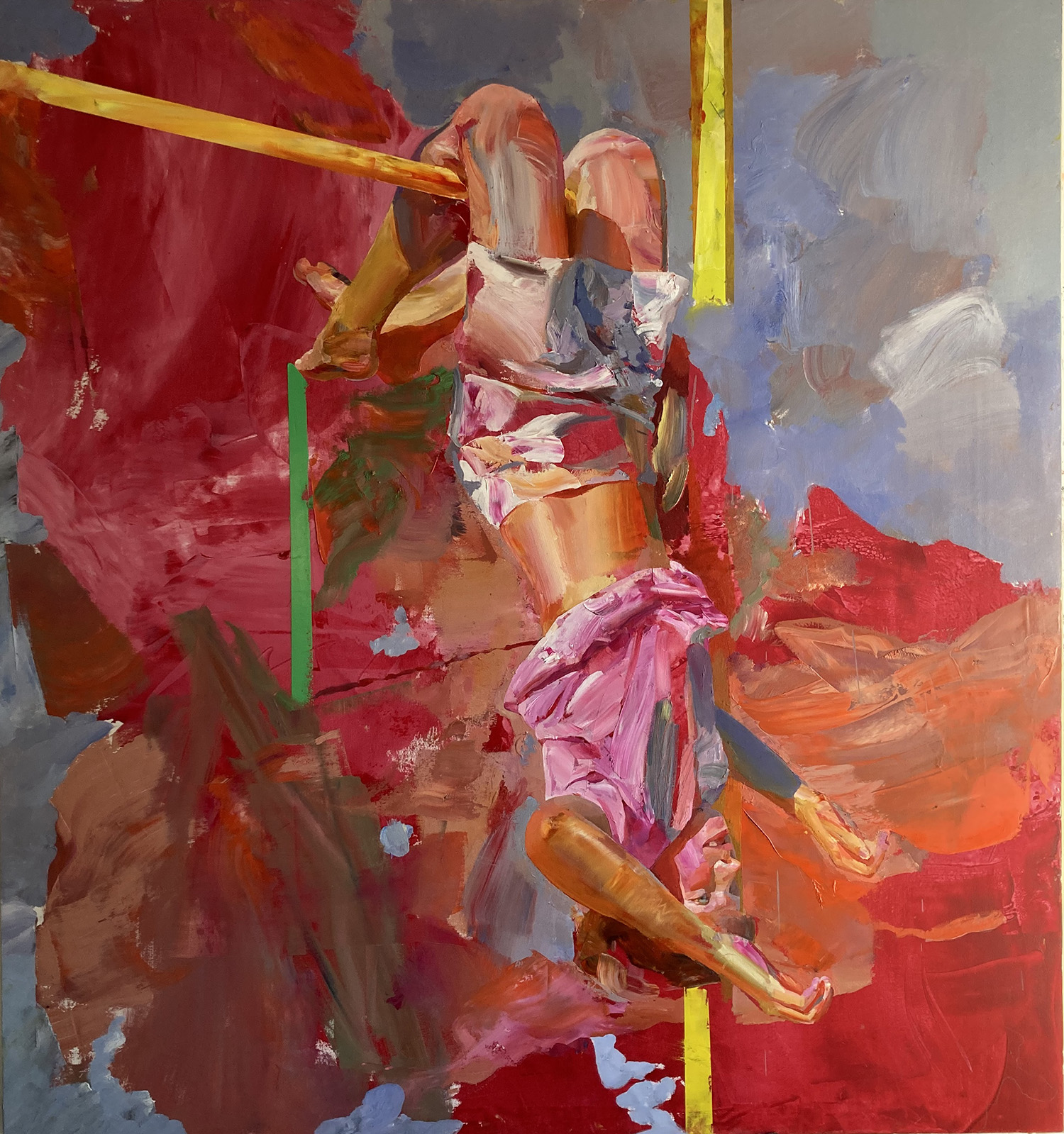
Tatsiana Kandratsenka — «Upside down» / 150x140 / Photo from the artist's personal archive
Looking ahead, aside from her current exhibition, she plans to participate next year in an autumn art fair in Switzerland and then at a major fair in Copenhagen in December, this time, together with Kirk Gallery. Of particular importance is her “sentimental plan” — a collaborative project in Warsaw with Katsiaryna Pashkevich.
“Using my own funds and effort, I want to exhibit a collection of works on paper, along with fragments from sketchbooks — almost like two personal diaries. It is an intimate history of two friends, a reflective mirror for one another, and a way to understand ourselves in a new environment. There is another context at play here: she was my student at the Academy of Arts”, Kandratsenka explains. “That’s entirely a non-commercial, non-ambitious idea”.
A more ambitious goal is to stage a personal exhibition following the current joint exhibition in Warsaw. This could go beyond just displaying recent works, employing a project-based approach, which she does not pursue frequently.
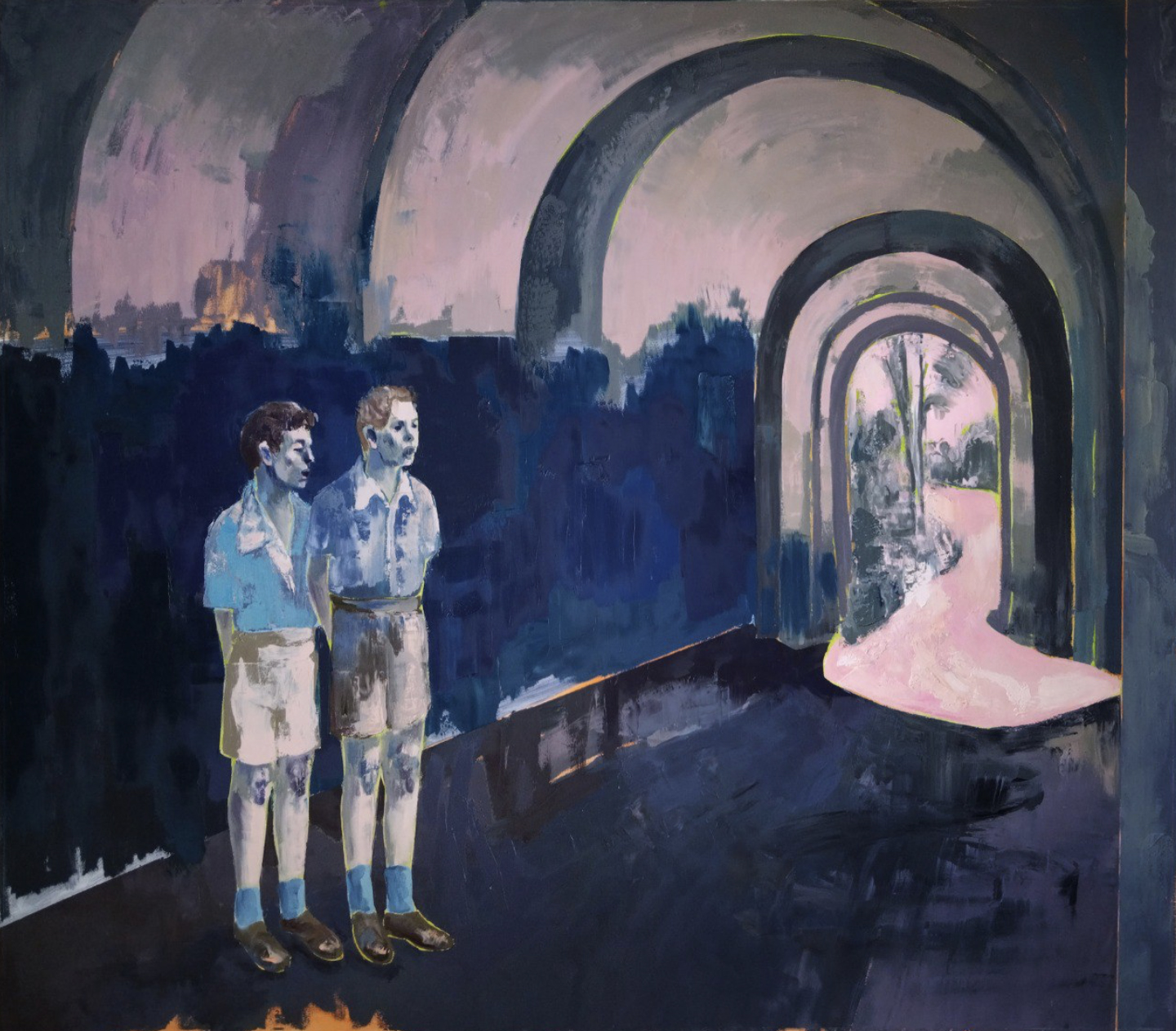
Kateryna Pashkevich — "Initiation Rite" / 140x160 / canvas, oil / image from the DK gallery website / 2022.
Recalling her artistic activity in Belarus, she remembers joint exhibitions and “apartment shows” — small-scale presentations in intimate settings. Although many artists have left the country, Belarus remains home and studio space for numerous excellent creators, who are often barred from exhibiting in both state-run and private venues, explains Tatsiana.
“Not to offend anyone, but things won’t improve in Belarus anytime soon. The art there is state-approved and, as such, amounts to nothing more than obedient kitsch. Audiences, students, and galleries treat it as a model to emulate. As a result, Belarus has a profound divide between official art, the invisible, and what is genuinely alive and valuable”, she says.
Among foreign women artists, she draws inspiration from Jacqueline Conley and her collage techniques, Cecily Brown with her large-scale, brutalist painting, and Dominika Kawinia, who champions the inclusion of women artists in teaching. “Painting programs in universities are mostly filled with women, yet they are mainly taught by male professors. They lack role models of successful female artistic careers”.
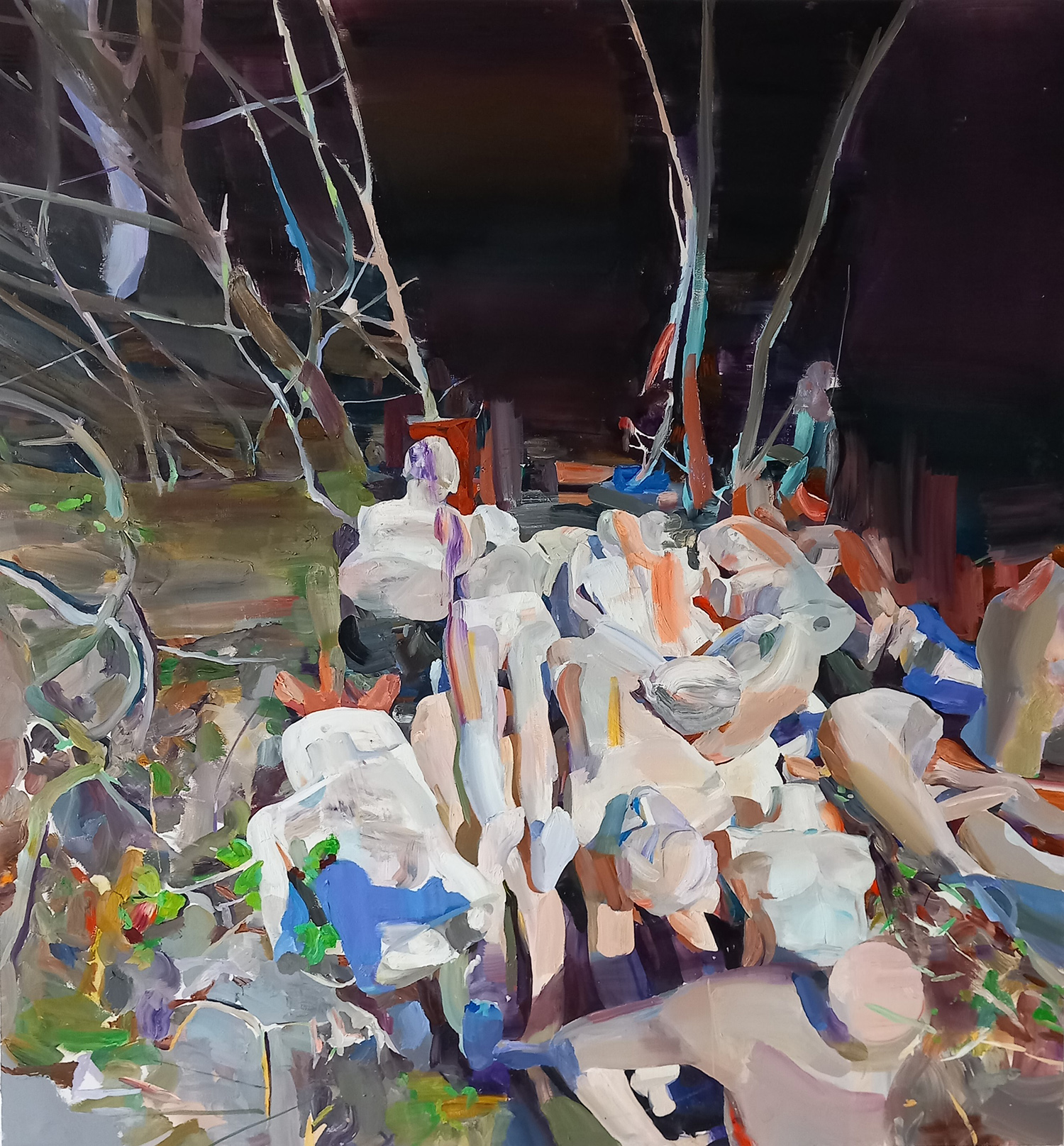
Tatsiana Kandratsenka — «No bodies» / Photo from the artist's personal archive
“Artists are inspired by tradition in different ways”. Maryia Syrakvash
Artist Maryia Syrakvash often draws on traditional culture, reinterpreting it through painting and graphic art in a contemporary context. Her works feature sunflowers, jugs, women’s scarves, and iconic landscapes of Belarus.
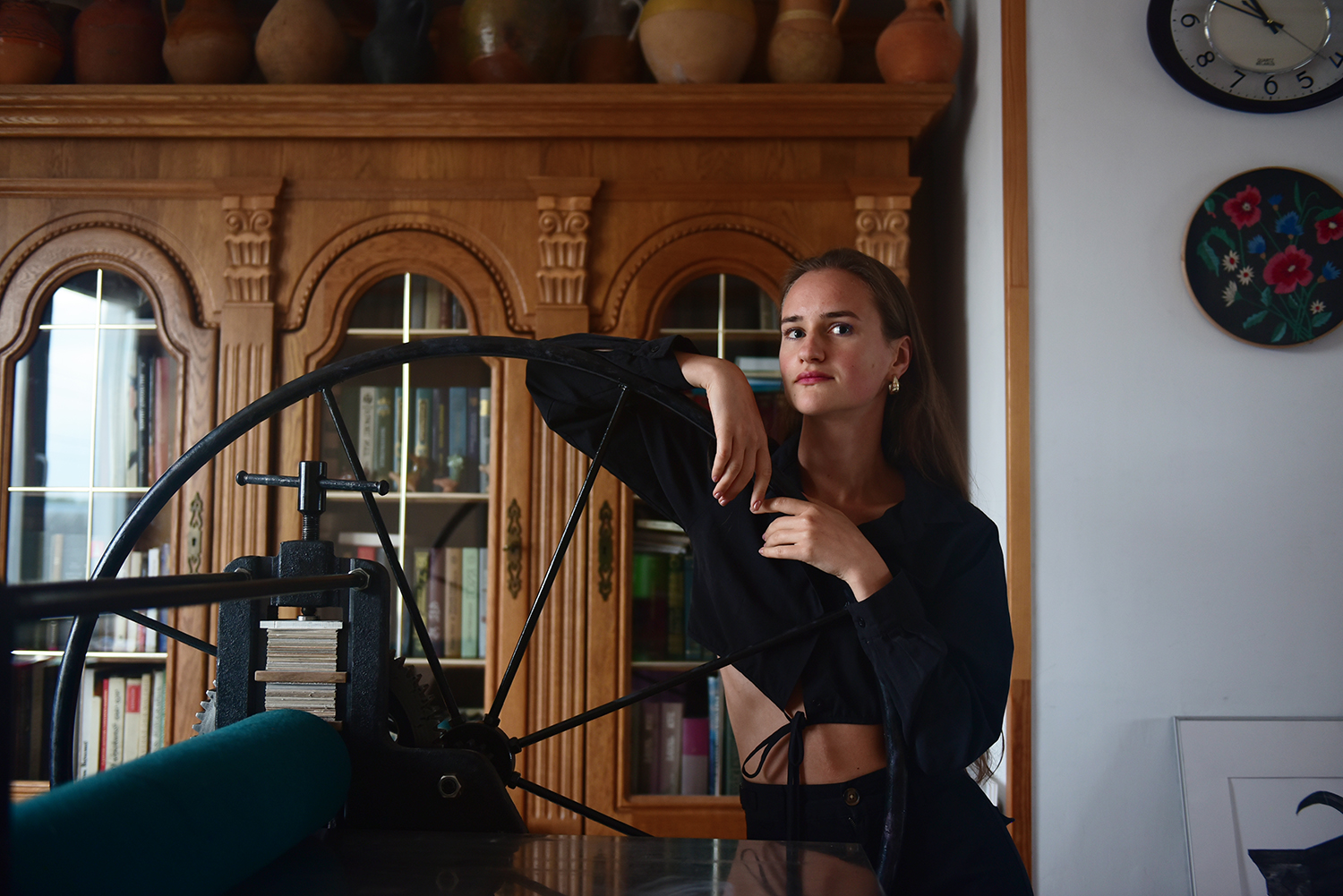
Maryia Syrakvash. Photo from the artist's personal archive
While she acknowledges a general trend among artists to use traditional motifs, she doesn’t track individual practitioners or make comparisons.
“I tend to sense broader trends in art rather than follow individual creators. Artists are inspired by tradition in different ways: some emphasise decorative aspects and use them as a core, some focus on themes, and some reinterpret particular images or symbols. I can’t really compare myself to anyone else — they are all so different,” she explains.
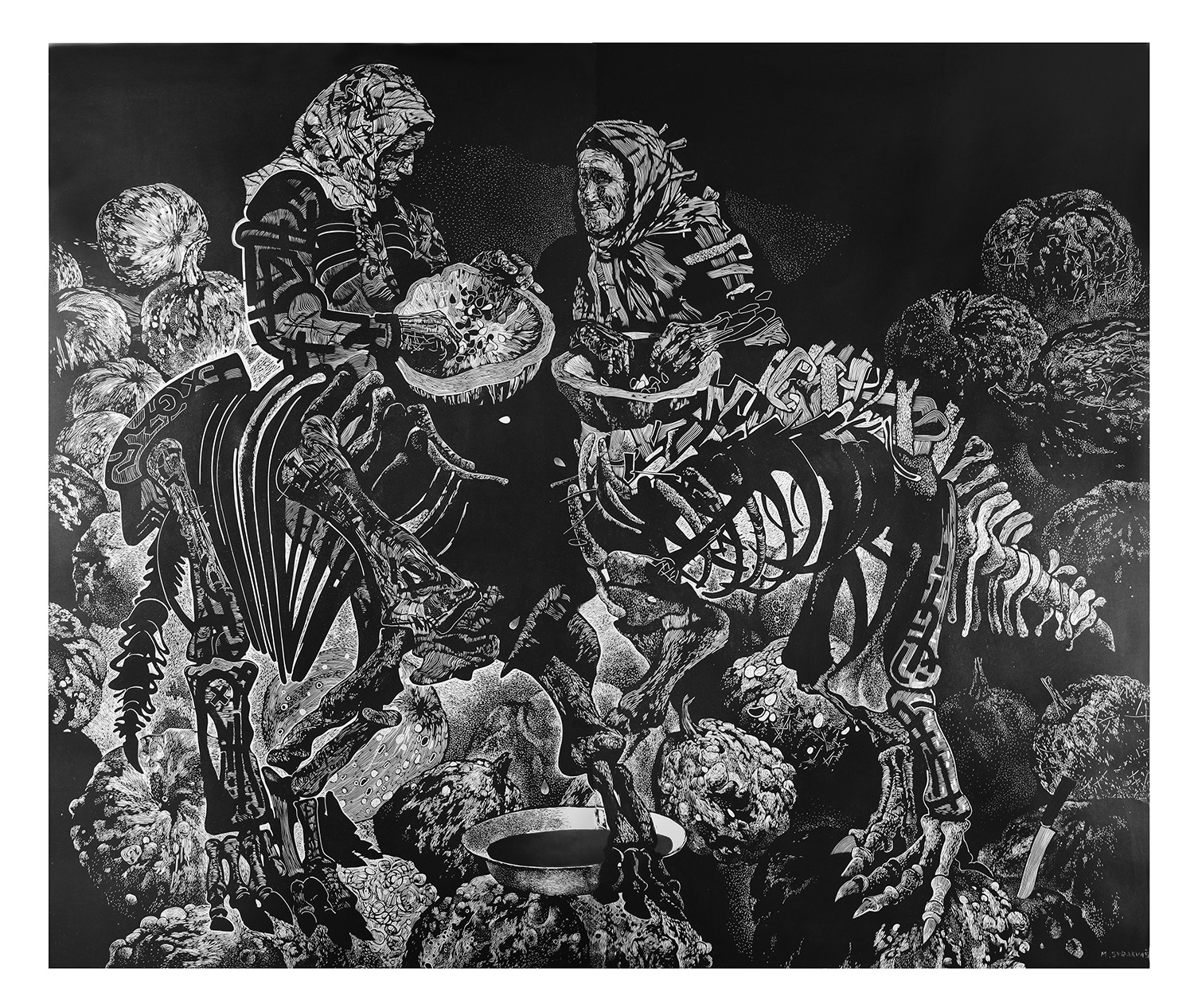
Maryia Syrakvash — «Sivily» / Paper, linocut / 180x225 / 2023.
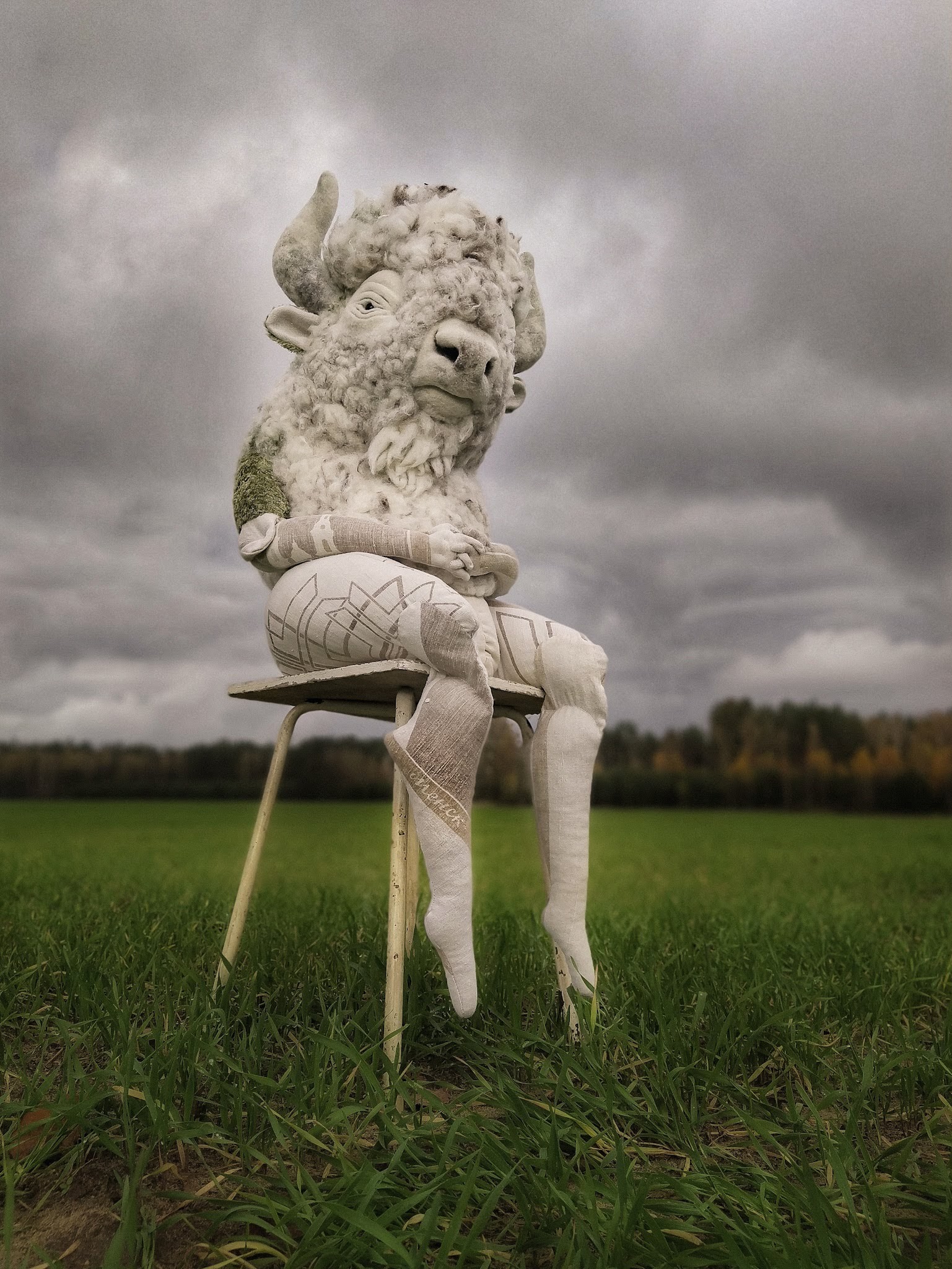
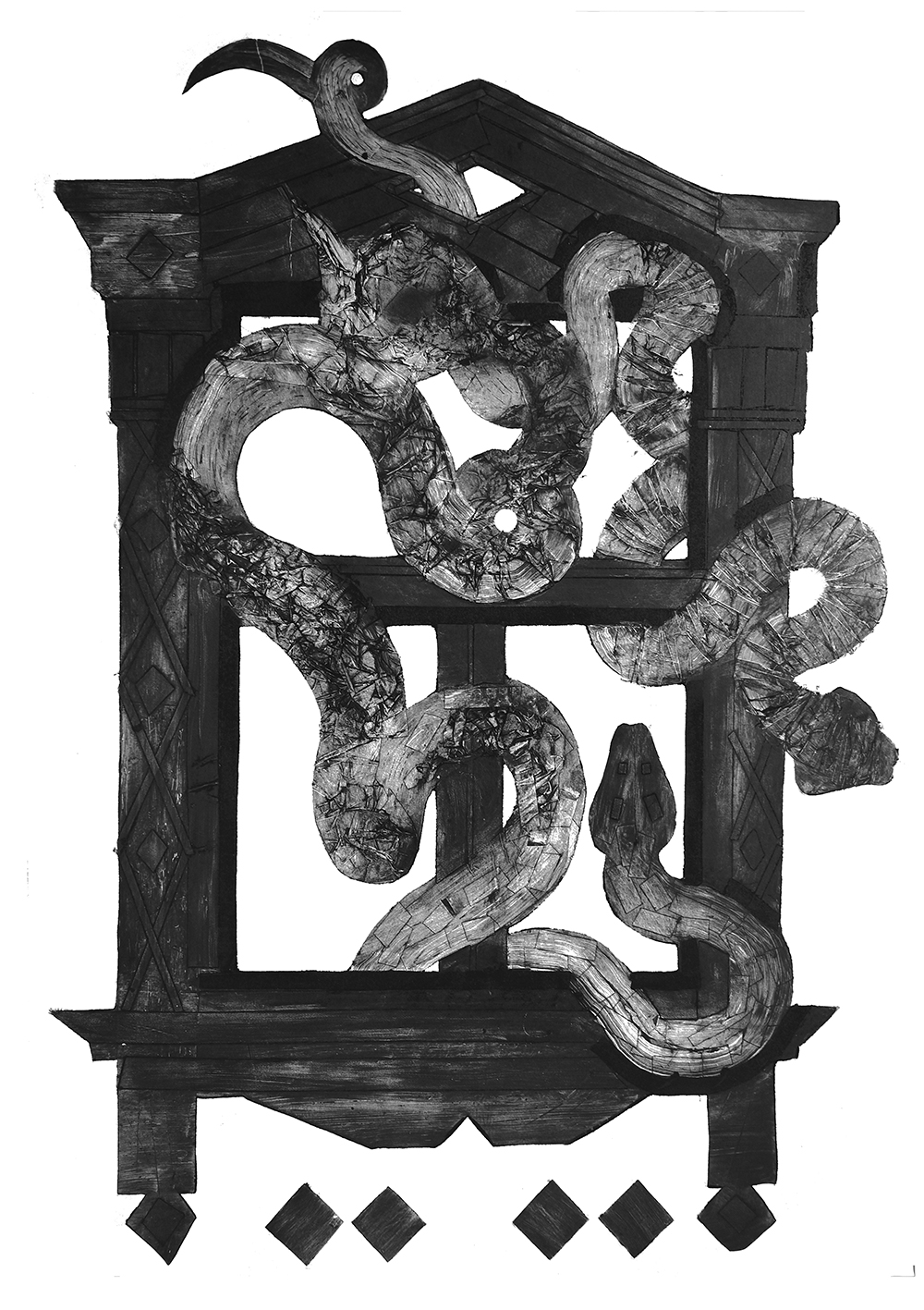
In this vein, she suggests paying attention to the graphic works of Maryia Koshaleva-Likhota, the paintings and decorative rugs of Siarhei Ashuk, and the soft wool and textile sculptures of Mila Zemliakova.
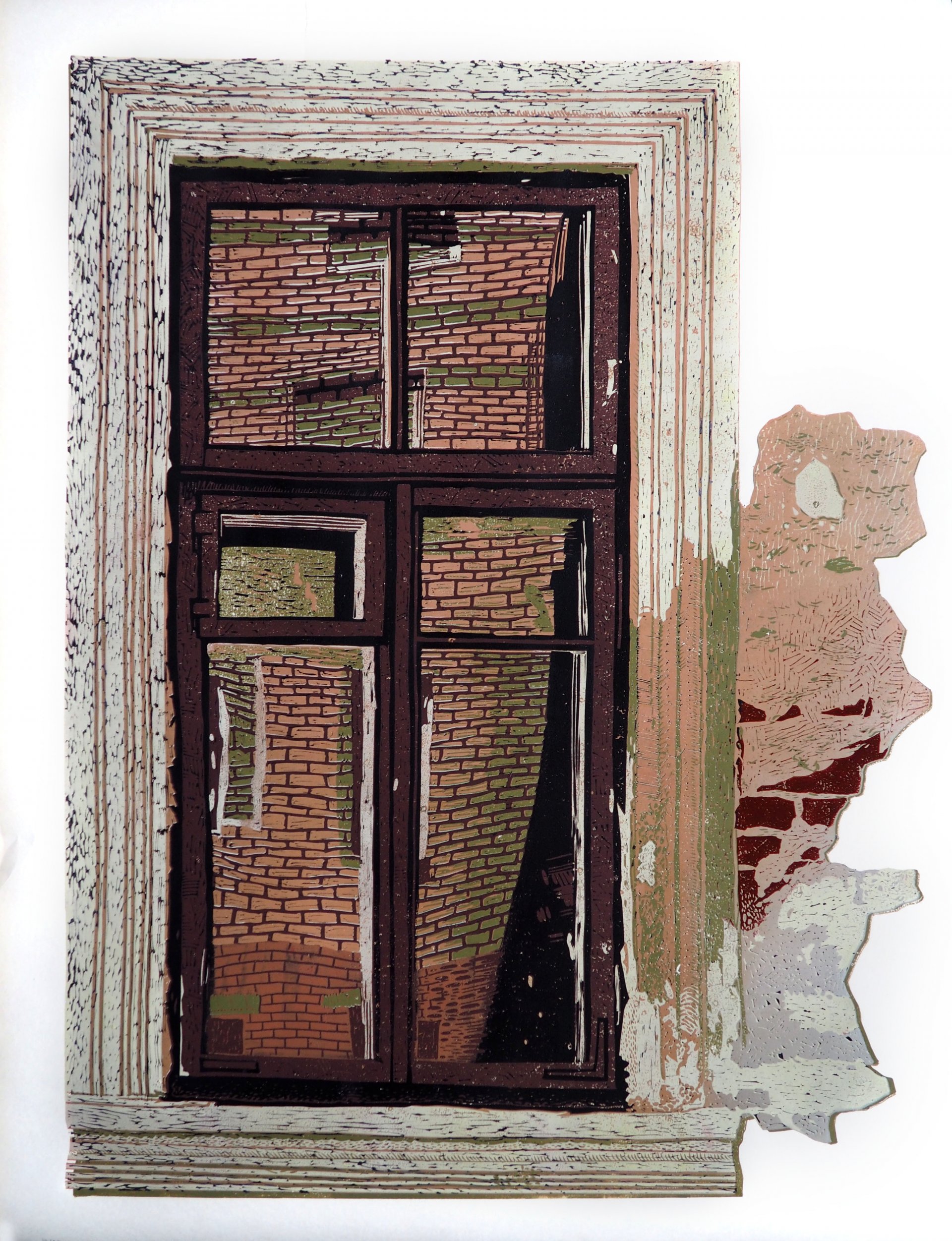
1 — Maria Koshaleva-Likhota — "Behind the Curtain" from the series "Witnesses of Time" / linocut / 102x73x1 / image from the website artcenter.by / 2023.
2 — Mila Zemlyakov — "Mighty Bison" / Felt, textile, sawdust / 100x60x50 / image from the website artcenter.by / 2020.
Recently, Maryia has been experimenting with books and etching presses. “I have also become fascinated by bookmaking — the layout planning and stitching techniques. I am currently working on a book based on Mickiewicz’s ballad about Sviciaz, in which the inhabitants turn into flowers. The idea came during my experiments with the etching press. I have also been doing monotypes lately, pressing plants onto paper, which I find both engaging and colourful”.
Maryia notes that the main challenges with this technique lie in its unpredictability — many plant prints don’t turn out well, and the results are hard to control. In the future, she would like to try her hand at animation and tattoo design.
Maryia Syrakvash — «Spadčyna».
“Sculpture is all about expressing what I genuinely feel”. Hanna Miadzviedzieva
Hanna Miadzviedzieva primarily works with hand-built ceramics. Before leaving Belarus, she worked with porcelain, though it required strict studio conditions and much higher firing temperatures.
“For me, sculpture is all about expressing what I genuinely feel. It’s not about complex concepts or abstract methods of self-expression. I don’t try to embed weighty ideas or follow whatever is ‘on the agenda’ or fashionable. My work speaks about my emotions — often about how certain places make me feel”, she says.
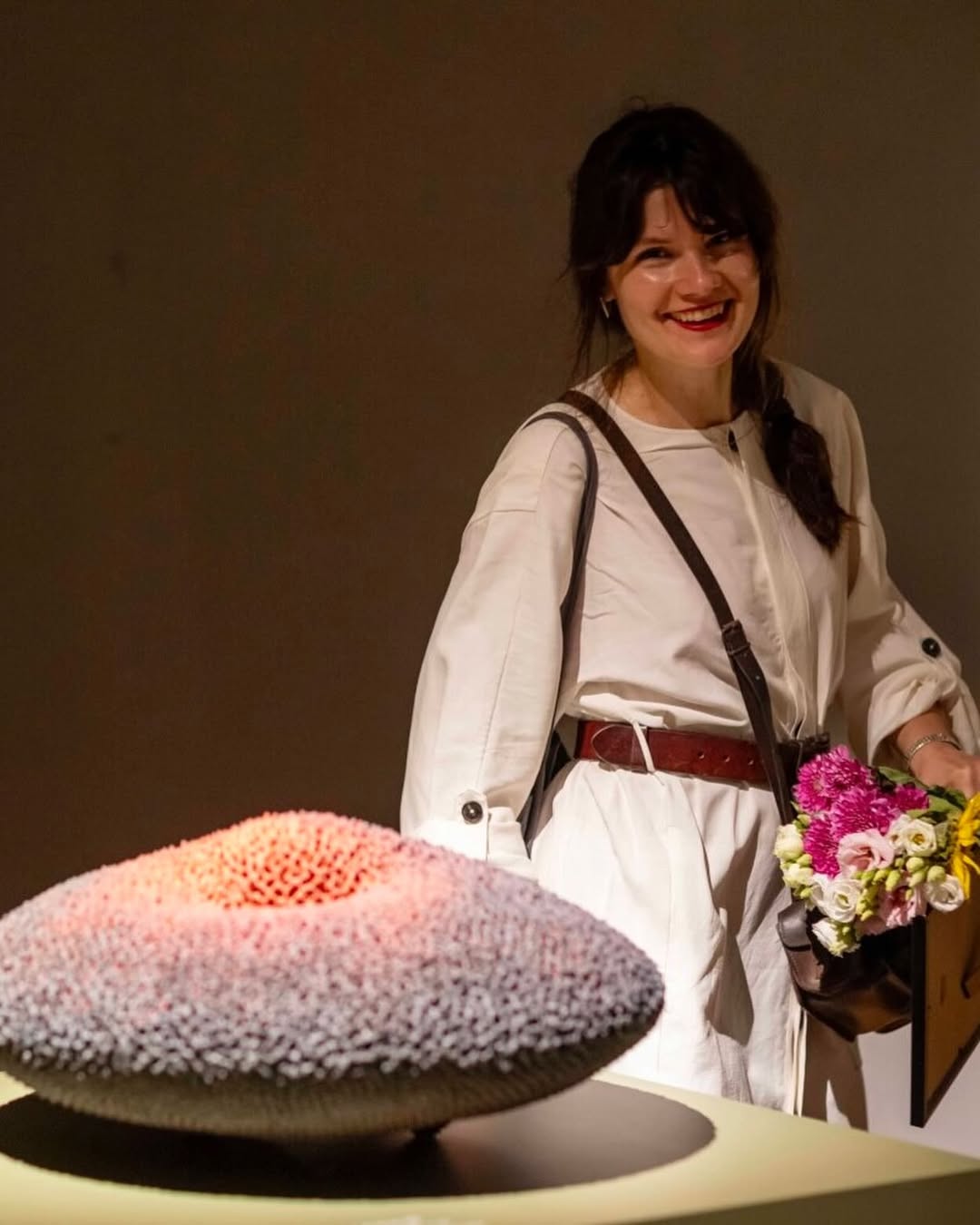
Hanna Miadzviedzeva near her sculpture The Hot-Cold War at the Rothko Museum (Latvia) / photo by Didzis Grodzs and Asia Vakhmistrova, image from the artist's personal social networks / 2025.
A year ago, the Rothko Museum in Latvia exhibited a series of Hanna’s landscape-related works. It was an important experience, she recalls.
“I really like the Rothko Museum as an exhibition venue and have great respect for the professionals who work there. That’s why I was able to execute the exact exhibition concept I felt would present me best as an artist”.
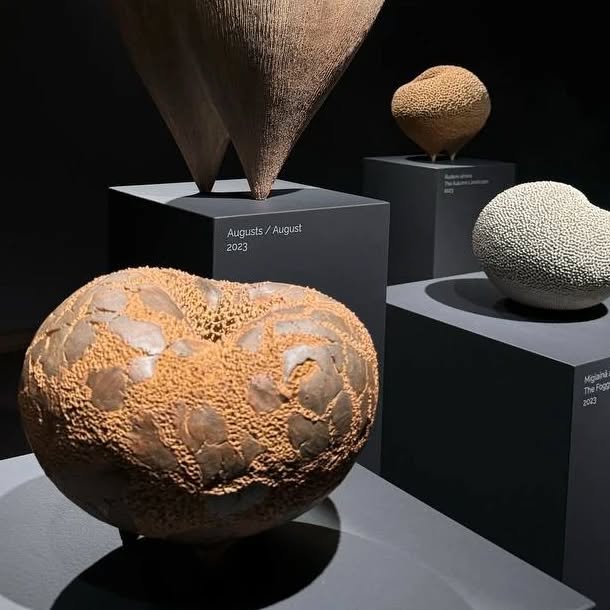
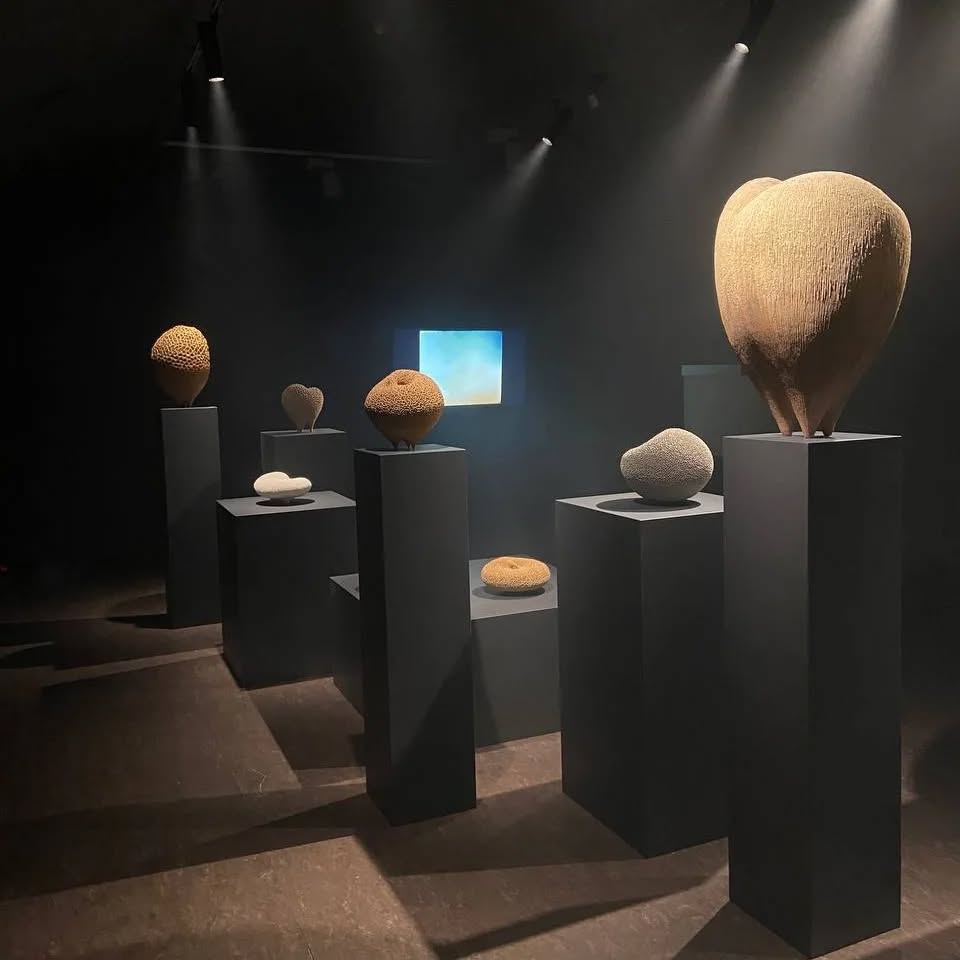
Photos from Hanna Miadzviedzeva's solo exhibition "Landscapes" at the Mark Rothko Museum (Latvia) / images from the artist's personal social networks / 2023.
In 2025, Hanna won the prestigious Faenza Prize, which boosted her visibility and led to more collaboration requests and residency invitations. She now participates in many residencies around the world, two of which she describes in detail.
“The first was in Japan — a place I had long dreamed of visiting. For a ceramicist, it’s truly a dream destination, a site that could exist nowhere else. It’s a traditional ceramics center transformed into a contemporary art hub, where centuries-old traditions intersect with modern approaches — creating a unique, almost cosmic environment. The residency itself offers incredible opportunities: they have a huge range of kilns, and since firing determines so much of our work and every ceramic artist wants to experiment with new techniques, it is simply a place to be”.
Another residency that proved pivotal for Hanna took place in Norway last year, in a studio specifically designed for large-scale work.
“I had never worked on pieces as tall as I am — it always seemed impossible. But the setting there encouraged me to experiment with a new scale, and I’m very pleased with what came out of it. I realized that the forms I create work just as well in a large format.”
Miadzviedzieva now plans to stage an exhibition featuring the large-scale works and is currently looking for new residencies and exhibition spaces to bring it to life.
Similar Materials


FOLLOW US
INSTAGRAM TELEGRAM TIKTOK FACEBOOK YOUTUBE
© 2026 Chrysalis Mag. All Rights Reserved.
Reprinting of materials or fragments of materials
is allowed only with the written permission