Cemra's «ZIAMLIAČKA»: 225 Kg of Belarusian Soil on View in Austria
Cemra's «ZIAMLIAČKA»: 225 Kg of Belarusian Soil on View in Austria
News | 18.02.2026
On February 19, a solo exhibition by the artist Cemra, “Ziamliačka” (“a woman from the same land,” ed.), opens at Kunsthaus Graz (Graz, Austria). The project reflects on the trauma of exile, intertwining the personal tragedy of losing one’s home with the global context of forced migration. At the center of the exhibition are 225 kilograms of soil taken from the place where the artist’s ancestral home once stood in Belarus. Using the enfleurage* method, the artist extracted the scent from this soil, which became for her an essence of memory and a symbol of support and the reclaiming of subjectivity.
On February 19, a solo exhibition by the artist Cemra, “Ziamliačka” (“a woman from the same land,” ed.), opens at Kunsthaus Graz (Graz, Austria). The project reflects on the trauma of exile, intertwining the personal tragedy of losing one’s home with the global context of forced migration. At the center of the exhibition are 225 kilograms of soil taken from the place where the artist’s ancestral home once stood in Belarus. Using the enfleurage* method, the artist extracted the scent from this soil, which became for her an essence of memory and a symbol of support and the reclaiming of subjectivity.
SHARE:
*The enfleurage method is an ancient perfumery technique used to obtain high-quality essential oils. Through this process, the scent of the soil is transferred into a fat base and then fixed in alcohol.
*The enfleurage method is an ancient perfumery technique used to obtain high-quality essential oils. Through this process, the scent of the soil is transferred into a fat base and then fixed in alcohol.
The exhibition is presented in Needle, the glass space of Kunsthaus Graz, which demands concentration and leaves no room for unnecessary background. Within it, a kind of mound of Belarusian soil against the backdrop of Austrian mountains is perceived as a Belarusian mountain, while the vial containing the scent of earth appears as a fragile counterpoint to this weight.
“To create this project, my mother dug up 225 kilograms of soil from the plot where our ancestral home once stood. Now there is only emptiness there. This soil crossed borders with great effort, under restrictive conditions,” the artist explains. “So ‘Ziamliačka’ is my ritual of closeness to what has been lost. Through enfleurage, I reclaim a sacred space, extracting the scent from the earth and compelling fat and ethanol to absorb it—as a trace of what cannot be taken away. This extract has become a form of my memory and a shared silent prayer of migrants around the world for the land that no longer holds them.”
The exhibition is presented in Needle, the glass space of Kunsthaus Graz, which demands concentration and leaves no room for unnecessary background. Within it, a kind of mound of Belarusian soil against the backdrop of Austrian mountains is perceived as a Belarusian mountain, while the vial containing the scent of earth appears as a fragile counterpoint to this weight.
“To create this project, my mother dug up 225 kilograms of soil from the plot where our ancestral home once stood. Now there is only emptiness there. This soil crossed borders with great effort, under restrictive conditions,” the artist explains. “So ‘Ziamliačka’ is my ritual of closeness to what has been lost. Through enfleurage, I reclaim a sacred space, extracting the scent from the earth and compelling fat and ethanol to absorb it—as a trace of what cannot be taken away. This extract has become a form of my memory and a shared silent prayer of migrants around the world for the land that no longer holds them.”
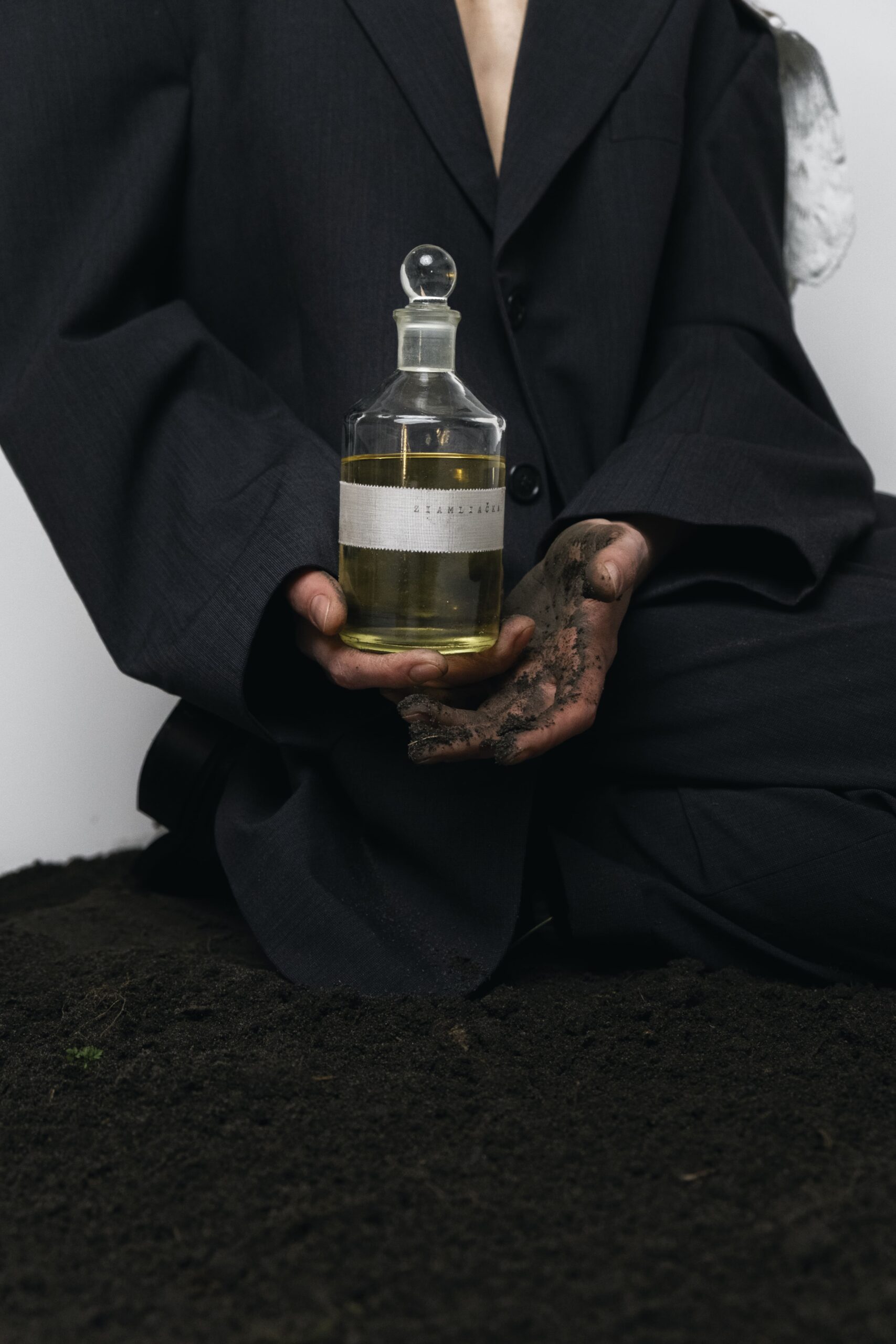
Photo for the project "Ziamliačka" by Belarusian artist Cemra / photo by Hanna Shot / 2025.
At the exhibition opening on February 19 at 6:00 PM, Cemra will present a performance connected to the project. In Graz, the artist will sing a poetic and melancholic rendition of a Belarusian lullaby.
The exhibition featuring Belarusian soil will run at Kunsthaus Graz until March 15. The project curators are Alexandra Trost and Katia Huemer.
At the exhibition opening on February 19 at 6:00 PM, Cemra will present a performance connected to the project. In Graz, the artist will sing a poetic and melancholic rendition of a Belarusian lullaby.
The exhibition featuring Belarusian soil will run at Kunsthaus Graz until March 15. The project curators are Alexandra Trost and Katia Huemer.
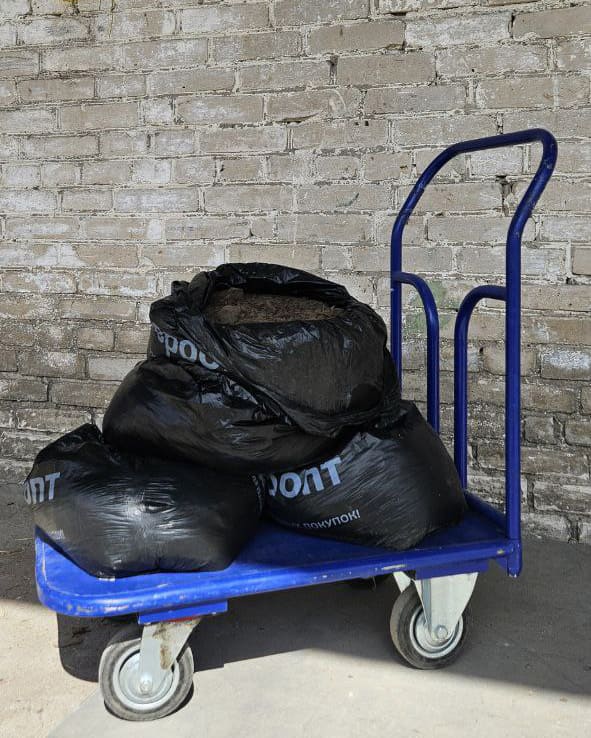
Belarusian soil, brought from Belarus / photo from the artist's personal archive / 2025.
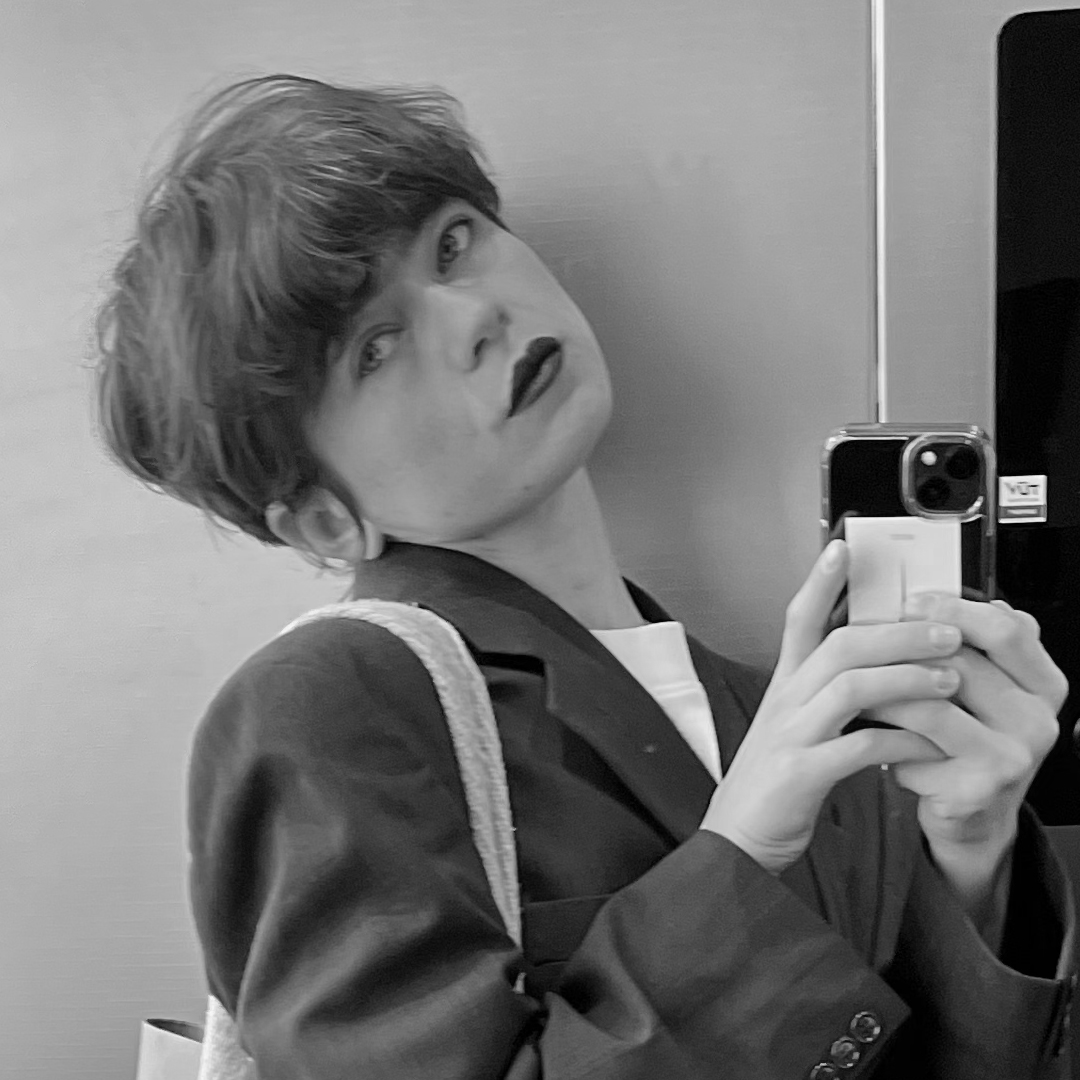
Darya Siamchuk, known to the audience under the pseudonym Сemra (translated from Belarusian as darkness), is a Belarusian artist originally from Grodno. In her work, she explores themes of trauma, memory, identity, and transformation on both a personal and collective level.
Сemra’s practice consists of creating textured, tactile surfaces using plaster bandages, resin, oil paint, pastel, and varnish on canvas. Each layer is reminiscent of a wound or scar, transforming the canvas into a sensual body. Thanks to this material language, the artist opens up a space where trauma can be acknowledged and where care can begin.
The artist currently lives and works in Warsaw (Poland).
Cover photo by Hanna Shot.
Перадрук матэрыялу або фрагментаў матэрыялу магчымы толькі з пісьмовага дазволу рэдакцыі.
Калі вы заўважылі памылку ці жадаеце прапанаваць дадатак да апублікаваных матэрыялаў, просім паведаміць нам.
Darya Siamchuk, known to the audience under the pseudonym Сemra (translated from Belarusian as darkness), is a Belarusian artist originally from Grodno. In her work, she explores themes of trauma, memory, identity, and transformation on both a personal and collective level.
Сemra’s practice consists of creating textured, tactile surfaces using plaster bandages, resin, oil paint, pastel, and varnish on canvas. Each layer is reminiscent of a wound or scar, transforming the canvas into a sensual body. Thanks to this material language, the artist opens up a space where trauma can be acknowledged and where care can begin.
The artist currently lives and works in Warsaw (Poland).
Cover photo by Hanna Shot.
Перадрук матэрыялу або фрагментаў матэрыялу магчымы толькі з пісьмовага дазволу рэдакцыі.
Калі вы заўважылі памылку ці жадаеце прапанаваць дадатак да апублікаваных матэрыялаў, просім паведаміць нам.
SHARE:
Also read: